






Understanding the Roof Certification Form
A roof certification form is a crucial document that verifies the condition of a roof, confirming that it has been inspected and meets specific standards for moisture protection and structural integrity. This certification often helps homeowners and property buyers secure insurance, facilitate financing, and establish trust in property transactions.
Key Components of a Roof Certification Form
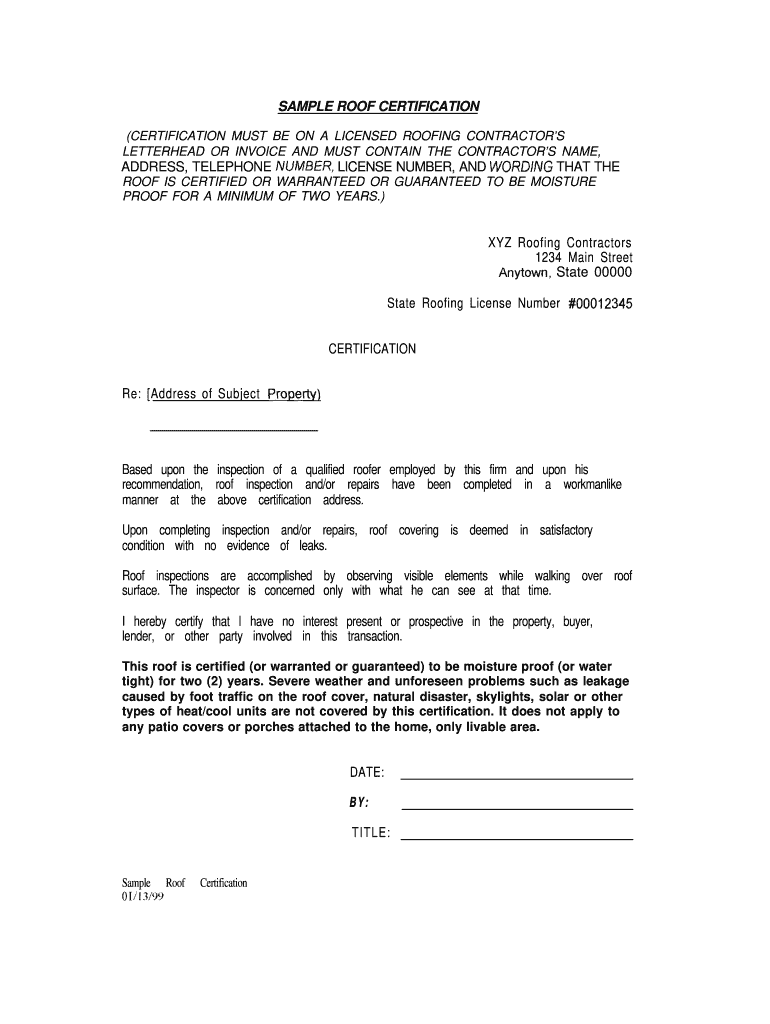
The roof certification form typically includes several critical pieces of information that validate its authenticity and purpose:
-
Contractor Information: Includes the roofing contractor's name, address, and license number. This information helps verify the credentials and reliability of the certification provider.
-
Property Details: Clearly states the address of the property being certified, along with the inspection date and the type of roofing material used.
-
Certification Period: Specifies the duration of the certification. A standard roof certification confirms that the roof is free from leaks and defects for two years from the inspection date, although extensions might be possible based on the condition assessed.
-
Limitations and Conditions: Outlines any exclusions or conditions that may affect the certification, such as adverse weather conditions, changes made to the property, or maintenance obligations placed on the homeowner.
How to Use the Roof Certification Form
Using a roof certification form is a straightforward process, but it requires attention to detail. Here are the steps to utilize it effectively:
-
Choose a Licensed Contractor: Select a licensed roofing contractor to perform the inspection. Ensure they are known for their quality of work and have a good reputation.
-
Schedule the Inspection: Contact the contractor to arrange a date for the inspection. It is essential to be aware of seasonal weather patterns, as conditions can affect the inspection results.
-
Obtain the Certification: After the inspection, request a roof certification. Ensure it includes all necessary details such as contractor information and the duration of validity.
-
Provide to Insurers or Lenders: Submit the completed certification form to your insurance company or lender as required. This document can accelerate insurance approvals and loan processes.
Types of Roof Certifications
There are different types of roof certifications that cater to various situations and requirements:
-
FHA Roof Certification Letter: Specifically designed for properties financed through the Federal Housing Administration (FHA), confirming that the roof meets the FHA's specific standards.
-
Roof Inspection Certification Form: A more general form that can also be used during purchasing or refinancing, serving as proof of the roof's condition at a particular time.
-
2-Year Roof Certification Sample: Often used to provide a more immediate solution for buyers needing assurance that a roof will last through at least the first two years of ownership.
Importance of the Roof Certification Form
Ensuring a property’s roof is in sound condition is vital for multiple reasons:
-
Insurance Requirements: Many insurance companies will require a roof certification before writing or renewing a homeowner's policy, especially for older roofs or properties in high-risk areas for severe weather.
-
Real Estate Transactions: Buyers often request a roof certification during the home buying process to avoid unexpected repair costs in the future. A certification can enhance the property's marketability.
-
Maintenance Planning: Regular use of a roof certification can help homeowners better plan for roof maintenance or replacement, ensuring long-term durability and safety.
Conclusion on the Utility of a Roof Certification Form
Submitting a roof certification form as part of your property management or sales process not only increases compliance with insurer and buyer expectations but also acts as a valuable tool for maintaining the integrity and longevity of your investment. Detailed knowledge of what is involved in obtaining and presenting this certificate can lead to more favorable outcomes for homeowners and real estate transactions alike.