



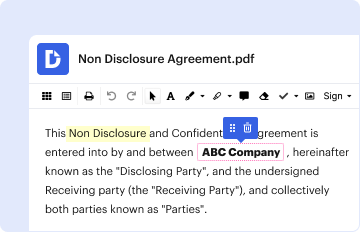
01. Edit your membership interest issuance transfer ledger online
Type text, add images, blackout confidential details, add comments, highlights and more.

Type text, add images, blackout confidential details, add comments, highlights and more.
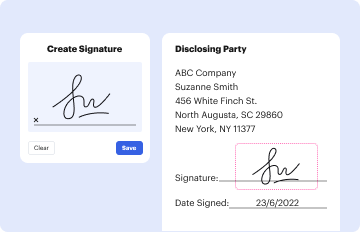
Draw your signature, type it, upload its image, or use your mobile device as a signature pad.

Send free llc membership ledger via email, link, or fax. You can also download it, export it or print it out.
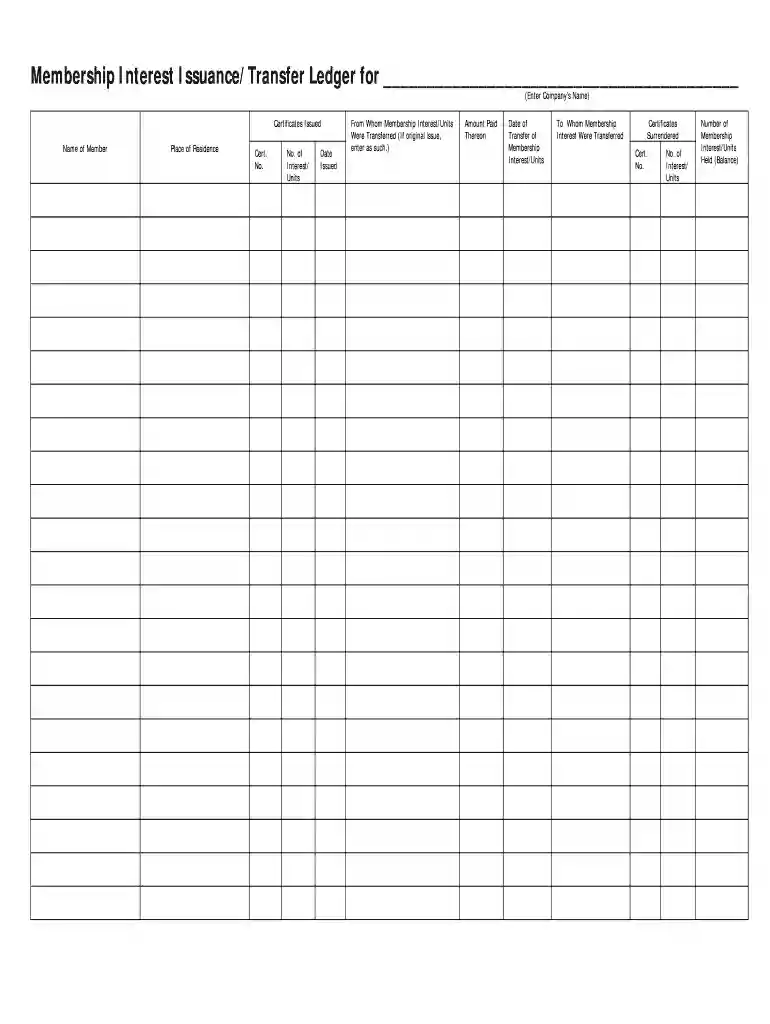
The current membership stock interest issuance transfer ledger is a specialized document used by companies, particularly limited liability companies (LLCs), to track the issuance and transfer of membership interests or units. It serves multiple purposes: documenting ownership, managing membership transitions, and ensuring legal compliance. Each entry in this ledger typically includes essential details such as member identities, the number of interests being issued or transferred, certificate numbers, relevant dates, and payment amounts.
The structure of this ledger is crucial for both operational efficiency and legal accountability. If disputes arise regarding ownership stakes or if members wish to sell or transfer their interests, a well-maintained ledger provides a clear record of transactions. This not only protects the interests of members but also upholds the operational integrity of the company.
Properly filling out the current membership stock interest issuance transfer ledger involves several systematic steps that ensure accuracy and compliance with regulations.
Gather Relevant Information: Start by collecting data on the membership interests to be issued or transferred. This includes member names, the number of interests, relevant dates, and any financial details.
Enter Member Information: For each transaction, input the full names and contact information of all members involved—those issuing and receiving the interests.
Specify Interest Details: Clearly indicate the number of membership interests being issued or transferred. This includes noting any specific certificate numbers associated with these interests.
Document Transaction Dates: Accurately fill in the dates of issuance and transfer, ensuring consistency with the company’s records.
Record Payment Amounts: If payments are involved in the transfer of membership interests, detail the amounts paid, and document the method of payment.
Signing and Acknowledgment: Require all parties involved to review and sign the ledger to confirm their agreement with the recorded information.
Maintain Copies: Once completed, ensure that copies of the ledger are stored securely both digitally and physically, as these documents may be important for future reference or legal requirements.
The current membership stock interest issuance transfer ledger contains key elements that are vital for tracking and managing membership interests within an LLC effectively.
Ownership Records: The ledger serves as the official record of who owns what percentage of the company, facilitating clarity in ownership and rights.
Transaction History: It provides a historical account of all memberships issued and transferred, which is essential for audits and dispute resolutions.
Legally Binding Format: The ledger is structured to adhere to legal obligations, ensuring compliance with state regulations governing business ownership and membership.
User Accessibility: Information is organized in a manner that is easy to access and understand by both management and members, enhancing transparency.
To maintain the integrity of the ledger:
Several parties frequently utilize the current membership stock interest issuance transfer ledger for various purposes, primarily revolving around ownership documentation and compliance in LLCs.
LLC Managers: Often responsible for maintaining record-keeping and ensuring all entries in the ledger are accurate and comply with regulations.
Accountants and Financial Advisors: Frequently reference the ledger for financial reporting and helping to manage the tax implications of membership interest transfers.
Attorneys: Legal professionals may use the ledger to verify ownership during legal proceedings or to draft contracts related to ownership interests.
New Members or Investors: Individuals considering joining the LLC or investing may request access to the ledger to assess ownership structures before making a decision.


Real-world scenarios illustrate the importance and functionality of the current membership stock interest issuance transfer ledger.
Ownership Transfer Scenario: An existing member wishes to sell their interest to a new investor. The current membership stock interest issuance transfer ledger is updated to reflect the sale, including details of the buyer and the number of interests transferred.
New Issuance Case: A newly formed LLC may need to issue membership interests to its founding members. Each issuance is recorded in the ledger, specifying the amount issued, dates, and corresponding member information.
Audit and Compliance Review: During an annual audit, an accountant references the ledger to confirm that all reported ownership interests align with the provisions stated in the operating agreement, ensuring transparency and accuracy in the company's records.
Dispute Resolution: If two members have a disagreement regarding ownership percentages, the ledger serves as a primary source of truth to clarify and resolve any misunderstandings.
Each use case emphasizes the ledger's role as an essential tool in tracking and managing membership interests, providing legal safeguards, and ensuring smooth operations within an LLC.
At DocHub, your data security is our priority. We follow HIPAA, SOC2, GDPR, and other standards, so you can work on your documents with confidence.

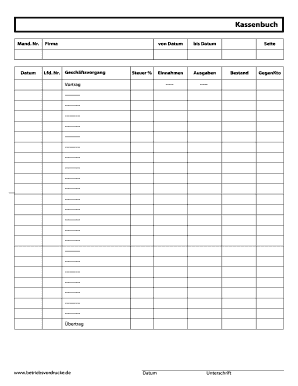


Dec 20, 2004 The general ledger of the Postal Service provides current account balances and summarized transaction history for all legacy accounts listedRead more
A Membership Issuance/Transfer Ledger is a document that identifies the owner(s) and tracks the stock/shares or membership units with percentage(s) issued toRead more


