







Definition & Meaning
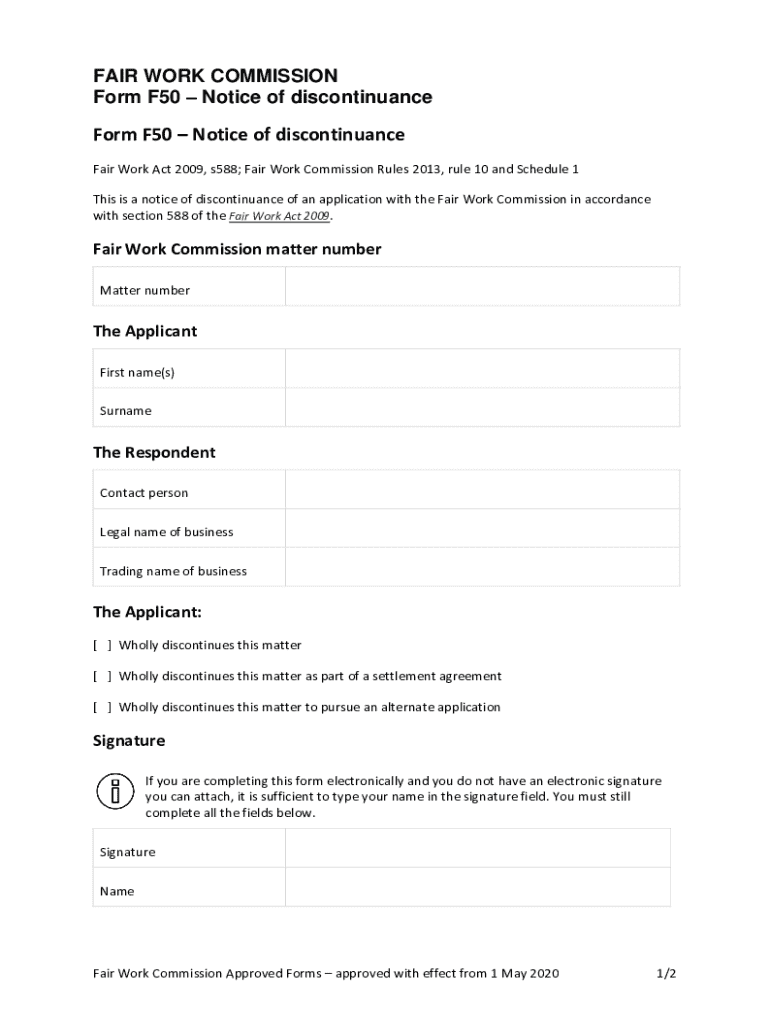
The Form F50 Discontinuance is a legal document used within the Australian employment law framework, specifically when engaging with the Fair Work Commission. It serves the purpose of officially terminating an ongoing application or matter before the commission. This action might arise from a variety of reasons, such as a change in circumstances, resolution of the dispute outside the commission, or a strategic decision by the applicant.
Steps to Complete the Form F50 Discontinuance
- Acquire the Form: Start by obtaining the official Form F50 document. This can typically be downloaded from the Fair Work Commission's website.
- Applicant's Details: Enter personal or organizational information, such as your full name, address, and any reference numbers related to your case.
- Reason for Discontinuance: Clearly state the reason for discontinuing your application. This could include reasons like mutual settlement or procedural errors.
- Signature and Date: The applicant must sign and date the form to authenticate the intention to discontinue. In cases where legal or organizational representation is involved, additional signatures may be required.
- Lodging the Form: Submit the completed form to the Fair Work Commission. This can often be done through email, physical mail, or directly via the commission's online portal.
Why Should You Use Form F50 Discontinuance
Using the Form F50 Discontinuance is crucial for formally withdrawing from a legal proceeding in the Fair Work Commission. This step ensures that your case is officially closed, preventing any further legal action or administrative processes that may arise from an unresolved application. It allows both parties to formally recognize the end of the dispute and public record of the matter.
Who Typically Uses the Form F50 Discontinuance
This form is predominantly used by applicants engaged in legal disputes or claims with the Fair Work Commission. Typical users include employers, employees, or their legal representatives involved in cases related to workplace disputes, unfair dismissal claims, or enterprise bargaining agreements. Legal consultants or HR professionals may also use this form as part of their service to clients undergoing such proceedings.


Important Terms Related to Form F50 Discontinuance
- Applicant: The person or party who initiated the proceedings before the Fair Work Commission.
- Respondent: The party against whom the application was originally made.
- Discontinuance: The formal termination of the legal process initiated by the applicant.
- Notice: An official written communication of intent to discontinue the application.
Legal Use of the Form F50 Discontinuance
Filing a Form F50 is a legally recognized method of terminating proceedings with the Fair Work Commission. It adheres to the procedural requirements defined by the commission and must be completed accurately to ensure legal validity. Non-compliance or inaccurate filing of this form can result in continued legal obligations or administrative follow-up.
Required Documents
When completing the Form F50, it is essential to have the related case documentation handy, such as:
- Initial Application: Reference to the original filing document can guide accurate withdrawal details.
- Previous Correspondence: Any communications that discuss or support the reason for discontinuance may be helpful.
- Negotiation Records: Documentation of any settlements or agreements reached that influenced the decision to discontinue.
Form Submission Methods (Online / Mail / In-Person)
- Online: The most efficient method involves submitting the form via the Fair Work Commission's online portal.
- Mail: Physical copies can be sent to the commission's designated mailing address, ensuring that certified or registered mail options are used for tracking purposes.
- In-Person: Direct submission to the commission's office is possible, allowing for immediate clarification or amendments if needed.
Penalties for Non-Compliance
Failing to properly file a Form F50 when intending to discontinue proceedings can lead to:
- Continued Legal Obligations: The case remains active, potentially resulting in unwanted legal actions or decisions.
- Financial Implications: Legal costs and other expenses may accrue if the commission continues handling the case.
- Administrative Burden: Both parties might face ongoing administrative requirements linked to the unresolved case.
Digital vs. Paper Version
The Fair Work Commission facilitates access to both digital and paper versions of the Form F50. Selecting the digital version streamlines the process, allowing faster submission through electronic means. However, some parties may prefer paper versions for tangible record-keeping or where digital access is limited. Digital submissions are preferred to expedite processing and minimize delays.




