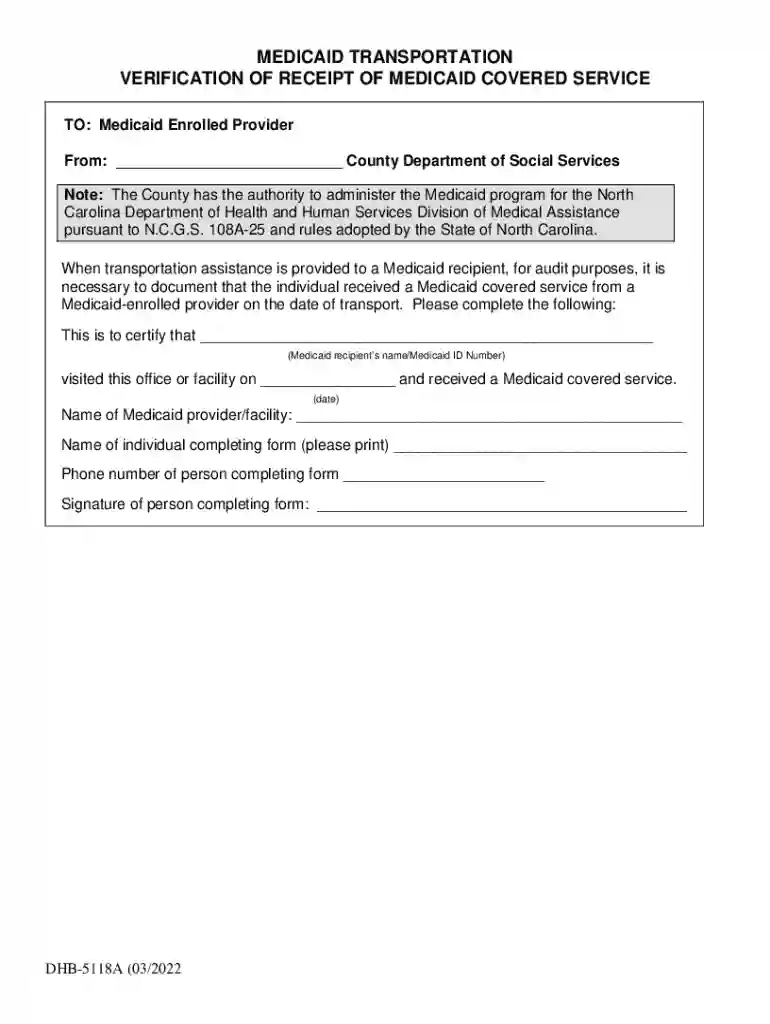
Definition and Purpose of DMA-5118A Form
The DMA-5118A form, known as the Medicaid Transportation Verification of Receipt of Covered Service A, serves a critical function in ensuring that Medicaid transport assistance was utilized correctly. It provides a verification mechanism for confirming that Medicaid recipients received a covered medical service on a specific date. This form is essential for audit purposes, as it records the recipient details, service date, and Medicaid provider's certification that the service was delivered.
Key Elements of the Form
- Recipient Details: Includes the Medicaid recipient's name, address, and identification number.
- Service Information: Details the type of medical service received and the date it was provided.
- Provider Certification: Requires the Medicaid service provider's signature and credentials to certify that the service was indeed performed.
- Transportation Details: Captures information about the transportation service used, facilitating tracking and verification.
How to Properly Use the DMA-5118A Form
Using the DMA-5118A form involves a few structured steps to ensure compliance and accurate record-keeping.
- Collect Recipient Information: Start by detailing the Medicaid recipient's information, ensuring it matches records for accuracy.
- Document Service Details: Accurately note the medical service provided, including the specific date of service to avoid discrepancies.
- Complete Provider Certification: The form must be certified by the service provider, who affirms the service was provided.
- Submit the Form: After completion, submit the form according to state-specific guidelines for Medicaid transport services.
Practical Examples
- A Medicaid recipient travels to a scheduled dialysis session. The medical provider completes the DMA-5118A to verify the session occurred.
- An audit requires verification of transportation usage, and the DMA-5118A forms are produced to confirm service dates and provider certifications.
How to Obtain the DMA-5118A Form
The DMA-5118A form can typically be obtained through several channels, each catering to varied user preferences and accessibilities.
- Local Medicaid Office: Physical copies can often be collected in person.
- State Health Department Website: Many states offer digital downloads of forms required for Medicaid processes.
- Healthcare Provider: Some providers may supply the form as part of the service process for convenience.
Steps to Complete the DMA-5118A Form
Filling out the DMA-5118A requires careful attention to detail to ensure accuracy and compliance. Here's a step-by-step guide:
- Gather Required Information: Ensure all recipient, provider, and service information is readily available.
- Complete Recipient Data: Fill in the recipient's name, Medicaid ID, and other personal information.
- Input Service Date and Details: Clearly specify the date and details of the service received.
- Provider Certification: Have the service provider certify the form with a signature and date.
- Review for Accuracy: Double-check the form for any missing or incorrect information before submission.
- Submit According to Guidelines: Send the form through the preferred submission method, whether online, mail, or in-person.
Importance and Benefits of the DMA-5118A Form
Completing and submitting the DMA-5118A form yields several significant benefits, contributing to an effective Medicaid service verification system.
- Audit Preparedness: The form creates an audit trail which is essential for verifying that services billed to Medicaid were delivered.
- Compliance Assurance: Helps ensure compliance with Medicaid rules, minimizing the risk of fraudulent claims.
- Resource Allocation: Supports efficient allocation of resources by verifying legitimate service usage.
Key Terms Related to the DMA-5118A Form
Understanding some of the common terms used within the context of the DMA-5118A form can aid in its correct usage and comprehension.
- Medicaid: A federal and state program assisting with medical costs for those with limited resources.
- Verification: The process of confirming that a service claimed as received was indeed provided.
- Audit: An examination of records or financial accounts to check their accuracy.
- Provider Certification: The endorsement by a medical provider that a service was rendered.
Legal Considerations for Using the DMA-5118A Form
Using the DMA-5118A form involves legal obligations, particularly around accurate reporting and data protection. Misuse or inaccuracies can result in penalties.
- Fraud Prevention: Filling the form accurately prevents potential fraudulent claims.
- Data Privacy: Ensure all information on the form is kept secure and confidential, following HIPAA guidelines.
- Compliance: Adhere to state-specific legal requirements when submitting the form to maintain legitimacy and avoid penalties.
Examples and Scenarios of Using the DMA-5118A Form
Real-world scenarios exemplify the critical role of the DMA-5118A form in Medicaid service verification.
- For patients requiring regular medical appointments, such as chemotherapy, the form confirms each visit, assisting in transport cost analysis.
- In a state audit, completed DMA-5118A forms prove that billed services coincide with the verified transportation assistance provided.
State-Specific Rules for the DMA-5118A Form
The rules and guidelines surrounding the DMA-5118A form can vary across different states, reflecting each state's Medicaid policy implementations.
- Submission Deadlines: Be aware of state-specific deadlines for form submission to ensure timely processing.
- Documentation Requirements: Certain states may require additional documentation to accompany the form.
- Approval Processes: Approval timelines and processes can differ, impacting how quickly services are verified and reimbursed.
Submission Methods for the DMA-5118A Form
Submitting the DMA-5118A form can be done through various channels tailored to user convenience and regulatory compliance.
Available Methods
- Online Submission: Some states offer electronic submission options to streamline processes.
- Mail: Traditional mailing remains an option for those not using electronic systems.
Potential Penalties for Non-Compliance
Failure to complete or submit the DMA-5118A form correctly can lead to several repercussions, ranging from service disruptions to legal penalties.
- Reimbursement Delays: Incorrect or late submissions may delay Medicaid reimbursement.
- Legal Ramifications: Non-compliance could result in fines or loss of access to Medicaid services.
Each section aims to provide an in-depth understanding of the DMA-5118A, stripping away jargon while ensuring precision and practical application for users dealing with Medicaid transportation verifications.