






Definition and Meaning of Fannie Mae Form 1202
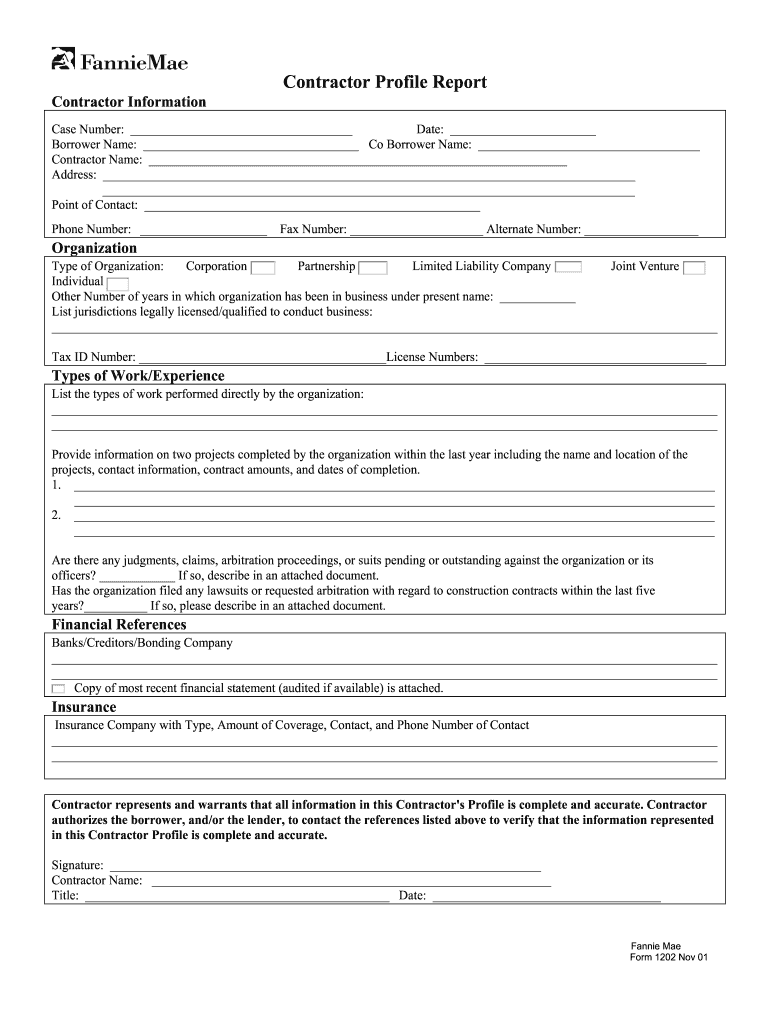
Fannie Mae Form 1202, commonly referred to as the contractor profile report form, is an essential document used in the mortgage industry for borrower assessments, particularly for renovation financing programs such as the HomeStyle and 203k loans. This form allows lenders to collect crucial information about contractors who will undertake renovation or construction work. It serves to ensure that contractors possess the necessary qualifications, experience, and financial stability to execute the renovation work satisfactorily.
The contractor profile typically contains several sections, including contractor information, organizational type, work experience, licensing details, financial references, and insurance coverage. This comprehensive data collection enables lenders to evaluate a contractor's credibility and suitability for a specific project, aiding in risk mitigation for financing.
Key Elements of the Fannie Mae Form 1202
Fannie Mae Form 1202 comprises several critical elements that ensure a thorough evaluation of contractors. Understanding these components is essential for accurate completion and compliance.
- Contractor Information: This section gathers basic details about the contractor, such as name, address, phone number, and email.
- Organizational Type: It categorizes the contractor whether they are an individual, partnership, corporation, or another organizational structure.
- Work Experience: Contractors must provide a summary of their past projects, including types of work performed and completion timelines.
- Financial References: This includes bank references, credit information, and any financial documents that support the contractor's fiscal responsibility.
- Insurance Coverage: Contractors must detail their insurance policies, including general liability and worker's compensation, to confirm they are protected against potential risks during construction.
Understanding these elements helps lenders assess the viability of contractors and the potential success of proposed renovation projects.
Steps to Complete the Fannie Mae Form 1202
Filling out the Fannie Mae Form 1202 requires attention to detail, ensuring all required sections are accurately completed. Following a systematic approach can help streamline the process.
- Gather Necessary Information: Compile all essential contractor details, including licenses, insurance documents, and financial records.
- Fill Out Contractor Information: Enter the contractor’s basic information in the designated fields accurately, as this sets the foundation for the evaluation.
- Specify Organizational Type: Indicate the contractor's business structure, adhering to the definitions provided in the form.
- Detail Work Experience: List previous projects, ensuring descriptions include the type of work, duration, and any applicable references.
- Provide Financial References: Attach the necessary documents and indicate banking information to showcase financial stability.
- Outline Insurance Coverage: Describe the insurance policies held and attach certificates or documentation as required.
- Review and Finalize: Double-check all entries for accuracy and completeness before submitting.
Taking thorough steps during completion enhances the likelihood of approval from the lender and contributes to effective risk management.
Important Terms Related to Fannie Mae Form 1202
Understanding key terminology surrounding Fannie Mae Form 1202 is essential for both contractors and lenders. The following terms are frequently encountered:
- Contractor Profile: A detailed representation of a contractor's qualifications, experience, and financial standings as submitted in Form 1202.
- HomeStyle Loan: A Fannie Mae mortgage program that allows for home renovations to be financed as part of the mortgage.
- 203k Loan: A government-backed loan for home purchases that also covers renovation costs, requiring the completion of Form 1202 for contractor assessments.
- Liability Insurance: Insurance that protects contractors against claims resulting from accidents or injuries that occur during the course of their work.
- General Contractor: A contractor responsible for overseeing construction projects and managing any subcontractors involved in the work.
Familiarity with these terms aids in effective communication among parties involved and enhances understanding when discussing the form and its implications.
Who Typically Uses the Fannie Mae Form 1202
Fannie Mae Form 1202 is primarily utilized by various stakeholders involved in the home renovation financing process.
- Lenders: Mortgage lenders require this form to assess the qualifications of contractors headlining renovation projects, enabling informed lending decisions.
- Borrowers: Homeowners seeking renovation loans must ensure their contractors complete the form to comply with mortgage requirements.
- Contractors: Service providers often complete this form to supply potential lenders with proof of their credentials and financial stability, ultimately enhancing their marketability.
- Real Estate Professionals: Agents and brokers involve this information in facilitating renovation-related transactions, ensuring that clients are connected with qualified contractors.
Recognizing who uses this form underscores its significance in fostering trust and transparency in renovation financing.


Legal Use of the Fannie Mae Form 1202
The legal use of Fannie Mae Form 1202 is critical for compliance with federal lending regulations. Adhering to the guidelines ensures that lenders maintain proper documentation, thus protecting both lenders and borrowers during the mortgage process.
- Adherence to Regulations: The completion of Form 1202 helps lenders comply with Fannie Mae guidelines, ensuring that only qualified contractors are hired for renovation projects.
- Risk Mitigation: By documenting contractors' credentials and financial profiles, lenders minimize potential risks associated with financing renovation work.
- Legal Validity: The form provides a structured means of collecting relevant contractor data, which can be valuable in case of disputes or claims related to renovation performance or contract adherence.
Utilizing the form legally supports the creation of a secure, regulated lending environment, contributing to the overall integrity of the mortgage system.