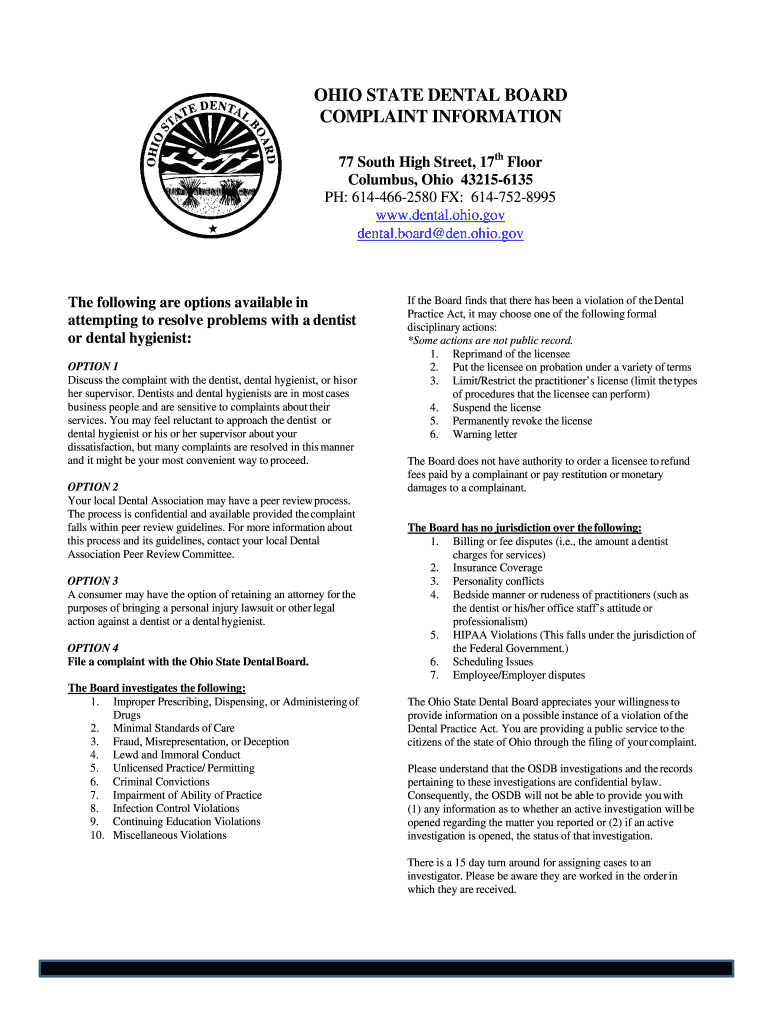







Understanding "Attempting to Resolve Problems with a Dentist"
When considering how to address challenges with a dental professional, it's important to understand the nuances and mechanisms available for resolution. This form serves as a guiding document to explore pathways for resolving issues effectively and efficiently.
How to Use the Form
The form titled "Attempting to Resolve Problems with a Dentist" can serve as a structured approach to navigate any grievances you may have with your dentist. The form helps in ensuring that all necessary steps are followed, leading to a clear pathway to resolve the issue.
Steps to Effectively Use the Form
- Identify the Issue: Clearly articulate the problem or grievance you are facing with the dentist. This clarity is crucial for taking the right steps toward resolution.
- Explore Resolution Options: Understand the different ways to approach resolution, which may include speaking directly to the dentist or seeking mediation through a dental association.
- Document Everything: Keep a detailed record of all communications and actions taken. This will be beneficial if the issue requires escalation.
- Proceed with Filing a Formal Complaint: If necessary, use the form to file an official complaint with the appropriate dental board or regulatory body.
Importance of Attempting to Resolve Problems with a Dentist
Attempting to resolve problems with a dentist is crucial for maintaining trust and ensuring quality dental care. Addressing issues can lead to better communication and understanding between the patient and the dentist.
Benefits of Resolution
- Improved Service: Resolving conflicts can lead to enhancements in service delivery by the dental practice.
- Prevention of Future Issues: By addressing problems, both dentists and patients can prevent similar issues from recurring.
- Legal Compliance: Following a structured resolution process helps ensure that all actions are in line with legal and regulatory standards.
Key Elements of the Form
Understanding the components of the form can optimize its use for effective resolution.
Essential Sections
- Contact Information: Ensure all personal and dental practice details are correctly filled.
- Description of Issue: Provide a comprehensive overview of the problem encountered.
- Desired Resolution: Clearly state what outcome or resolution you are seeking.
State-Specific Considerations
The form may have variations or specific requirements that differ by state. Be aware of these to ensure complete compliance.
Example: Ohio
In Ohio, the board investigates certain types of violations and offers specific guidelines for submission and resolution. Understanding these can be critical in maximizing the efficiency of the resolution process.
Legal Use and Compliance
Understanding the legality associated with filing a complaint against a dentist, including what falls within or outside the jurisdiction of dental boards, is fundamental for the effective use of the form.
Non-Jurisdictional Issues
Not all complaints are within the scope of a dental board’s authority. Issues such as general dissatisfaction without a breach of conduct may not be addressed by the board.
Digital vs. Paper Versions
Consider the benefits and limitations of using digital versus paper formats of the form.
Advantages of Digital Submission
- Efficiency: Digital forms can be filled and submitted quickly.
- Tracking: An electronic submission often comes with a tracking or confirmation system.
- Environmentally Friendly: Reduces paper usage and is more sustainable.
Who Typically Uses the Form
Different groups might utilize this form for resolving dental issues, including but not limited to patients, healthcare advocates, or legal representatives.


Common Users
- Patients: Primary users who directly experience issues with dental services.
- Legal Professionals: May use the form when assisting clients in legal claims or actions against a dentist.
- Consumer Advocacy Groups: Help individuals understand and navigate the process.
By thoroughly understanding and applying the information provided in the form, stakeholders can efficiently address and resolve disputes with dentists in a structured and effective manner.