
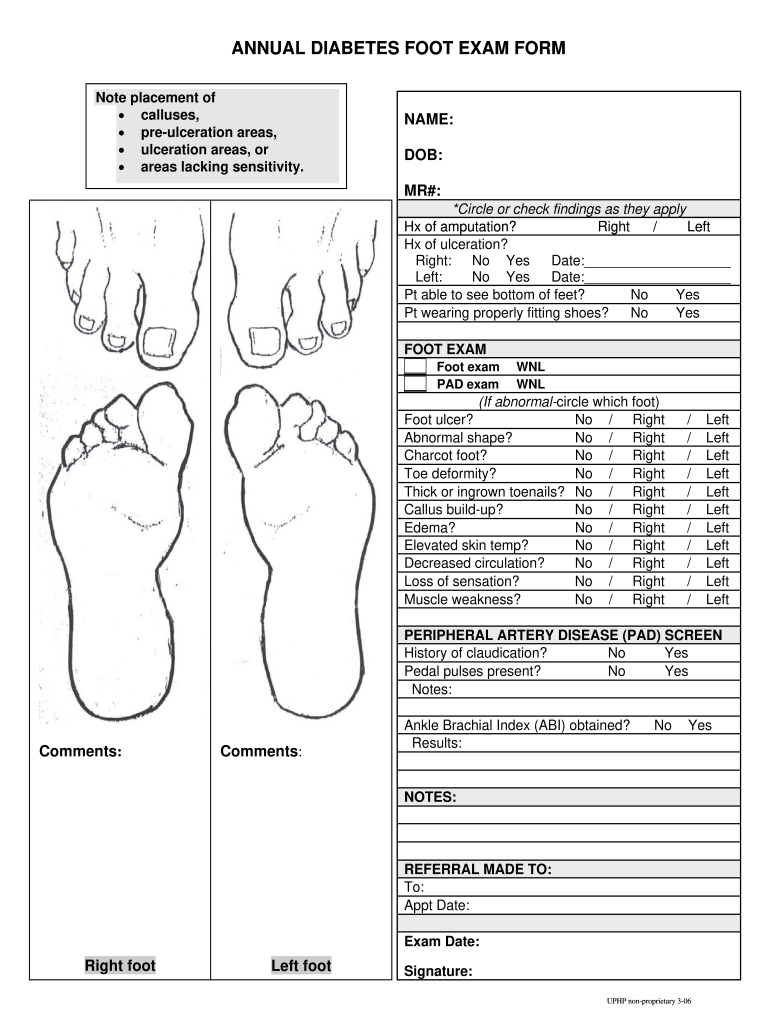







Components of a Diabetic Foot Exam Form
The diabetic foot exam form is a crucial tool for assessing foot health in patients with diabetes. It is designed to capture key information that aids in diagnosing foot-related complications, ensuring effective patient management and care.
Patient Information Section
This section collects essential demographic details about the patient, including:
- Name, age, and gender: Basic identifying information is critical for record-keeping and personalizing care.
- Medical history: Space for documenting prior foot complications, treatments, and related health issues that may affect foot health.
- Current medications: Listing current medications helps in understanding potential side effects or interactions that could impact foot conditions.
History of Foot Conditions
The history of foot conditions contributes to evaluating risk factors for diabetes-related complications. This includes:
- Amputations: Documenting any history of amputations allows healthcare providers to assess the severity of previous foot complications.
- Ulcerations: Recording past ulcerations is vital, as a history of ulcers increases the risk for future foot problems.
- Circulation issues: Gathering information on previous diagnoses of vascular conditions that may affect circulation to the feet helps gauge risk levels.
Physical Examination Findings
This section focuses on documenting the results of the physical examination of the feet. Key components include:
- Visual inspection: Observations related to skin condition, calluses, and any ulcers. Detailed notes regarding the appearance aid in identifying issues early.
- Monofilament test results: This standardized test assesses the sensation in patients’ feet and is essential for detecting neuropathy. Accurate documentation is crucial for tracking changes over time.
- Pulses and temperature: Assessing the dorsalis pedis and posterior tibial pulses, as well as the temperature of the feet, helps evaluate vascular health.
Assessment of Peripheral Artery Disease (PAD)
Identifying the presence of peripheral artery disease is critical in diabetic patients due to the heightened risk of complications. This section typically includes:
- Ankle–brachial index testing: Documenting results from this test can indicate circulation and vascular health, providing important prognostic information.
- Risk factors: Including data on tobacco use, hypertension, and hyperlipidemia, as these significantly impact foot health and overall cardiovascular risk.
Recommended Interventions and Care Plan
A comprehensive diabetic foot exam form typically outlines recommendations based on examination findings. This includes:
- Referrals: Identifying when to refer to specialists, such as podiatrists or endocrinologists, based on examination results.
- Preventative care measures: Recommending proper foot hygiene, appropriate footwear, and daily foot inspections to reduce the risk of complications.
- Patient education: Documenting the educational resources provided to the patient regarding foot care to promote understanding and compliance.
Follow-Up and Documentation
Regular follow-up is essential for managing foot health in diabetic patients. This section may have:
- Scheduled follow-up appointments: Encouraging routine examinations and monitoring of at-risk patients is crucial for early detection of problems.
- Documentation of patient compliance: Noting how well a patient follows through with recommended care and education ties back to their health outcomes and informs future management strategies.
Regulatory and Insurance Considerations
Certain policies dictate the structure and detailed requirements of the diabetic foot exam form in the U.S. For instance:
- Medicare's coverage criteria: Understanding the specific requirements for reimbursement can guide the completion of the form.
- Insurance documentation standards: Adhering to these standards ensures proper claims processing and supports access to care.
Digital Formats and Accessibility
Utilizing a digital format for the diabetic foot exam form can enhance efficiency and accessibility. Considerations include:
- PDF accessibility: Creating fillable diabetic foot exam documentation in PDF format allows for easy sharing and completion by patients and healthcare providers.
- Integration with electronic health records (EHRs): Ensuring that the form can be integrated into EHR systems streamlines patient data management.
By utilizing this comprehensive and structured approach to the diabetic foot exam form, healthcare providers can facilitate better patient outcomes and enhance the understanding of diabetic-related foot issues.