




01. Edit your orec forms online
Type text, add images, blackout confidential details, add comments, highlights and more.

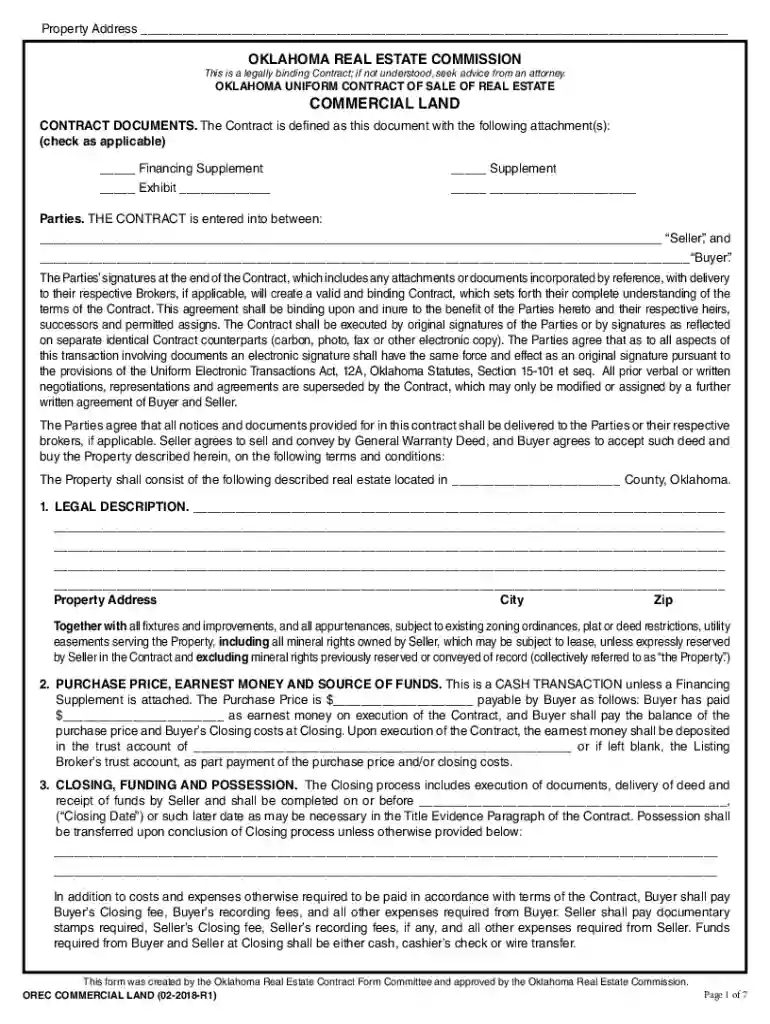
Type text, add images, blackout confidential details, add comments, highlights and more.

Draw your signature, type it, upload its image, or use your mobile device as a signature pad.

Send orec via email, link, or fax. You can also download it, export it or print it out.
The Oklahoma Real Estate Commission (OREC) forms are standardized contractual documents used within the real estate industry in Oklahoma. These forms facilitate the negotiation and sale of real estate properties, ensuring that both buyers and sellers operate under consistent terms and conditions. They are commonly used in transactions involving various property types, such as residential, commercial, and vacant land. Using these standardized forms helps prevent misunderstandings and disputes by clearly outlining the rights and responsibilities of all parties involved.
OREC forms include several critical sections that ensure a seamless real estate transaction. Important components are:
Completing OREC forms requires meticulous attention to detail:
OREC forms are legally binding documents once all parties involved sign them. They serve as an official record of the real estate transaction and detail each party's rights and responsibilities. It is crucial for both buyers and sellers to understand the implications of the form before signing, as failure to comply with any section could result in legal consequences. These forms also align with state-specific real estate laws, ensuring compliance with Oklahoma regulations.
Several terms repeatedly appear in OREC forms and are key to understanding their use:
OREC forms are specifically designed to comply with Oklahoma state laws governing real estate transactions. They integrate state-specific rules that might not be applicable in other jurisdictions. For example, Oklahoma law may have unique stipulations regarding disclosure requirements, earnest money handling, or title insurance specifics. Utilizing these forms ensures that all transactions are conducted within the framework of state legal standards.
Using OREC forms involves several straightforward steps:
OREC forms are readily available online and can be accessed by visiting the Oklahoma Real Estate Commission's official website. Licensed real estate agents often provide these forms, ensuring they are the latest approved versions. You may also access them through various real estate platforms that offer a suite of tools for document management. It's crucial to verify that you're using current versions to ensure compliance with any updates in state regulations.
OREC forms are predominantly used by real estate agents, brokers, buyers, and sellers involved in property transactions in Oklahoma. Real estate professionals rely on these forms to provide clients with secure, standardized agreements. While primarily used in professional transactions, individuals conducting private sales may also utilize these forms to ensure their sale adheres to state regulations and to streamline the process.


To facilitate a smooth real estate transaction using OREC forms:
We've got more versions of the orec forms form. Select the right orec forms version from the list and start editing it straight away!
Approving documents on a mobile device is fast, easy, and doesn’t require software installation if you have an account with DocHub. Log in from any browser, fill in your blank fields with your data, and click on Sign → Create your signature. You can draw your electronic signature the same way you usually do on paper, add its image to your orec supplement, or type in your name and stylize its look. Whatever option you select, your document will be valid.
You can easily edit fill out your orec forms on any iOS gadget. Open an internet browser of your choice, visit the DocHub website, authorize or create a new account, upload your file for editing, and make your required adjustments. Our service is mobile-friendly, so utilizing its features on your smartphone will be a no-brainer, even on the first try.
At DocHub, your data security is our priority. We follow HIPAA, SOC2, GDPR, and other standards, so you can work on your documents with confidence.
Browse Forms: Residential Sale And Related Documents Financing Supplements Homeowner | Condo | Townhouse Associations help@orec.ok.gov (405) - 521 - 3387
OREC programs and committees aim to enhance compliance, integrity, and Forms Templates Guidelines Procedures HRPP Toolkit Research MisconductRead more


