







Understanding the Purpose and Significance of Form 8915-E
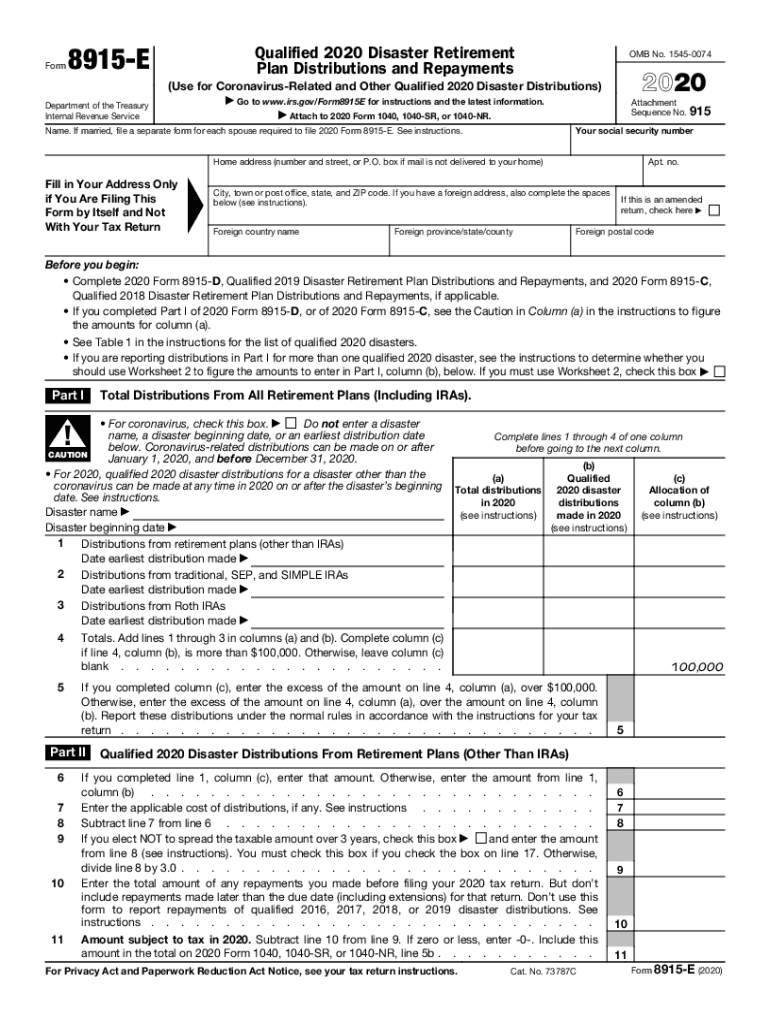
Form 8915-E plays a crucial role in reporting qualified retirement plan distributions and repayments under specific disaster-related circumstances, such as those arising in 2020 due to events like the coronavirus pandemic. It serves as a means for taxpayers to correctly document these distributions on their tax returns, ensuring compliance with IRS requirements and legal standards. The form's utility extends to managing various types of retirement accounts, providing taxpayers with the guidance necessary to navigate complex financial and legal implications stemming from disaster-driven withdrawals.
How to Use Form 8915-E for Tax Reporting
To effectively utilize Form 8915-E, individuals must first determine whether their retirement plan distributions are related to a qualifying disaster. The form is specifically designated for capturing information about distributions that occurred in the designated 2020 disaster period. Taxpayers must report the relevant dates, amounts, and descriptions of their distributions accurately. By using Form 8915-E, they ensure that such distributions are tracked correctly, potentially impacting taxable income and allowing for eligible repayment options.
Obtaining Form 8915-E
Form 8915-E can be acquired through several convenient methods. The IRS website is a primary source where taxpayers can download the most recent version of the form, along with instructions on how to fill it out. Additionally, tax preparation software often integrates IRS forms, including Form 8915-E, allowing for a seamless experience when preparing taxes electronically. Alternatively, the form may also be available through professional tax advisors who assist taxpayers in obtaining and completing the necessary documentation.
Steps to Complete Form 8915-E
- Enter Personal Information: Start by filling in your personal information, such as your name, Social Security Number (SSN), and other identifying details.
- Provide Distribution Details: Accurately report all qualifying distributions from your retirement account, documenting the gross distribution amounts and the specific reasons for these withdrawals.
- Calculate and Report: Use the form to compute the portion of the distribution that needs to be included in current year income, ensuring compliance with applicable tax laws.
- Indicate Repayment Information: If any amounts have been repaid to the retirement account, record these transactions for accurate reporting.
- Review IRS Guidelines: Make sure all information aligns with IRS guidelines to avoid errors and possible penalties.
Key Elements of Form 8915-E
Form 8915-E includes several crucial components that warrant close attention:
- Individual Identification: This section captures detailed personal information and serves as a critical identifier.
- Disaster Information: Taxpayers must specify the disaster that warranted their retirement distribution.
- Income Impact: The form calculates how the distributions affect taxable income, crucial for determining tax liability.
- Repayment and Benefits: Sections dedicated to repayments help taxpayers understand the benefits of restoring withdrawn amounts under designated timelines.
Important IRS Guidelines for Form 8915-E
It's imperative to adhere to specific IRS guidelines when completing Form 8915-E. The IRS provides comprehensive instructions detailing eligibility criteria, acceptable types of retirement accounts, and disaster designations. These guidelines ensure the correct application of tax relief measures associated with disaster withdrawals. Staying informed of these directives guarantees adherence to legal standards and can potentially mitigate undue financial burdens on taxpayers.
Filing Deadlines and Crucial Dates
Filing deadlines associated with Form 8915-E typically align with the annual tax return deadline, which is usually April 15th of the following year. However, it's important for taxpayers to verify specific deadlines as they can occasionally shift due to IRS extensions or unique circumstances. Timely submission is vital to avoid penalties and to capitalize on any benefits associated with qualified disaster-related distributions.
Required Documentation for Form 8915-E
To complete Form 8915-E accurately, taxpayers must gather all relevant documentation, which generally includes:
- Statements from retirement accounts detailing the distribution transactions.
- Evidence of the qualifying disaster, which could encompass official government declarations or correspondence confirming disaster status.
- Records of any repayments made back into retirement accounts to offset the distributions.
Electronic Submission and Compatibility with Tax Software
Form 8915-E can be submitted electronically through the IRS’s e-file system or using compatible tax software like TurboTax and QuickBooks. These platforms provide intuitive interfaces that guide taxpayers through the form completion process, ensuring accuracy and compliance. Electronic submission is often preferred due to its convenience, security, and quicker processing times.
By understanding the comprehensive details and requirements of Form 8915-E, taxpayers can navigate the complex landscape of disaster-related retirement distributions with assurance and compliance.




