Definition & Meaning
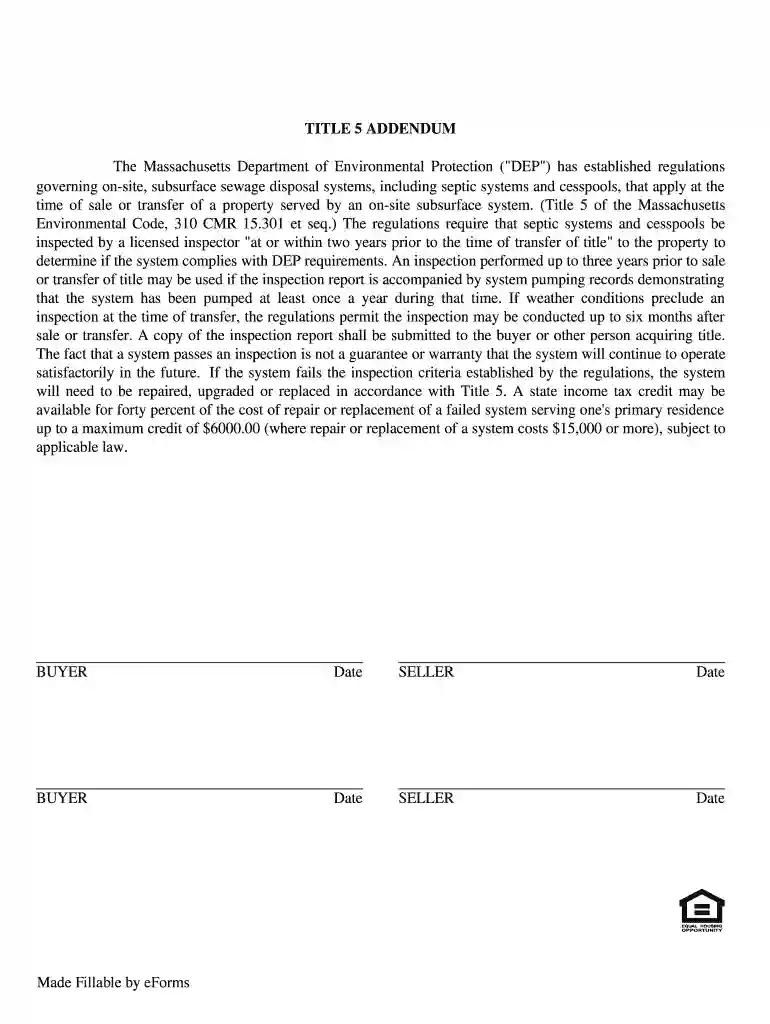
The "Septic Systems & Title 5Mass.gov" is a regulation under the Massachusetts Department of Environmental Protection (MassDEP) focused on the oversight and management of on-site subsurface sewage disposal systems—primarily septic systems and cesspools. This regulation serves to ensure that these systems are adequately inspected before property transfers to prevent public health hazards and environmental impacts. The directive covers various aspects of septic system operations, from installation to maintenance, with specific attention to systems’ inspections during property transactions.
Key Components
- Inspections: Inspection is a major component, required within two years before property sale. If a sale is delayed, an inspection validity can extend up to three years with proper pumping records.
- Conditions for Inspection Delay: In some cases, weather conditions may delay inspections, which can then occur within six months post-transfer.
- Income Tax Credits: Property owners may qualify for state income tax credits for repairs or replacements of systems that do not meet the passing criteria.
How to Use the Septic Systems & Title 5Mass.gov
Understanding how to navigate and utilize the Title 5 regulations is vital for property owners, buyers, and real estate professionals. The process involves identifying the need for an inspection, scheduling it within the specified timeline, and ensuring compliance with all regulatory requirements.
Practical Steps
- Identify Required Inspections: Determine if a Title 5 inspection is needed for your property, especially if you plan to sell or transfer ownership.
- Schedule Inspections Promptly: Arrange for a licensed inspector to evaluate the septic system within the required timeframe.
- Review Inspection Results: Use the inspection report to make informed decisions about necessary repairs or upgrades.
- File Records: Maintain all inspection documents for personal records and compliance verification.
Steps to Complete the Septic Systems & Title 5Mass.gov
Completing the requirements of "Septic Systems & Title 5Mass.gov" involves a methodical process that ensures compliance with Massachusetts state regulations. These steps are crucial for property transactions involving septic systems.
Detailed Procedure
- Property Evaluation: Conduct an initial evaluation to ascertain whether the property’s septic system falls under the regulatory requirements.
- Select a Licensed Inspector: Choose a qualified, state-approved professional to carry out the inspection.
- Perform Inspection: Facilitate the on-site inspection of the septic system, checking for structural integrity, proper functioning, and regulatory compliance.
- Analyze Report: Receive and carefully review the inspection report for any issues or areas needing improvement.
- Address Deficiencies: Implement necessary repairs or replacements if the system fails inspection. Ensure work is done by accredited professionals to qualify for potential tax credits.
- Reinspection & Final Filing: If corrections are made, a re-evaluation may be necessary. File all final reports with the relevant state authorities.
Who Typically Uses the Septic Systems & Title 5Mass.gov
The Title 5 regulations primarily apply to various stakeholders involved in property transactions that feature septic systems. This includes homeowners, potential buyers, real estate agents, and legal professionals, each playing a critical role in ensuring compliance.

Stakeholder Roles
- Homeowners/Sellers: Responsible for arranging inspections and addressing any system deficiencies before selling.
- Buyers: Need to verify the validity and results of inspections as part of their due diligence.
- Real Estate Professionals: Facilitate the inspection process and help navigate Title 5 requirements for their clients.
- Legal Advisors: Offer guidance on compliance and assist in understanding legal ramifications.
Important Terms Related to Septic Systems & Title 5Mass.gov
Understanding the technical jargon associated with Title 5 can bolster compliance and streamline the inspection process. Here are crucial terms associated with this regulation.
Glossary of Terms
- Title 5 Inspection: An evaluation of a septic system’s condition, carried out by a licensed professional to determine functionality and compliance.
- Cesspool: An older, less efficient form of sewage disposal that may require replacement under Title 5.
- Subsurface Sewage Disposal System: Any system for disposing residential or commercial sewage below the ground surface.
- Pumping Records: Documentation proving septic system maintenance, necessary to extend inspection validity.
Key Elements of the Septic Systems & Title 5Mass.gov
Several vital elements underpin the Septic Systems regulations in Massachusetts, defining compliance and the scope of application.
Core Elements
- Subsurface System Standards: Ensures all new and existing systems meet specific operational standards designed to protect the environment and public health.
- Inspection Timing & Validity: Determines the specific timeframe for completing an inspection relative to a property transaction.
- Failure Protocol: Outlines steps for handling failing systems, including repair timelines, reinspection processes, and available financial benefits.
- Documentation Requirements: Mandates comprehensive documentation to maintain regulatory compliance and facilitates smoother transactions.
Legal Use of the Septic Systems & Title 5Mass.gov
Compliance with the legal aspects of Title 5 involves adhering to the structured guidelines set forth by Massachusetts law. The regulation's application spans across various legal scenarios associated with property sales.
Legal Considerations
- Regulatory Compliance: All septic system inspections must align with MassDEP’s defined legal standards.
- Property Transfers: Legal requirements stipulate a valid Title 5 inspection report before transferring property ownership.
- Liability Coverage: Ensures that any future liability related to septic system malfunctions is mitigated through thorough legal compliance.
State-Specific Rules for the Septic Systems & Title 5Mass.gov
The rules and regulations regarding septic systems can differ from state to state, making it crucial for stakeholders in Massachusetts to understand the particular nuances of Title 5.
Massachusetts-Specific Regulations
- Weather Exceptions: Massachusetts provides specific allowances for inspections delayed due to weather, emphasizing the state’s commitment to practical flexibility.
- Income Tax Benefit: Unique to Massachusetts is the potential tax incentive for repairing failing systems, encouraging compliance and system improvements.
- Regulatory Oversight: Massachusetts enforces stringent oversight through dedicated agencies, ensuring systemic adherence to environmental health standards.