
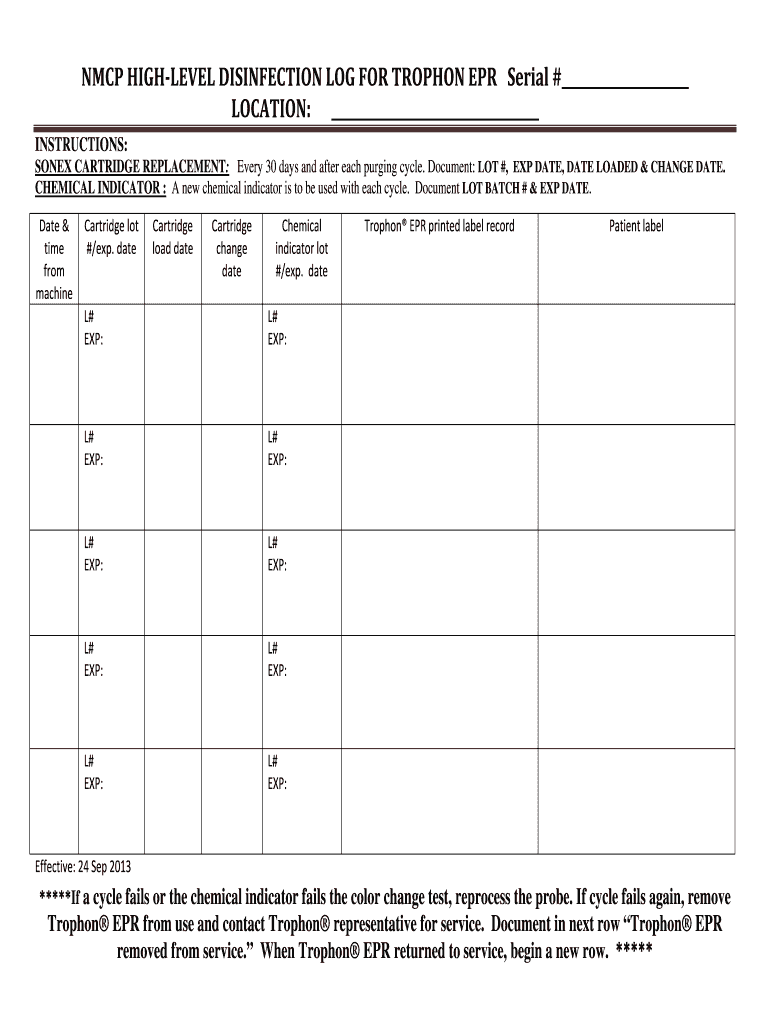







Definition and Meaning of the Trophon Log Sheet
The trophon log sheet is a critical document used in healthcare settings, specifically for tracking the high-level disinfection processes involving the Trophon EPR system. This log sheet serves as an official record, ensuring compliance with safety and sanitation protocols outlined by industry standards. It typically includes details such as the dates when disinfection cycles were performed, the lot numbers and expiration dates of used cartridges, and any incidents of failure in the disinfection process.
The primary purpose of the trophon log sheet is to provide a clear audit trail that helps healthcare facilities maintain safe practices in the reprocessing of medical devices. Recording these details is essential for regulatory compliance and helps in maintaining quality control within healthcare environments. Accurate logging ensures devices are safe for patient use, and any audits or inspections can be addressed promptly.
Importance of Effective Usage
Consistent usage of the trophon log sheet improves patient safety by ensuring all disinfection processes are properly documented. It greatly aids in identifying trends or issues in the disinfection cycles, enabling staff to respond proactively to potential problems.
How to Use the Trophon Log Sheet
Using the trophon log sheet effectively involves a series of steps:
- Familiarize with the Layout: Understand the different sections of the log sheet, including areas for dates, lot numbers, and chemical indicators.
- Document Each Cycle: After each disinfection cycle, record the cycle completion date, any relevant lot numbers, and the results of chemical indicators. Every entry should be accurate and immediate to ensure reliability.
- Track Changes: If a cartridge is replaced or there are any deviations from standard procedures, note these changes clearly. This is important for troubleshooting and accountability.
- Regular Reviews: Periodically review the log sheet for completeness and accuracy. This includes verifying that all entries are filled out and conform to established protocols.
Using Technology for Efficiency
Some facilities may opt for digital solutions, such as electronic log sheets, to enhance efficiency. These solutions often come with built-in reminders and validation checks to ensure compliance with disinfection protocols.
Steps to Complete the Trophon Log Sheet
Completing the trophon log sheet involves following specific steps to ensure all necessary information is recorded:
-
Preparation Before Use:
- Ensure that the Trophon EPR system is in good working order and ready for use.
- Gather necessary materials, including the log sheet and the Trophon cartridge.
-
Documenting Cycle Details:
- Upon starting the disinfection cycle, note the date and time of initiation on the log sheet.
- After the cycle is completed, record the completion date and verify that the chemical indicator has reacted as expected.
-
Lot and Expiration Tracking:
- Enter the lot number and expiration date of the cartridge used for this cycle. This information is vital in case of recalls or quality control checks.
-
Notes on Anomalies:
- If there were any errors, such as a failed cycle or a need to reprocess a probe, document these events immediately. Include any corrective actions taken.
-
Finalization:
- At the end of the day or week, ensure that all entries are complete and signed off by the appropriate personnel.
Different Formats and Accessibility
The trophon log sheet may be available in both printable and digital formats. Facilities should choose the format that best suits their operational needs while ensuring compliance with security standards.
Key Elements of the Trophon Log Sheet
Understanding the key elements of the trophon log sheet aids in effective documentation and compliance:
- Cycle Date: Essential for tracking when each disinfection occurred.
- Lot Number: Helps to identify the specific cartridge used, supporting traceability.
- Expiration Date: Ensures that only valid cartridges are used, which is crucial for maintaining compliance with safety regulations.
- Chemical Indicators: Documenting the results for each cycle is important, as it reflects the effectiveness of the disinfection process.
- Signature of Responsible Personnel: Ensures accountability and integrity in the documentation process.
Compliance and Regulatory Standards
Compliance with state and federal regulations often mandates stringent record-keeping practices for medical device reprocessing. The trophon log sheet serves as a tangible record to demonstrate adherence to these standards, safeguarding patient safety and the integrity of healthcare practices.
Important Terms Related to the Trophon Log Sheet
Familiarizing staff with key terminology associated with the trophon log sheet can enhance understanding and compliance:
- Trophon EPR: The system used for high-level disinfection of medical devices.
- High-Level Disinfection (HLD): A validated process that eliminates all microorganisms except large numbers of bacterial spores.
- Sonex Cartridge: A key component used within the Trophon system that requires regular replacement.
- Chemical Indicator: A device used to monitor physical conditions during the sterilization process, indicating whether conditions for decontamination were met.
Importance of Training
Ongoing training for healthcare staff on the use of the trophon log sheet and associated terms is crucial. Regular training sessions can reinforce the importance of accurate documentation in maintaining compliance and ensuring patient safety.




