




01. Edit your form online
Type text, add images, blackout confidential details, add comments, highlights and more.

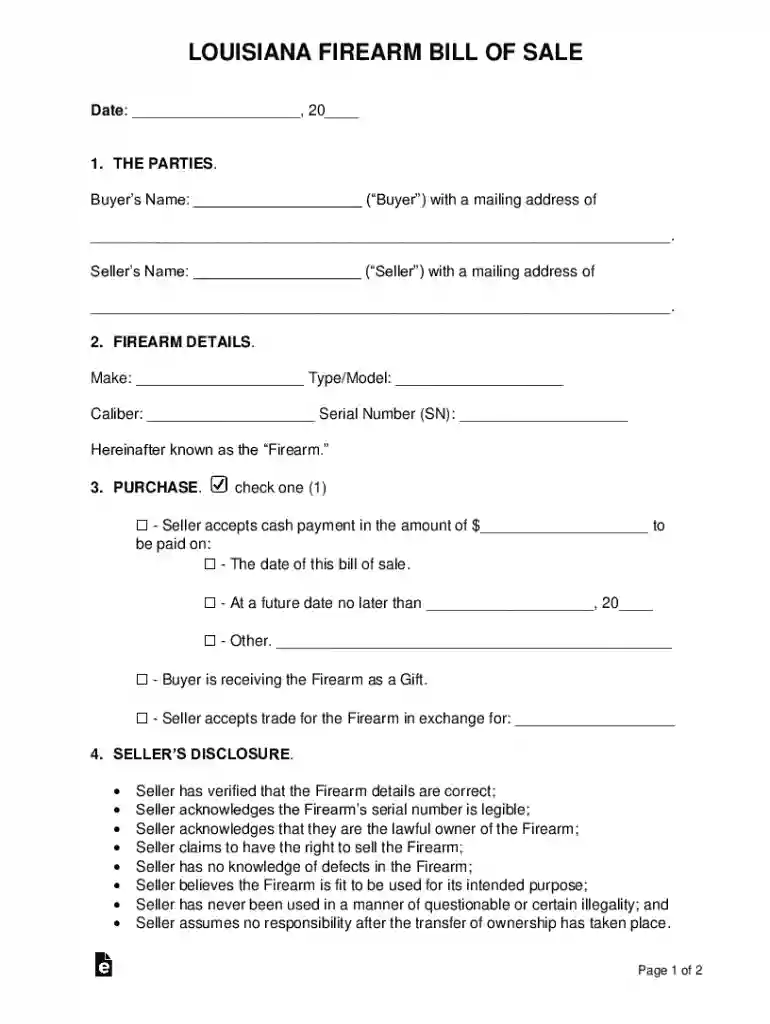
Type text, add images, blackout confidential details, add comments, highlights and more.

Draw your signature, type it, upload its image, or use your mobile device as a signature pad.

Send it via email, link, or fax. You can also download it, export it or print it out.
A Bill of Sale is a legal document that records the transfer of ownership of goods from one party to another. It serves as proof of transaction and outlines the details of the sale agreement. The "Free Bill of Sale Forms - WordPDFeForms" helps individuals and businesses in the United States create these documents efficiently. This form is particularly useful for transactions involving personal property such as vehicles, boats, or firearms, where clear documentation of the terms is crucial for both the buyer and seller.
Having a clear understanding of what a Bill of Sale entails ensures compliance and protects the interests of the involved parties.
The form comprises several critical elements that ensure it captures all necessary information for a legal transfer of ownership:
A thorough completion of these sections ensures that there is a mutual understanding and agreement on the sale particulars.
Completing a Bill of Sale form correctly is fundamental to its validity. Here is a step-by-step guide on how to complete the document:
These steps streamline the process, minimizing errors and reducing the likelihood of disputes.
The Bill of Sale plays a crucial legal role in transactions, acting as a binding agreement recognized by U.S. courts. Here's how it serves legally:
These legal aspects protect both parties and ensure the transaction is recognized by relevant authorities.
Regulations for Bills of Sale can vary significantly across different states in the U.S. Understanding these variations is crucial:
Being aware of state-specific rules helps in preparing a form that complies with local requirements and avoids legal complications.
DocHub's "Free Bill of Sale Forms - WordPDFeForms" are designed to integrate seamlessly with a variety of software platforms:
These compatibility features ensure ease of use, making the document management process more efficient and accessible.
The form is a customizable template provided by DocHub, a platform specializing in improving document workflow:
Understanding the origin and purpose of the form helps users trust its reliability while ensuring they follow correct usage procedures.
Comprehending the terminology used in the Bill of Sale is essential to ensure clarity and completeness:
Understanding these terms ensures that both parties are aware of their rights and obligations, fostering a smooth transaction process.
We've got more versions of the Free Bill of Sale Forms - WordPDFeForms form. Select the right Free Bill of Sale Forms - WordPDFeForms version from the list and start editing it straight away!
| Versions | Form popularity | Fillable & printable |
|---|---|---|
| 2015 | 4.8 Satisfied (84 Votes) |
You need to use only trustworthy software solutions with strong data protection compliance to sign your paperwork electronically. DocHub is just the type of editor you need! It stores data on Amazon Web Servers and complies with all essential security criteria and eSignature laws, so it’s a reliable way to electronically sign your Free Bill of Sale Forms - WordPDFeForms or other paperwork with this tool.
You need only a web connection and a web browser to complete your Free Bill of Sale Forms - WordPDFeForms on an iOS phone. Open the DocHub website and authenticate. Then, add your document or select it from the list in your dashboard. Then use our editing tools to complete your form and preserve all your adjustments. You can also send it to a dedicated recipient right away.
At DocHub, your data security is our priority. We follow HIPAA, SOC2, GDPR, and other standards, so you can work on your documents with confidence.


