




01. Edit your form online
Type text, add images, blackout confidential details, add comments, highlights and more.

Type text, add images, blackout confidential details, add comments, highlights and more.

Draw your signature, type it, upload its image, or use your mobile device as a signature pad.

Send it via email, link, or fax. You can also download it, export it or print it out.
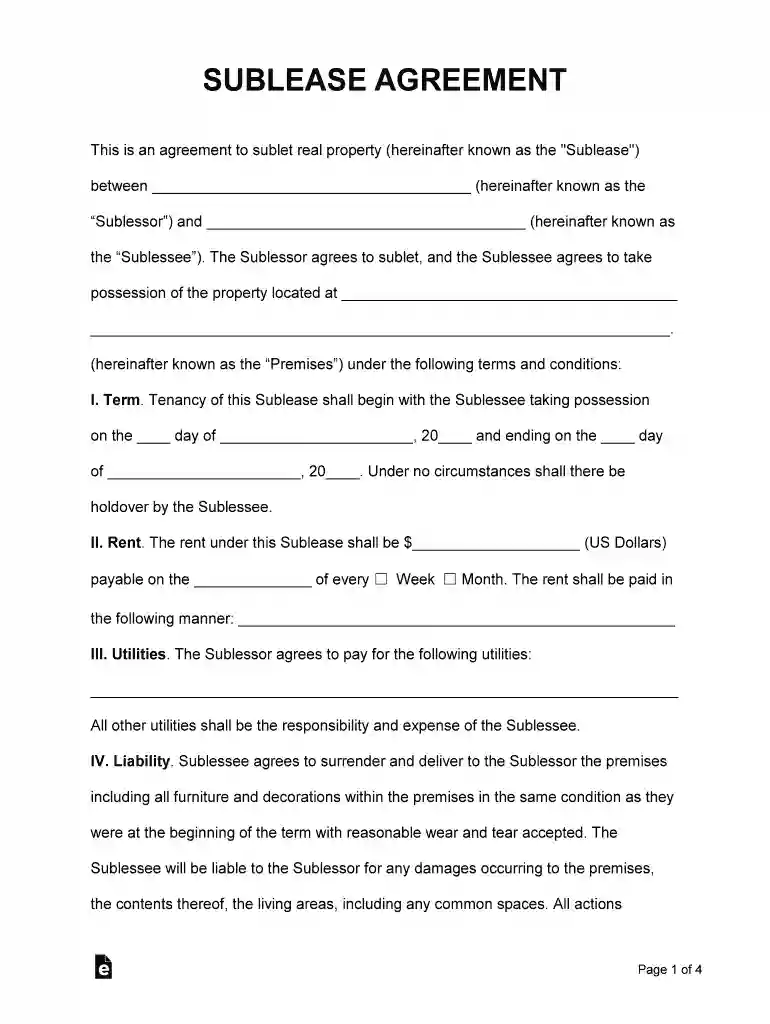
A sublease agreement refers to the legal document that allows a tenant (the sublessor) to lease out their rented property to another party (the sublessee) while retaining their rights and responsibilities under the original lease. This agreement outlines essential terms, such as rental duration, payment details, and the adherence to the original lease’s conditions. Crafted with precision, a sublease agreement ensures that both the sublessor and sublessee understand their obligations and rights, minimizing potential disputes.
Using the MindMeister version of the sublease agreement involves several tailored steps to ensure clarity and compliance. Users should begin by thoroughly reviewing the template to familiarize themselves with its structure. Once understood, inputting specific details such as property address, rental terms, and involved parties is essential. MindMeister provides visualization tools, allowing users to map out the entire agreement process, aiding in better understanding and organization of each crucial aspect.
Review the Original Lease: Ensure that the original lease allows for subleasing and note any required permissions or restrictions.
Detail the Sublessor and Sublessee Information: Enter complete identification details for both parties to establish clear contractual entities.
Define the Rental and Financial Terms: Include the rent amount, payment schedule, security deposit, and any utility responsibilities.
Outline Property Use Terms: Specify any restrictions on smoking, pet policies, and maintenance duties to avoid future conflicts.
Include Governing Law and Dispute Resolution: Adopt appropriate clauses that prescribe the governing jurisdiction and steps for resolving potential disagreements.
Validate with Signatures: Finalize the document with signatures from both parties and, if required, the landlord.
In the U.S., using a sublease agreement legally requires adherence to state regulations and the terms of the original lease. The agreement serves as a binding contract, granting the sublessee temporary rights to the property while outlining the sublessor's obligations. Typically, it must comply with real estate laws and may often necessitate the landlord's consent, which can be a crucial legal requirement to confirm validity.
The requirements and permissions around subleasing can vary significantly by state. For example, in New York, a tenant has the right to sublease, provided they obtain the landlord's consent. In California, while subleasing is allowed, landlords may have more freedom to deny it based on reasonable grounds. It is essential for sublessors and sublessees to understand and comply with the specific state laws applicable to their situation to ensure that their sublease agreement is legally sound.
Scenario 1: A graduate student leaves for an internship in another state and subleases their apartment to another student for nine months. This arrangement allows the sublessor to maintain their primary residence without financial strain.
Scenario 2: A tenant in Chicago obtains consent from her landlord and subleases her condo for a six-month period, providing detailed terms on pet policies and utility payments to prevent disputes.
By understanding these scenarios, individuals can see the practical applications and benefits of employing a well-structured sublease agreement.
At DocHub, your data security is our priority. We follow HIPAA, SOC2, GDPR, and other standards, so you can work on your documents with confidence.


