




01. Edit your auto insurance comparison spreadsheet template online
Type text, add images, blackout confidential details, add comments, highlights and more.

Type text, add images, blackout confidential details, add comments, highlights and more.

Draw your signature, type it, upload its image, or use your mobile device as a signature pad.

Send car insurance comparison chart via email, link, or fax. You can also download it, export it or print it out.
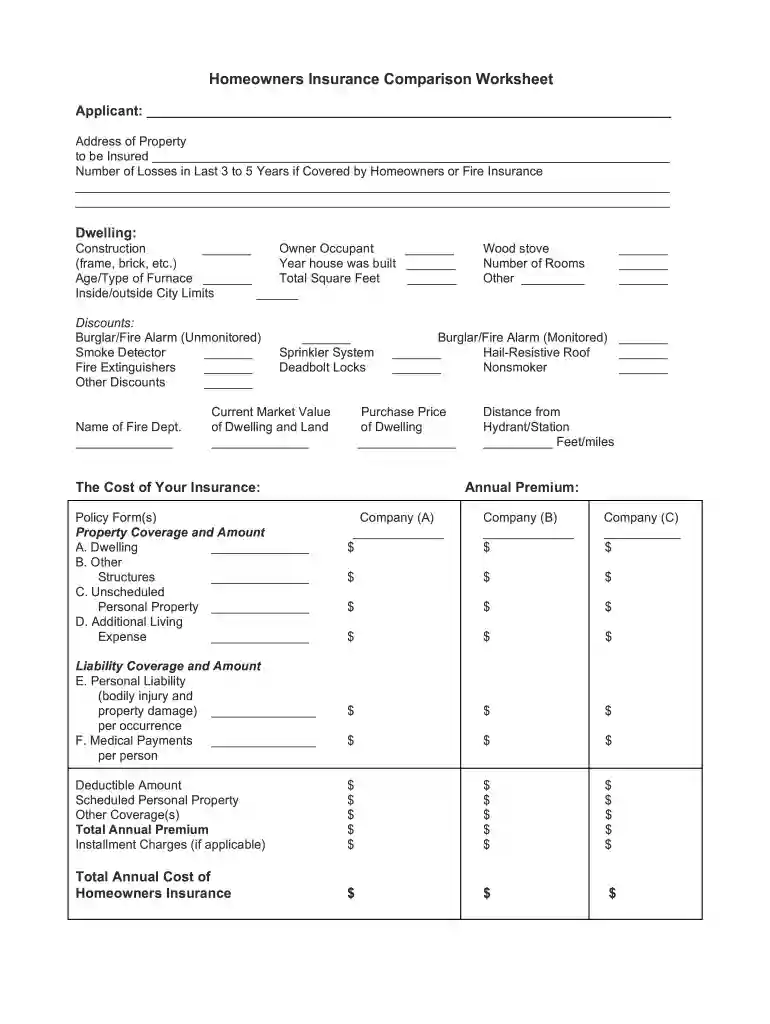
The auto insurance comparison spreadsheet serves as a vital tool for individuals seeking to evaluate different car insurance options. It allows users to systematically and effectively compare policies based on various criteria, ensuring informed decision-making.
A well-structured auto insurance comparison spreadsheet includes several essential components that help users assess their options thoroughly:
Personal Information and Vehicle Details: Sections that capture the policyholder's name, address, vehicle make, model, year, and VIN (Vehicle Identification Number) are critical. This information enables insurers to provide tailored quotes based on specific vehicles.
Coverage Options: The spreadsheet should categorize various types of coverage offered, such as liability, collision, comprehensive, uninsured motorist, and personal injury protection. Each type of coverage should have a brief description and potentially a checklist for required coverage limits.
Premiums and Deductibles: A comparison of estimated annual premiums along with deductible amounts for each coverage category helps users evaluate the overall cost associated with each policy. Users should be able to see how different deductible amounts affect the insurance premiums.
Insurer Ratings and Reviews: Including an evaluation of insurers based on customer satisfaction and financial stability ratings provides valuable context for users. This section can contain links or references to third-party reviews and ratings agencies, enhancing the spreadsheet's utility.
When creating an auto insurance comparison spreadsheet, using a clear and organized format is essential:
Column Headings: Use distinct column headings for each comparison criterion. Suggested headings include:
Row Structure: Allocate a row for each insurance provider being compared. This setup allows for a direct side-by-side comparison, highlighting key differences between offerings.
Color Coding and Conditional Formatting: Utilizing color coding can enhance visual appeal and usability. For example, high-rated insurers could be highlighted in green, while less desirable options might be marked in red.
An auto insurance comparison spreadsheet should be systematically built through the following steps:
Research Insurance Providers: Begin by collecting information from various insurance companies, focusing on their coverage offerings, premiums, and deductibles.
Create the Spreadsheet Layout: Open an Excel sheet or Google Sheets and set up the columns and rows as previously discussed.
Input Data: Fill in the data derived from research, ensuring accuracy and clarity in the information presented.
Calculate and Analyze: Use formulas to automatically calculate total costs over time or compare monthly vs. annual premiums, helping users see the long-term financial implications of their choices.
To maximize the effectiveness of an auto insurance comparison spreadsheet, consider the following best practices:
Regular Updates: Insurance rates and coverage options can shift frequently. Regularly reviewing and updating the spreadsheet ensures that it remains a relevant resource.
Incorporating Additional Factors: Consider adding factors such as discounts for safe driving, bundling policies, or low mileage, which may significantly influence premiums.
Seek Professional Advice: Users should consider consulting with an insurance agent or financial advisor to discuss particular needs and confirm that all necessary coverage components are included.
When utilizing an auto insurance comparison spreadsheet, key details to remember include understanding each policy's definition, coverage limits, and exclusions. This meticulous approach encourages informed decision-making, ultimately leading to better insurance choices tailored to individual needs. By systematically comparing various insurance options through this structured approach, consumers can obtain the best value for their auto insurance needs.
At DocHub, your data security is our priority. We follow HIPAA, SOC2, GDPR, and other standards, so you can work on your documents with confidence.
Use this worksheet to help you gather information about insurance companies and the homeowners insurance policies they sell. Visit HelpInsure.com to getRead more
Jan 18, 2026 Insurance and reinsurance ➜ Definition meaning ✔️ Implementation strategies ✔️ Drivers barriers ✔️ Examples ✔️ Read article.


