




01. Edit your form online
Type text, add images, blackout confidential details, add comments, highlights and more.

Type text, add images, blackout confidential details, add comments, highlights and more.

Draw your signature, type it, upload its image, or use your mobile device as a signature pad.

Send it via email, link, or fax. You can also download it, export it or print it out.
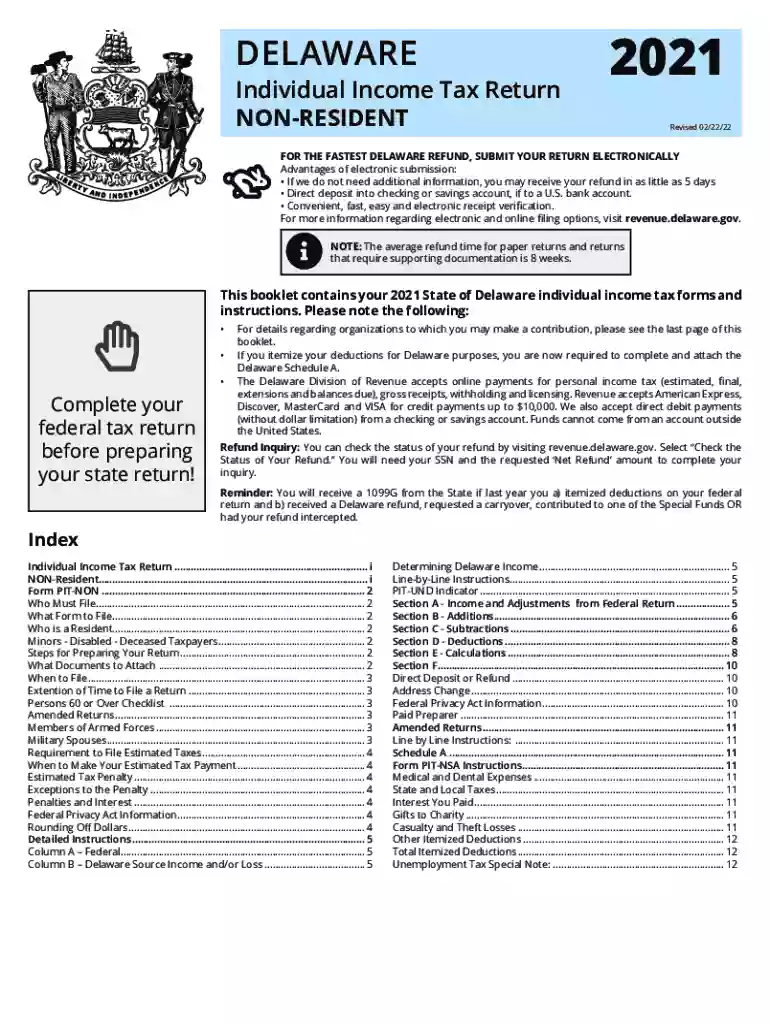
In the context of tax filings, "Delaware" refers to the state-specific requirements and forms necessary for individuals and businesses operating within Delaware to comply with state tax obligations. For non-residents, this typically involves filing the Delaware Individual Income Tax Return, which includes understanding specific state tax laws, credits, and deductions applicable to non-resident taxpayers. The term “Delaware” in this sense encompasses all pertinent instructions, forms, and procedures unique to Delaware's taxation system.
Understanding Delaware’s unique tax regulations is crucial for accurate and timely tax filing. Each state in the U.S. has its own set of tax codes, which can differ significantly from federal tax requirements. Delaware's rules around income tax filing for non-residents ensure that appropriate state taxes are collected based on the income earned within the state. For instance, a non-resident earning income in Delaware must adhere to Delaware's specific tax policies, which may include unique credits or deductions not available in other jurisdictions.
To accurately use Delaware tax forms, individuals must first determine their residency status. For non-residents, the Delaware Individual Income Tax Return is essential for reporting income earned within the state. The process involves several key steps:
Determine Residency Status: Establish whether you are a resident, non-resident, or part-year resident, as this affects which forms to complete.
Gather Necessary Documentation: Ensure that you have all pertinent financial documentation, such as wage statements (W-2 forms), interest and dividend income statements (1099 forms), and any other relevant financial documents.
Select the Correct Form: Non-residents typically use Delaware’s specific income tax return form for non-residents. Ensuring you have the correct form is crucial for compliance.
Complete and Submit the Form: Fill out the form with accurate information. Pay attention to instructions related to sources of income that are taxed in Delaware.
Review and File: Double-check all entries for accuracy before submitting. Submissions can often be made electronically or via traditional mail as per Delaware’s filing guidelines.
Delaware encourages taxpayers to file electronically, which reduces processing times, decreases errors, and provides confirmation upon receipt. E-filing systems often consist of built-in checks to prevent common errors, making it a preferred method for tax preparation and submission.
Completing the Delaware tax form involves several detailed steps, each vital for ensuring compliance and accuracy:
Review Tax Year Instructions: Each tax year may have updates or changes in tax codes which are critical to understand before initiating the filing process.
Accumulate Required Financial Records: Gather all wage, salary, and additional income documentation. Accuracy in these documents supports precision in your tax filings.
Tax Calculation: Calculate state tax obligations by considering Delaware-specific tax rates, applicable deductions, and available credits for that fiscal year.
Complete All Relevant Sections: Ensure comprehensive filling of all individual sections related to personal information, income details, and taxpayer status.
Review for Completeness: Carefully review the form for any missed sections or possible mistakes which can result in processing delays.
Submit by Designated Deadlines: Adherence to Delaware's specific filing deadlines prevents penalties.
Several terms are essential to understand when dealing with Delaware tax filings:
Understanding these terms aids in more effective and knowledgeable preparation and filing of Delaware tax forms.
The legal use of Delaware tax forms ensures proper compliance with state tax commitments. Non-compliance can result in penalties or legal action. Delaware, like all states, mandates accurate reporting of income and timely filing of tax returns. Adhering to state laws includes understanding submission channels, deadlines, and provided exemptions or special conditions, which aid in maintaining statutory compliance.
Self-Employed Individuals: Must report all business earnings from operations conducted in Delaware, even if not residing in the state.
Rental Income Earners: Non-residents receiving income from rental properties in Delaware must reflect this income on their state tax returns.
Each Delaware tax form consists of several critical sections an individual must address:
This structure ensures completeness in tax reporting, enabling effective evaluation by state tax authorities.
Delaware has its unique tax rules impacting how certain incomes are assessed:
These specific nuances in Delaware's tax code are vital for correctly preparing tax returns and avoiding common pitfalls associated with misunderstandings of state-specific rules.
Delaware tax filings follow specific timelines:
Understanding and adhering to these dates ensures timely compliance, preventing potential punitive measures for late submissions.
We've got more versions of the DELAWARE form. Select the right DELAWARE version from the list and start editing it straight away!
At DocHub, your data security is our priority. We follow HIPAA, SOC2, GDPR, and other standards, so you can work on your documents with confidence.


