







Definition and Purpose of CDCA in Ohio
The Chemical Dependency Counselor Assistant (CDCA) certification in Ohio is a credential for individuals who support clients dealing with substance use disorders. It is primarily aimed at those working in the addiction treatment field, providing critical support to licensed professionals. This certification allows individuals to engage in various supportive roles, facilitating the recovery journey for clients by offering guidance and assistance under the supervision of licensed counselors.
Key Responsibilities of a CDCA
- Assisting in the development of treatment plans.
- Monitoring clients' progress in recovery.
- Facilitating group therapy sessions.
- Documenting client interactions and status updates.
The CDCA certification does not permit individuals to independently diagnose or treat substance use disorders; instead, they work as part of a treatment team.
Steps to Obtain the CDCA Certification in Ohio
Acquiring the CDCA certification involves a series of structured steps designed to ensure applicants meet the necessary educational and ethical standards.
-
Complete Required Training:
- Individuals must complete a 40-hour training program, focusing on understanding substance use disorders and recovery processes. Many organizations offer free online CDCA training programs to ensure accessibility.
-
Submit Application:
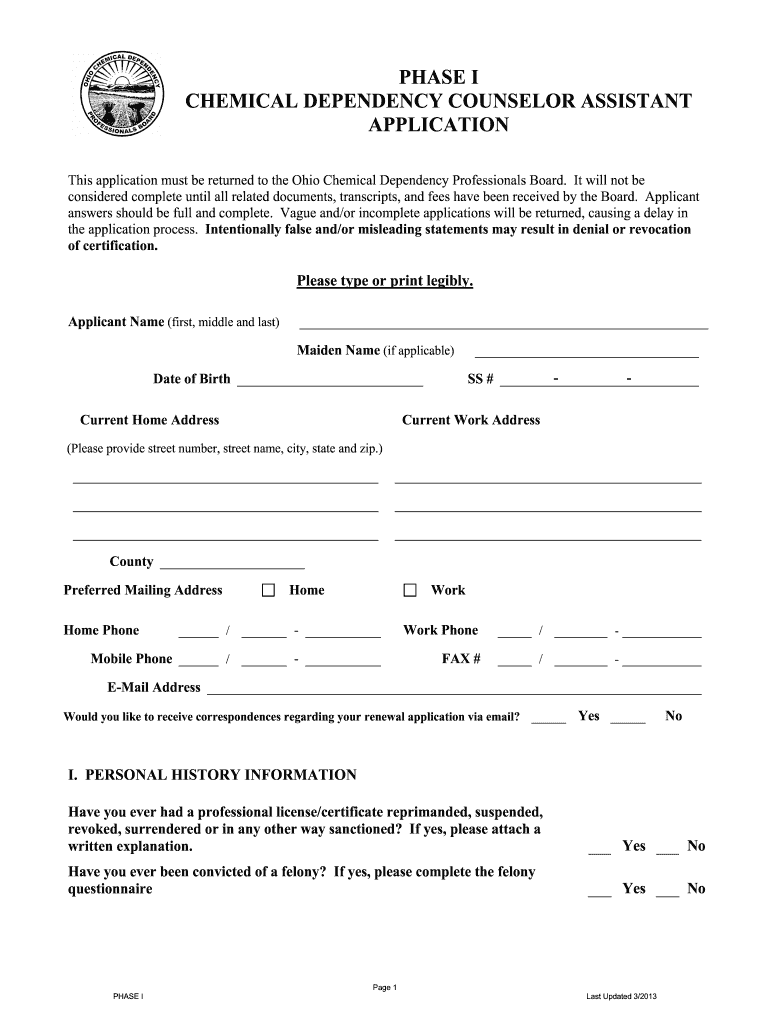
- After completing the training, applicants must fill out the official CDCA application form, which includes personal information, training verification, and a submission fee.
-
Provide Documentation:
- Applicants are required to submit proof of their completed training and any additional documents specified in the application. This may include transcripts from relevant educational institutions.
-
Await Approval:
- The Ohio Chemical Dependency Professionals Board reviews the application. Once approved, the candidate receives their certification and can begin working under supervision.
-
Continuing Education:
- To maintain certification, professionals must complete continuing education requirements periodically, ensuring their knowledge remains current in this evolving field.
Important Terms Related to CDCA in Ohio
Familiarizing oneself with key terms associated with the CDCA certification is crucial for clarity and understanding of the role.
-
Substance Use Disorder (SUD): A medical condition characterized by an individual's inability to control their use of substances leading to harmful consequences.
-
Ethical Guidelines: A set of practices that govern the professional conduct of counselors, ensuring they meet standards of care and respect client confidentiality.
-
Supervision: The oversight exercised by a licensed counselor over CDCA professionals, ensuring their work complies with legal and ethical standards.
Understanding these terms aids in grasping the broader context of CDCA certification and its purpose within addiction treatment frameworks.
Required Documents for CDCA Application
When applying for CDCA certification, specific documents are essential to verify qualifications and training completion.
-
Training Certificate: Proof of completion for the required 40-hour training program.
-
Application Form: The Official CDCA application form filled out with accurate personal and educational details.
-
Payment Receipt: Evidence of payment for the application fee, which varies in amount based on the specific certification.
-
Background Check: A completed background check ensuring that applicants meet the ethical standards required for working in the addiction recovery field.
Having these documents properly prepared can streamline the application process and minimize delays.
Who Typically Uses CDCA Certification in Ohio
The CDCA certification is utilized by various individuals in diverse roles within the treatment and recovery landscape.
-
Counselors In Training: Aspiring licensed chemical dependency counselors often obtain a CDCA to gain practical experience and meet educational requirements.
-
Support Staff in Treatment Facilities: Those working in facilities assisting patients recovery, like case managers or recovery coaches, use the CDCA credential to validate their qualifications.
-
Community Organizations: Non-profit organizations engaged in substance use prevention and recovery programs often employ CDCA-certified staff to provide outreach and support.
-
Educational Institutions: Some educators in accredited programs may hold a CDCA as an essential credential for teaching relevant courses.
Each of these roles contributes significantly to the comprehensive care and support offered to individuals facing substance use challenges.




