
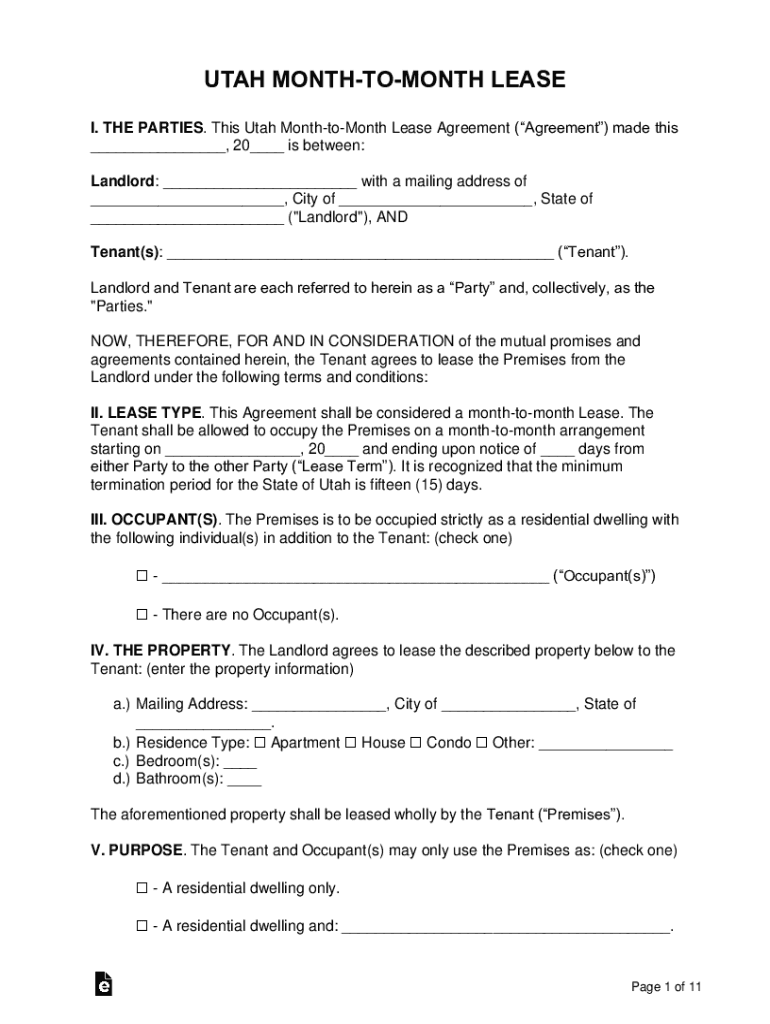







Definition & Meaning
The Utah Month-to-Month Lease Agreement is a legal contract designed for rental transactions in which property occupation occurs on a monthly basis. Unlike fixed-term leases, this type of agreement allows both parties—landlord and tenant—the flexibility to alter or terminate the contract with proper notice. Typically, this arrangement is advantageous for tenants who may need short-term housing, or landlords who prefer dynamic rental market conditions. The agreement outlines specific terms covering rent, deposit policies, maintenance responsibilities, and more, ensuring clear expectations and obligations for both parties.
Key Elements of the Utah Month-to-Month Lease Agreement
A comprehensive Utah Month-to-Month Lease Agreement covers several critical elements to protect both parties' interests:
- Lease Duration: Specifies the monthly renewal nature and the notice period required to end the lease.
- Rent Payment Details: Includes the amount, due date, and acceptable payment methods.
- Security Deposits: States the required deposit amount and conditions regarding its return.
- Property Maintenance and Repairs: Outlines tenant and landlord responsibilities for upkeep and repairs.
- Policies on Pets and Smoking: Specifies any restrictions or allowances related to pets and smoking on the premises.
- Utility Responsibilities: Defines which party is responsible for utility payments.
- Termination and Renewal Terms: Details the procedure for extending or terminating the lease.
Steps to Complete the Utah Month-to-Month Lease Agreement
- Collect Information: Gather details about the landlord, tenant, and rental property.
- Draft the Agreement: Use a standard template or legal service to ensure compliance with Utah state laws.
- Specify Terms and Conditions: Clearly define rent, security deposit, maintenance duties, and any specific property rules.
- Review Legal Obligations: Ensure both parties understand their rights and obligations under Utah law.
- Signatures: Both parties sign the agreement, indicating their consent and understanding of the terms.
- Provide Copies: Each party should receive a fully signed copy for their records.
Legal Use of the Utah Month-to-Month Lease Agreement
The Utah Month-to-Month Lease Agreement must be used in compliance with relevant state and local regulations. This includes respecting tenant rights and adhering to fair rental practices. It is important for landlords to understand the notice periods required for rent increases, termination, or changes to lease terms. Both parties should be aware of Utah's statutes regarding security deposits, as mishandling can lead to legal disputes.
State-Specific Rules for the Utah Month-to-Month Lease Agreement
While similar agreements exist in other states, the Utah-specific version adheres to unique state mandates. Utah requires:
- Notice Period for Termination: Typically, a minimum of 15 days is required to terminate or change the lease agreement.
- Security Deposit Handling: Landlords must return deposits within 30 days of lease termination, barring any lawful deductions.
- Rent Increase: Adequate notice must be provided ahead of implementing rent changes.
Examples of Using the Utah Month-to-Month Lease Agreement
Consider a tenant in Salt Lake City who needs temporary accommodation for a three-month job. A month-to-month lease offers flexibility without committing to a long-term contract. Likewise, a property owner in Park City, during peak tourist seasons, might prefer a month-to-month lease to adjust rates as demand varies throughout the year.
Software Compatibility
For digital document preparation, the Utah Month-to-Month Lease Agreement is compatible with document editing platforms such as DocHub. This software facilitates the creation, signing, and sharing of legal documents online. Users can import templates, fill out fields, add electronic signatures, and share documents securely.
Why Use the Utah Month-to-Month Lease Agreement
Opting for a month-to-month lease provides:
- Flexibility: Adjust living situations and financial commitments quickly.
- Market Responsiveness: Adjust rental terms to reflect current market conditions.
- Short-term Commitment: Ideal for those unsure about their long-term plans.
These benefits cater to individuals requiring adaptable living conditions and landlords maximizing rental income efficiently.




