




01. Edit your connecticut firearms online
Type text, add images, blackout confidential details, add comments, highlights and more.

Type text, add images, blackout confidential details, add comments, highlights and more.

Draw your signature, type it, upload its image, or use your mobile device as a signature pad.

Send ct firearms via email, link, or fax. You can also download it, export it or print it out.
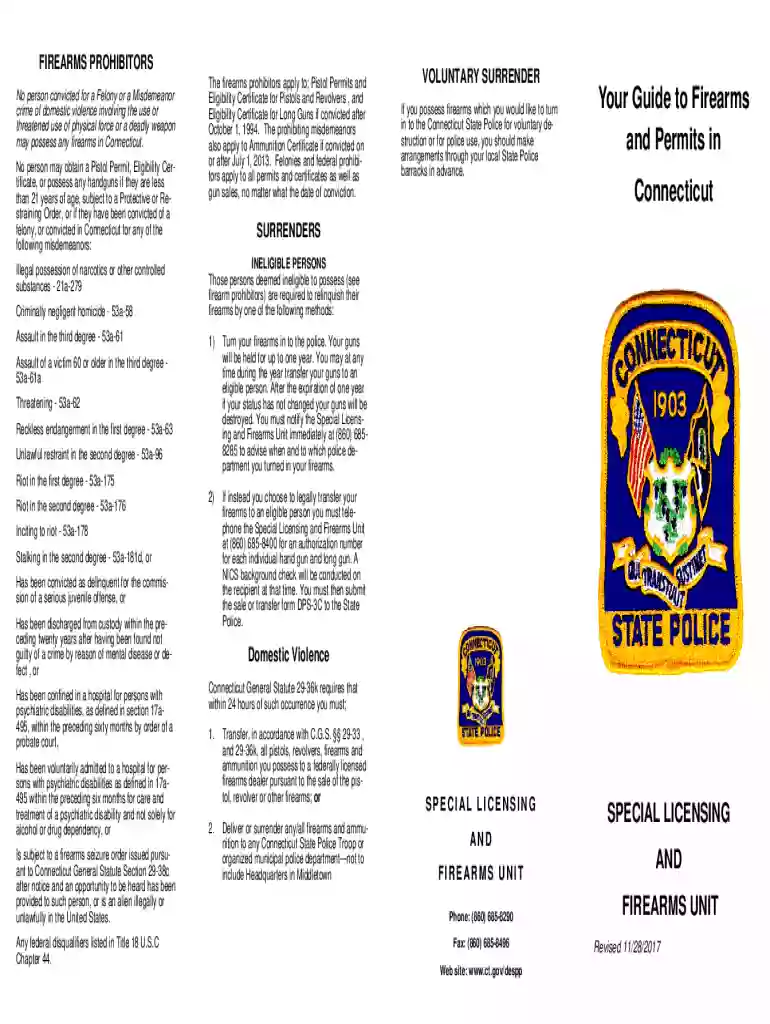
Connecticut firearms regulations govern the possession, purchase, and transfer of firearms within the state. These laws are designed to ensure public safety by setting standards for who may own firearms and the terms under which they can be acquired or transferred. Key components include eligibility criteria that prohibit individuals with felony or certain misdemeanor convictions from owning firearms, age restrictions, and specific processes for obtaining permits to purchase handguns and long guns.
To legally purchase a firearm in Connecticut, individuals must follow a regulated process. This includes obtaining a permit to purchase or carry a pistol or revolver. Applicants must be at least 21 years of age and must first complete a handgun safety course approved by Connecticut's Department of Emergency Services and Public Protection. Furthermore, the application process involves a background check, fingerprinting, and interview, ensuring the applicant is eligible under state law to own a firearm.
Handgun Safety Course: Enroll in and complete an approved handgun safety course. This step is mandatory and serves to educate future firearm owners on safe handling practices.
Submit Application: Fill out the state application form for a firearms permit, providing accurate personal information and required documentation, such as proof of residency.
Background Check and Fingerprinting: All applicants must undergo a thorough background check. Fingerprints are collected at local law enforcement agencies as part of this process.
Attend an Interview: Some local authorities might require an interview to further assess the eligibility of the applicant.
Processing: The processing time can vary but typically takes up to eight weeks. Applicants are notified by mail once the permit is approved or denied.
Eligibility to own firearms in Connecticut is determined by several criteria. Applicants must be 21 or older for handguns and 18 for long guns. They cannot have any felony convictions; nor can they have been convicted of certain misdemeanors, such as domestic violence offenses. Additionally, mental health criteria must be satisfied, as individuals with a history of involuntary commitments to mental institutions are usually ineligible.


Ownership Restrictions: Specific prohibitions against who may own or possess firearms ensure that only individuals meeting strict legal criteria can legally acquire firearms.
Permit Requirements: Purchasing or carrying handguns requires a valid permit.
Transfer Processes: Detailed legal processes must be followed for the lawful transfer of ownership of firearms between individuals or entities.
The use of firearms in Connecticut is subject to various legal conditions. Legal users must adhere to constraints regarding public display, usage in self-defense, and storage protocols. Additionally, there are critical limitations on the use of semi-automatic firearms and regulations governing gun shows and fire ranges. Understanding these specifics is vital for legal compliance.
Connecticut has unique regulations distinctly separate from federal firearms laws. For instance, the state enforces a ban on assault weapons and imposes waiting periods for firearm acquisition. Furthermore, Connecticut mandates stringent storage requirements, particularly in homes with residents under the age of 18. Compliance with these state-specific rules is essential for firearm owners.
Verify Permit: Ensure the buyer possesses a valid Connecticut permit to purchase or carry.
Complete Application: Both the seller and buyer must fill out relevant applications disclosing the details of the firearm and the transaction.
Background Check: The buyer must clear a background check conducted by a licensed dealer or recognized authority.
Transfer Approval: Receive approval from the Department of Emergency Services and Public Protection confirming legal compliance of the transfer.
Documentation: Keep accurate records of the transaction and provide copies to both the buyer and the appropriate state authorities.
Connecticut permits firearms use for various purposes with compliance to its strict regulations. Common legal uses include hunting, sport shooting, and personal protection within the home. For instance, hunters must follow specific seasonal guidelines when using firearms and obtain necessary hunting licenses. Similarly, sport shooters can participate in organized shooting events at licensed ranges, provided safety protocols are observed.
Violating Connecticut firearms laws can result in severe penalties, including fines, imprisonment, or both. Non-compliance can include possession of firearms without a valid permit, illegal transfers, or ownership by ineligible individuals. Legal experts caution that strict adherence to state regulations is imperative for avoiding these significant legal repercussions.
DocHub offers a digital solution for securely handling documents related to firearm permits, transfers, and compliance documentation. Importantly, these processes involve sensitive information that requires enhanced security, which DocHub provides through encrypted storage and transmission methods. This ensures that all personal details and legal forms remain protected when shared or stored online.
We've got more versions of the connecticut firearms form. Select the right connecticut firearms version from the list and start editing it straight away!
A lot of software applications are available on the market for document editing and signing. DocHub is one of the most widely used online solutions that comply with all security and compliance requirements and guarantees your eSigned paperwork is legally enforceable. All you need to try it out is to sign up for an account, upload your ct firearms permits, fill out the requested information, and click Sign. Create your eSignature by typing, drawing it, uploading its picture to your document, or scanning a unique QR code.
You may find and edit your ct pistol permit renewal online with the help of DocHub. Its simple but feature-rich design enables you to begin effective work right after you sign up your account. Create your profile and add your file, and then our interface will guide you via our stress-free form completion experience.
At DocHub, your data security is our priority. We follow HIPAA, SOC2, GDPR, and other standards, so you can work on your documents with confidence.


