




01. Edit your nj 1040 es payment voucher online
Type text, add images, blackout confidential details, add comments, highlights and more.

Type text, add images, blackout confidential details, add comments, highlights and more.

Draw your signature, type it, upload its image, or use your mobile device as a signature pad.

Send nj 1040 es 2022 via email, link, or fax. You can also download it, export it or print it out.
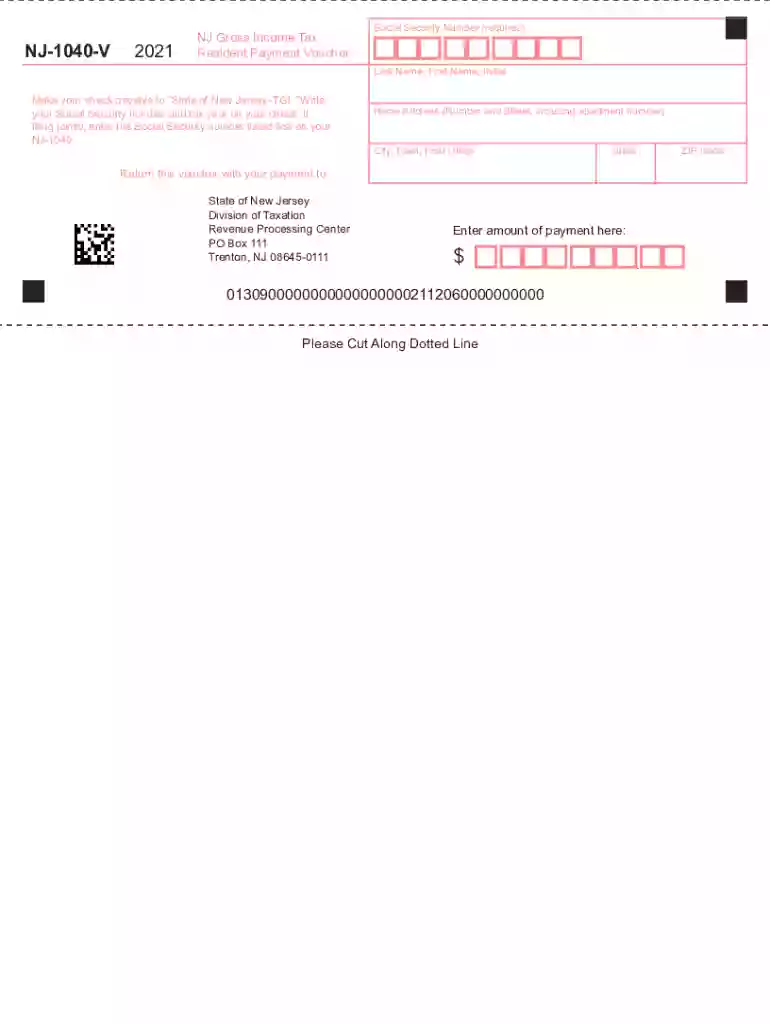
The NJ 1040-V payment voucher is a document used by New Jersey residents to submit their gross income tax payments to the state. This voucher is essential for taxpayers who owe additional taxes beyond what was withheld or previously paid. It serves as a payment slip to ensure that the payment is correctly credited to the taxpayer’s account. The voucher includes fields for personal information such as the taxpayer's name, address, and Social Security number, which helps the New Jersey Division of Taxation identify and allocate payments accurately.
To use the NJ 1040-V payment voucher effectively, follow these steps:
Complete Your Tax Return: Calculate the total tax you owe for the year using the NJ-1040 state income tax return form.
Fill Out the Payment Voucher: Enter your full name, Social Security number, and address on the voucher. Be sure to specify the tax year for which the payment is being made.
Determine the Payment Amount: Indicate the total amount you owe on the voucher. This figure should match the difference between your total tax liability and the payments you've already made.
Prepare Your Payment: Write a check or money order for the amount due, payable to the State of New Jersey - TGI.
Mailing Instructions: Attach the check or money order to the voucher without stapling or clipping them together. Mail both items to the address specified for payments on the voucher.
This streamlined process ensures that your payment is properly processed by the state's tax authorities.
Completing the NJ 1040-V payment voucher involves a few straightforward steps:
Personal Information: Start by entering your legal name and current residential address. Ensure the data is consistent with the information provided on your NJ-1040 tax return.
Social Security Number: Include your Social Security number to link the payment to your tax records correctly.
Payment Amount: Clearly specify the amount you are remitting. Double-check this figure to ensure it reflects your outstanding tax balance.
Date and Signature: While the voucher typically does not require a signature, verify if additional authentication or a date is needed for your records.
Submission: Adhere precisely to mailing guidelines to avoid processing delays, especially during peak tax seasons.
The NJ 1040-V payment voucher is primarily used by New Jersey residents who fall into various taxpayer categories, such as:
Individual Taxpayers: Those whose withholding throughout the year does not cover their total tax liability.
Self-Employed Individuals: Freelancers and gig economy workers who need to pay estimated taxes or settle year-end tax dues.
Retired Individuals: Those with retirement income subject to state taxes and who must make additional payments not covered by pension withholding.
Business Owners: Particularly those filing as sole proprietors who owe personal income taxes that are not automatically withheld.
Understanding who uses this voucher can help in identifying the tax situations that necessitate its use.


To fully grasp the use and importance of the NJ 1040-V payment voucher, it is beneficial to familiarize oneself with terms such as:
Gross Income Tax: The total income subject to state tax after adjustments and deductions are made, determining the base for your tax liability.
Estimated Payments: These refer to periodic tax payments made to avoid underpayment penalties when withholding is insufficient.
Tax Liability: The total amount of tax owed to the state for a specific fiscal year.
Withholding: Amounts withheld from wages and other payments to cover expected tax liabilities.
These terms aid in understanding the broader context and specific applications of the payment voucher.
The NJ 1040-V payment voucher encompasses several essential elements:
Personal Identification Information: Your full name, address, and social security number serve as primary identifiers for processing.
Tax Year: Indication of the tax year ensures the payment is credited accurately.
Payment Amount Field: This field specifies the amount being remitted to fulfill your tax obligation.
Submission Instructions: Directions for submitting the voucher and payment help streamline the process and prevent errors.
Incorporating these elements accurately is critical to successful submission.
Remaining aware of deadlines is crucial for compliance and to avoid penalties:
Filing Deadline: Typically, the NJ 1040-V payment voucher must be submitted by April 15 of the tax year following the income period, in line with federal and state tax return deadlines.
Estimated Payment Dates: Payments are due quarterly if paying estimated taxes.
Late Payment Penalty Dates: Financial penalties accrue after the official due dates, so timely submission is imperative to avoid additional fees.
Understanding these timelines can assist in planning your payment strategy effectively.
The NJ 1040-V payment voucher can be submitted via different methods, depending on taxpayer preference:
Mail: Traditional paper submission involves mailing a completed voucher with a check or money order.
Online Payment Options: Some taxpayers may opt for electronic submissions through state tax websites, allowing for quicker processing and confirmation.
Knowing these options can help streamline taxpayer processes and potentially expedite confirmation of payments.
We've got more versions of the nj 1040 es payment voucher form. Select the right nj 1040 es payment voucher version from the list and start editing it straight away!
At DocHub, your data security is our priority. We follow HIPAA, SOC2, GDPR, and other standards, so you can work on your documents with confidence.
Payment of Fixed Deposit Amount and 1nterest A. Payment at Maturity. B. Payment before Maturity:. V. Renewal ofRead more
May 18, 2026 Your invoice and customer ID number are located on your payment voucher. Make a Payment Frequently Asked Questions. Payment Plan Information.Read more
▫ Submitting a payment voucher simultaneously with the application to the identified site. A technical assistance payment of $50 would be paid to the lRead more


