
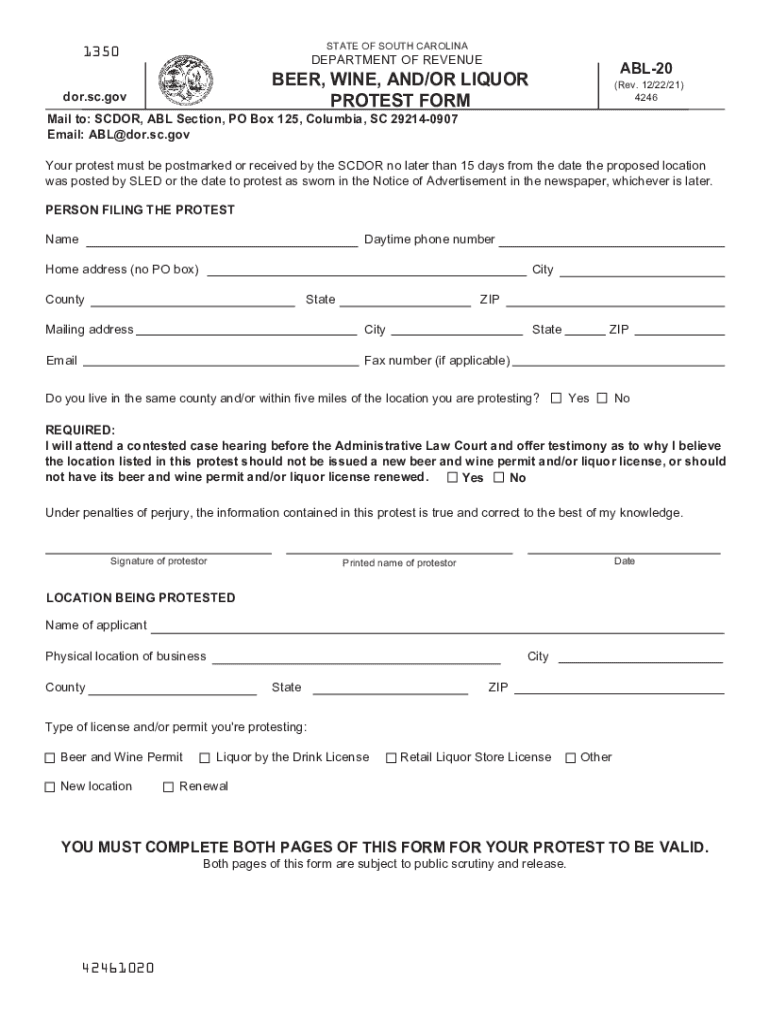







Definition and Purpose of ABL-20
The ABL-20, also known as the Alcohol Beverage License form, is a specialized protest form employed by the South Carolina Department of Revenue. It is primarily used for individuals or entities wishing to contest the issuance or renewal of beer, wine, and liquor licenses within the state. This form plays a critical role in ensuring community voices are heard regarding the suitability of a business for an alcohol license in their area.
Steps to Complete the ABL-20 Form
-
Obtain the Form: The ABL-20 can typically be downloaded from the South Carolina Department of Revenue's website or acquired directly from their office.
-
Enter Personal Information:
- Provide your full name and contact details, including address and phone number.
- Indicate your proximity to the location being protested, as it could impact the validity of your contest.
-
State the Reason for Protest:
- Clearly outline your objections. These could include concerns about noise, traffic, or historical issues with the applicant or premise.
-
Review and Sign:
- Thoroughly review all information for accuracy.
- Sign and date the form, ensuring all sections are adequately completed.
-
Submit the Form:
- The form must be submitted within 15 days of receiving notification of the license application. Late submissions could invalidate the protest.
Legal Implications of the ABL-20
- Contested Case Hearing: Submitting an ABL-20 mandates attendance at a contested case hearing. Failure to attend could lead to the dismissal of the protest.
- Legal Representation: While not mandatory, engaging legal counsel might be beneficial, especially if the case involves complex legal arguments or potential appeals.
Eligibility and Criteria for Filing
- Who Can Protest: Any individual or organization that resides or operates within a predetermined distance from the business in question can file a protest.
- Documentation: Protests typically require supporting documentation to substantiate claims, such as affidavits or photographic evidence of existing issues.
Important Terms Related to ABL-20
- Proximity: Refers to the specific metric or set distance from the applicant's location relevant for filing a protest.
- Contested Case Hearing: A formal hearing where the protester must present their case against the issuance or renewal of an alcohol license.
- Notification Period: The timeframe post which a protest must be filed, generally stated as 15 days from notification.
Penalties for Non-Compliance
- Failure to Attend Hearings: Non-attendance without valid cause can lead to the protest being thrown out of court.
- Providing False Information: Submission of incorrect or misleading information can attract penalties, including fines or legal action.
Who Issues the ABL-20
The ABL-20 is issued by the South Carolina Department of Revenue. They also provide guidelines on how the form should be completed and submitted, as well as additional assistance for individuals unfamiliar with the protest process.
Examples of Using the ABL-20
- Neighborhood Associations: Local groups may use the ABL-20 to protect residential areas from businesses likely to increase crime or noise.
- Competing Businesses: Existing licensed businesses could file protests if they believe a new license would unfairly affect their operations due to market saturation.
Digital vs. Paper Submission
- Forms can be submitted electronically via the Department of Revenue’s online portal, ensuring faster processing.
- Paper submissions are still accepted but may take longer for processing and review. Ensure all required fields are filled to prevent processing delays.
Understanding and accurately completing the ABL-20 form is crucial to effectively asserting concerns and participating in local community governance regarding alcohol licensing.




