







Definition & Meaning
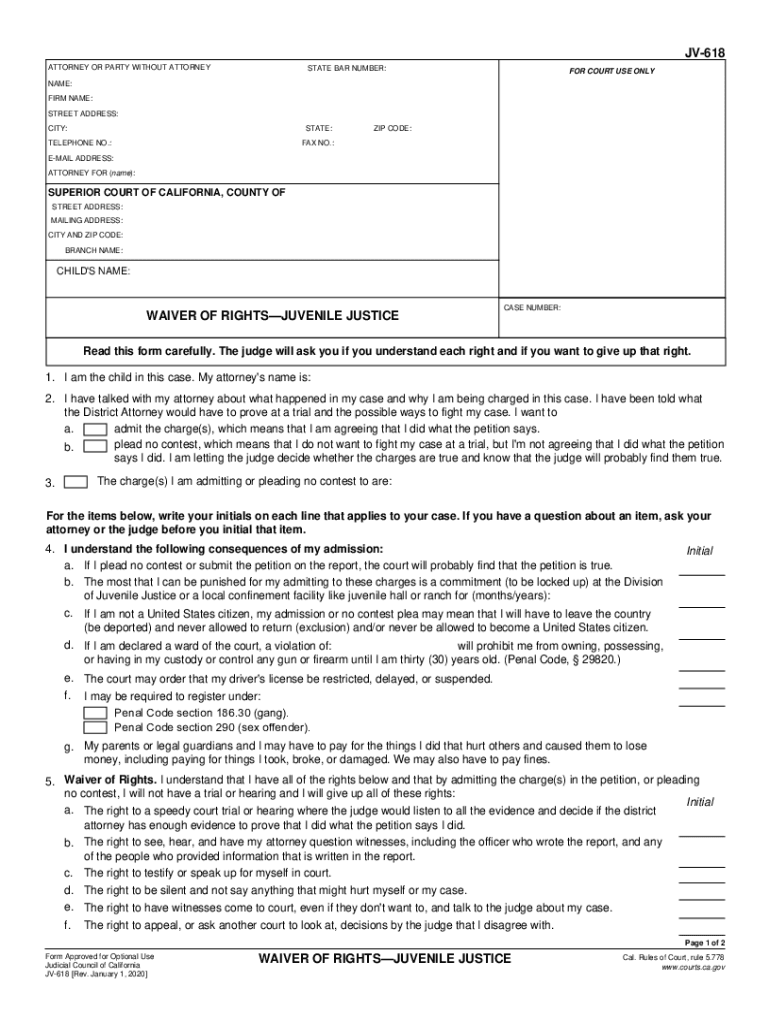
The JV-618 form is a legal document used within the California juvenile justice system. It serves as a formal declaration where a minor acknowledges their rights and waivers related to legal charges brought against them. The form outlines the child's comprehension of their legal rights and the consequences of either admitting guilt or pleading no contest. It is crucial for ensuring that the minor fully understands the legal process, the implications involved, and the potential outcomes of their decisions. This document requires signatures from the child, their attorney, and a judicial officer to confirm understanding and acceptance of the waiver.
How to Use the JV-618
Using the JV-618 form involves several critical steps to ensure proper execution and legal compliance. First, the minor and their legal counsel must review all rights that the child is waiving by signing the form. These include the right to a trial, the right to confront witnesses, and the right to remain silent. After reviewing their rights, the minor is guided through the consequences of their specific admissions, which may influence their charges or sentencing. The form plays a pivotal role in court hearings where these rights need waivers as part of a plea or admission agreement. Importantly, the form is always completed under the supervision of a legal guardian or an attorney to protect the minor’s interests and ensure their informed consent.
How to Obtain the JV-618
Obtaining the JV-618 form is generally straightforward. Individuals involved in juvenile cases can access this form through the California Courts website, where it is available for download. Legal representatives, such as juvenile defense attorneys, often provide the form during case preparation. Additionally, courthouses and legal assistance offices can offer copies and assistance in completing the document. It is important for recipients to use the most current version of the form to ensure compliance with the latest legal standards and procedural requirements. Accessing the form online provides convenience and direct guidance, as supplementary instructions are typically included to aid in proper completion.
Steps to Complete the JV-618
Completing the JV-618 form requires careful attention to detail and understanding of its sections. The initial step involves filling out personal information, including the minor's name, case number, and court location. Next, the minor and their attorney review the list of rights that the child is agreeing to waive, which are clearly outlined in the document. Then, both parties examine the potential outcomes of the case, such as sentencing or other legal repercussions, ensuring that the child understands all consequences. The section that follows requires signatures from the minor, their attorney, and finally, a judicial officer, validating that the process and reviews were properly conducted. Each step in this process confirms that the minor’s waiver is informed and consensual.
Key Elements of the JV-618
Several essential components make up the JV-618 form, ensuring it serves its designated legal purpose. The personal information section establishes the identity of the minor involved and links the form to the correct judicial case. Furthermore, a detailed list of rights being waived is provided to ensure transparency and understanding. Explanatory sections inform the minor about potential legal outcomes and obligations. The signature section, featuring areas for the child, their attorney, and a judicial officer, confirms that everyone involved acknowledges the conditions outlined by the form. Each key element contributes to the overall goal of ensuring minors in the juvenile justice system fully comprehend the legal implications of their decisions.
Who Typically Uses the JV-618
The JV-618 form is primarily utilized by minors within the California juvenile justice system who face legal charges or proceedings. Juvenile defense attorneys play a crucial role in guiding young clients through the use of this form, advocating for their legal rights and interests during the waiver process. Judicial officers are also key users, as they are responsible for validating the form's execution by ensuring minors fully understand the waiver and its associated consequences. Additionally, parents or legal guardians typically participate in review and signing, as their involvement helps safeguard the minor's decision-making process and adherence to legal protocols.

Legal Use of the JV-618
In a legal context, the JV-618 form functions as an essential tool within court proceedings involving minors. Its primary legal application is to legitimize the waiver of certain rights by a juvenile when accepting conditions set forth during a plea agreement or admission. The form ensures that minors are provided with a fair opportunity to understand the legal and personal outcomes of their decisions. By mandating judicial confirmation and inclusion of the child's attorney, the process enforces consent under informed conditions. This structure protects minors from unintentionally forfeiting rights or agreeing to legal actions without full awareness of the implications.
State-Specific Rules for the JV-618
The JV-618 is governed by specific rules and regulations set forth by the state of California. These state-specific guidelines dictate the form’s content, execution, and use within the judicial process. California law requires that minors in the juvenile system are granted a comprehensive understanding of their legal rights, which the JV-618 form facilitates. The form must also strictly adhere to procedural mandates, such as requiring signatures from all involved parties. These requirements ensure that the legal protections intended for underage individuals are maintained, aligning with California’s broader focus on safeguarding minors' rights and promoting informed decision-making in juvenile court proceedings.
Examples of Using the JV-618
Practical examples of using the JV-618 form often arise in various juvenile legal cases involving charges like theft, vandalism, or minor drug offenses. In these scenarios, a minor who admits to the charges through plea agreements may need to fill out the form to acknowledge the forfeiture of their right to contest the charges in trial. Attorneys and judicial officers ensure that these examples are representative of informed decision-making, providing educational sessions to contextualize the consequences. Successfully using the JV-618 ensures minors comprehend the long-term effects of their legal choices, offering real-world learning opportunities about the justice system.
Required Documents for the JV-618
The preparation of a JV-618 form typically involves gathering several pertinent documents. These include official identification proving the minor’s identity, such as a birth certificate or government-issued ID. Legal documentation regarding the case details, including charge sheets or notice of hearings, is also essential, as they provide context for the proceedings. Court records of previous legal actions, if applicable, may be needed to understand the case history. Additionally, any documents outlining legal representation or guardianship arrangements should accompany the JV-618, ensuring all parties are authorized and informed about the minor's waiver process.
Penalties for Non-Compliance with JV-618
Failing to comply with the requirements of the JV-618 form can lead to significant legal ramifications. Non-compliance, such as incomplete forms or lack of required signatures, may invalidate any plea agreements or admissions associated with the waiver. This can result in the minor having to re-engage with the court process from the beginning, often leading to extended legal proceedings and potential negative impacts on their case outcomes. Given the structured framework of California's juvenile system, adherence to JV-618 protocols minimizes legal uncertainties and helps maintain confidence in agreed court actions and outcomes.




