





Definition & Meaning
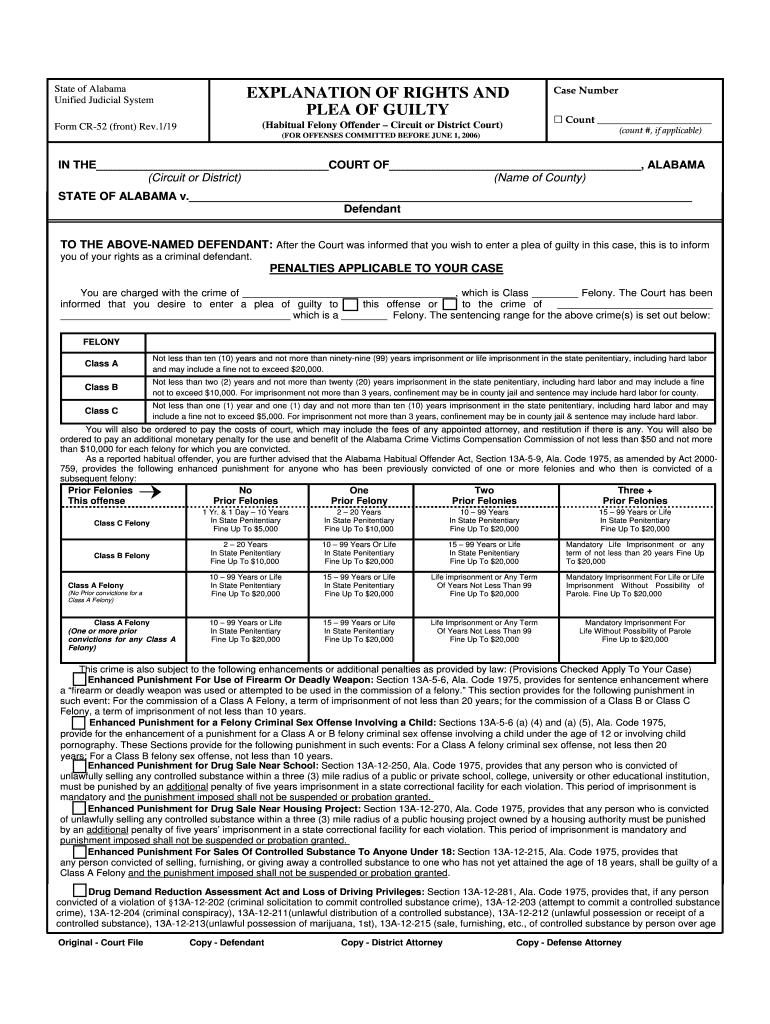
The "Alabama Form Plea Guilty" is a crucial legal document used within the State of Alabama's Unified Judicial System. It facilitates the entry of a guilty plea by a defendant in a criminal case. This form serves as a formal acknowledgment of the defendant's decision to waive specific constitutional rights, such as the right to a trial by jury and the option to appeal the judgment. The document outlines penalties associated with different classes of felonies, including additional repercussions for repeat offenders or offenses committed under special circumstances, like using a firearm or committing a crime near a school.
How to Use the Alabama Form Plea Guilty
The form is filled out as part of the plea bargain process, usually after negotiations with the prosecution. It involves both the defendant and their legal counsel to ensure that the defendant is fully aware of the consequences of their plea. The defendant should review each section carefully, particularly the statements regarding waived rights and agreed penalties. Legal counsel is advised to assist throughout, ensuring comprehension of all legal terminologies and implications. The completed form is then submitted to the court for acceptance.
How to Obtain the Alabama Form Plea Guilty
Acquiring this form can typically be done by contacting the clerk of the court where the case is being heard. Many jurisdictions also provide online access to legal forms through the court's official website, allowing for straightforward download and print. Legal representatives may also have access to these documents and can provide them to defendants during the plea negotiation process.
Steps to Complete the Alabama Form Plea Guilty
- Review the Case Details: Ensure that all personal and case information is accurate.
- Acknowledge and Understand Rights and Consequences: Carefully read through the rights being waived, ensuring comprehension.
- Fill Out Punishment Details: Include agreed-upon penalties or sentencing terms, specified according to the class of felony.
- Signatures: Include the defendant’s and their legal counsel’s signatures, acknowledging understanding and voluntary agreement.
- Submit to Court: Hand in the form to the court as part of the plea acceptance process, where it will be reviewed by a judge.
Who Typically Uses the Alabama Form Plea Guilty
This form is primarily used by defendants in criminal cases within Alabama who decide to plead guilty as part of a plea bargain agreement. Legal practitioners, including defense attorneys and prosecutors, are closely involved in utilizing this form for their clients. The form ensures that the defendant fully understands the implications of their guilty plea and that due process is followed, protecting the legal rights of all involved.


Legal Use of the Alabama Form Plea Guilty
The form serves as a binding legal document, confirming the defendant’s admission of guilt. It facilitates expedited court proceedings by bypassing the need for a trial. When submitted, it allows the court to pronounce a judgment based on agreed penalties while safeguarding the defendant’s rights by documenting their voluntary waiver of key legal protections. It is a critical component of the plea bargaining process.
Key Elements of the Alabama Form Plea Guilty
- Defendant Information: Full legal name, address, and case number.
- Waived Rights: Detailed list of constitutional rights that the defendant is relinquishing.
- Sentence Agreement: Clear outline of plea deal terms, including any sentence alterations.
- Legal Representation: Fields for acknowledgment and consent from both the defendant and their attorney.
- Court Pronouncements: Spaces for judicial confirmation that the plea has been accepted and is binding.
State-Specific Rules for the Alabama Form Plea Guilty
Alabama law stipulates that the defendant must voluntarily and knowingly enter a plea of guilty. The state requires that all legal ramifications be explained clearly to ensure informed consent. The form includes specific language outlining that the guilty plea will be entered into the court record, emphasizing the need for accuracy and the defendant’s understanding. Special procedures may apply for certain charges, such as those involving firearms or drugs, where additional state laws come into play.
Penalties for Non-Compliance
Failure to properly execute or submit the Alabama Form Plea Guilty can result in delays in legal proceedings or the plea being rendered invalid. Incorrect or incomplete information might lead to the court rejecting the plea agreement. If additional offenses are omitted or the form is found lacking in acknowledgment of waived rights, further legal scrutiny or revisions may be required. This emphasizes the importance of legal counsel when preparing and submitting the form.
Examples of Using the Alabama Form Plea Guilty
Consider a case where an individual is charged with a second-degree felony, like burglary. By filling out and submitting the form, the defendant acknowledges their understanding of the rights they waive and the specifics of any negotiated sentencing. In another scenario, a first-time offender charged with drug possession near a school might plead guilty in exchange for a reduced sentence or alternative program. Each example illustrates how the form finalizes agreements reached during plea negotiations.