




01. Edit your notice to quit template online
Type text, add images, blackout confidential details, add comments, highlights and more.

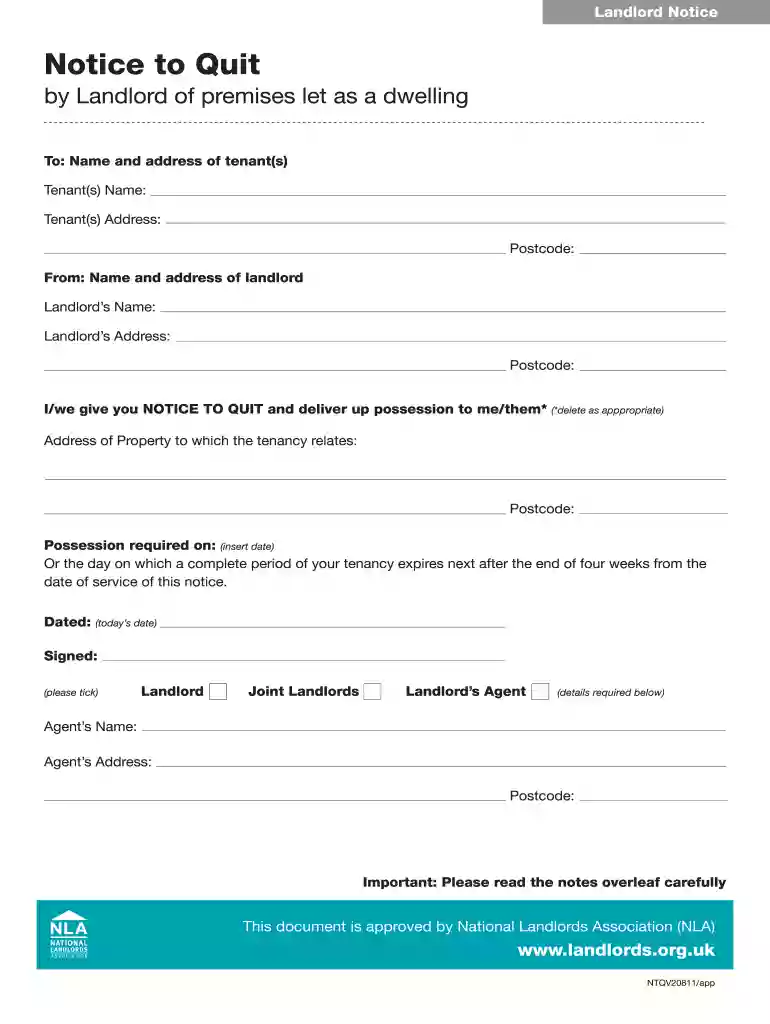
Type text, add images, blackout confidential details, add comments, highlights and more.

Draw your signature, type it, upload its image, or use your mobile device as a signature pad.

Send landlord notice to quit template via email, link, or fax. You can also download it, export it or print it out.
A "Notice to Quit" is a legal document used by landlords in the UK to formally inform tenants that they are required to vacate the rented premises. This notification serves as the necessary first step in eviction proceedings and must comply with specific legal requirements to be valid. The notice clearly outlines the tenant's and landlord's information, property address, and the date by which the tenant needs to vacate. Issued by the landlord, this document is crucial for initiating a tenant's removal due to breaches in tenancy agreements or end of tenancy terms.
The primary purpose of a Notice to Quit is to provide formal notice to the tenant regarding the termination of their lease or rental agreement. It acts as an official record that the landlord wishes to reclaim possession of the rental property, sometimes due to the tenant's failure to adhere to the lease terms, such as non-payment of rent or causing property damage.
In legal contexts, a Notice to Quit addresses statutory requirements under UK housing laws. It can be considered a pre-eviction notice and, when correctly issued, forms part of the necessary documentation for landlords to regain control of their property through legal processes if required. It must usually provide the tenant with at least four weeks of notice before the required move-out date.
A comprehensive Notice to Quit should include several key elements to ensure legal compliance and clear communication. These elements help to avoid potential disputes and facilitate a smooth transition for both landlord and tenant.
The template should clearly list the tenant's full name, current address, and contact information, along with the landlord's details. These identifiers help ensure that there is no confusion about the parties involved in the rental agreement.
Including a thorough description of the property is vital. This section includes the address and any specific features that identify the premises being discussed, ensuring both parties reference the same location.
The document must specify the exact date by which the tenant is required to vacate the premises. This date is crucial as it starts the countdown for the notice period and is legally binding for initiating eviction procedures if the tenant does not comply.
A well-prepared Notice to Quit must include legally required language that informs the tenant of their rights and obligations. It should advise them of their right to seek legal advice and challenge the notice if they believe it was issued in error.
Understanding the legal use of a Notice to Quit is essential for landlords, as non-compliance with legal standards can render the notice ineffective.
In the UK, eviction notices must comply with specific legal standards dictated by housing law. This includes adhering to prescribed periods and using legally recognized methods for serving the notice. For instance, notices cannot be issued without sufficient cause, such as breaches of tenancy terms or finalized fixed-term contracts.
Landlords are obliged to serve the notice within the legal time frame and in accordance with statutory provisions. Failing to do so can lead to legal challenges and potentially postpone the eviction process.
Using the Notice to Quit involves several steps that a landlord must carefully follow to ensure the process is valid and enforceable.
Draft the Notice: Using the template, fill out the required sections with accurate information about the tenant, property, and reasons for eviction.
Select a Delivery Method: Legally, the notice can be delivered in person, via mail, or through a registered process server to ensure the tenant receives it.
Maintain Proof of Service: Keep a record of the delivery method used and any acknowledgements received, as this may be needed in legal proceedings.
Follow-Up Actions: If the tenant does not vacate by the specified date, further legal action may be required, such as applying to the court for a possession order.
Familiarity with terms associated with a Notice to Quit is beneficial for both landlords and tenants to understand the full implications of the document.
This refers to the legal process of removing a tenant from a rental property, initiated by the Notice to Quit.
A legal request submitted by the landlord to the court if the tenant fails to vacate the property by the specified date in the Notice to Quit.
A contract between the landlord and tenant specifying the terms and conditions of the rental arrangement, which the Notice to Quit follows if breaches occur.
While this guide focuses on the UK, it's worth noting that procedures can vary significantly by country and even within regions in terms of notice periods and legal requirements.
Some regions may require notice periods longer than the typical four weeks, depending on local laws or specific tenancy agreements.
Legal frameworks varying by location might offer tenants different levels of protection, making it crucial to understand regional norms and consult local legal experts.
Understanding who uses a Notice to Quit template can provide context on its function within property management.


These parties are the primary users of Notice to Quit templates as part of their role in managing rental properties and enforcing lease terms.
Solicitors and legal advisors might use or reference this template to ensure its compliance with current laws, offering guidance to landlords throughout the eviction process.
We've got more versions of the notice to quit template form. Select the right notice to quit template version from the list and start editing it straight away!
| Versions | Form popularity | Fillable & printable |
|---|---|---|
| 2012 | 4.6 Satisfied (57 Votes) |
At DocHub, your data security is our priority. We follow HIPAA, SOC2, GDPR, and other standards, so you can work on your documents with confidence.


Generally the notice period is two weeks for nonexempt (hourly) and 4 weeks for exempt (salaried) employees. This requirement may be waived by the supervisor orRead more
PREFACE. The Analysts Style Manual is a product intended to assist student analysts with the many perplexing and complex rules they should follow in.Read more


