





Definition and Meaning of New York Instructions Tax
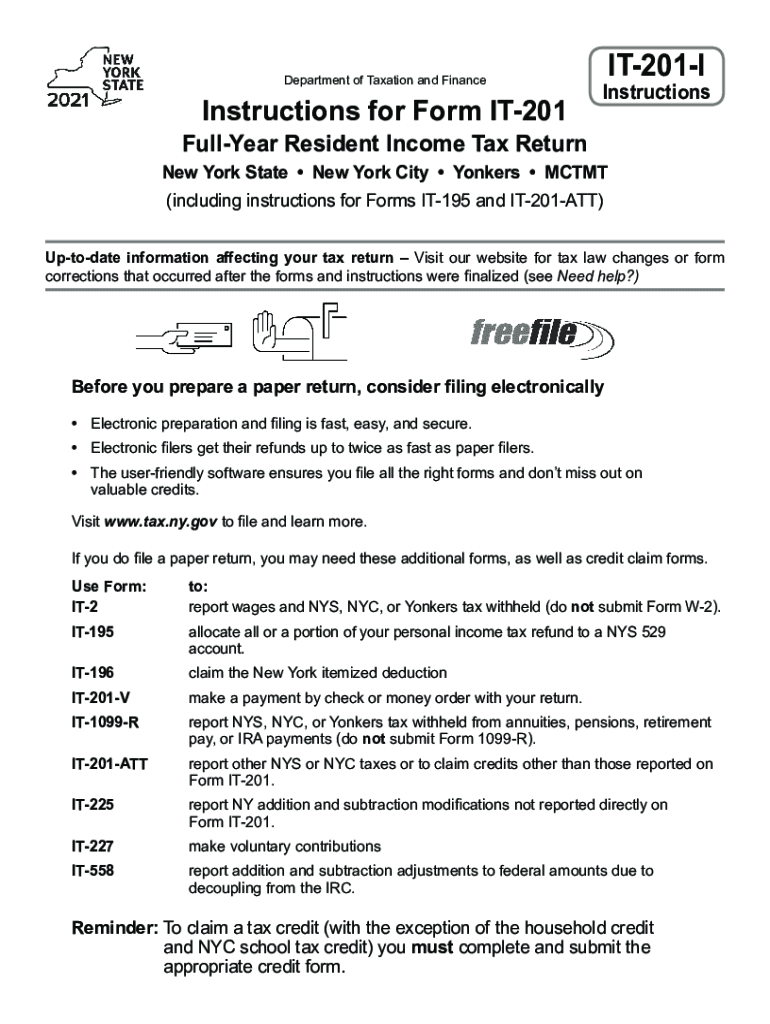
New York Instructions Tax refers primarily to the guidelines provided for completing the New York State Full-Year Resident Income Tax Return, commonly known as Form IT-201. This document is essential for taxpayers residing in New York state, offering comprehensive directions on reporting income, deductions, credits, and additional tax liabilities. It details various aspects such as state-specific tax credits, filing statuses, and the responsibilities of legal and professional preparers to ensure tax compliance.
Key Elements of the New York Instructions Tax
Form IT-201 encompasses several critical components:
- Personal Information: Includes taxpayer's full name, Social Security Number, and address.
- Income Details: Different types of income, such as wages, interest, and dividends.
- Adjustments and Deductions: Includes standard or itemized deductions applicable to state taxes.
- Credits and Other Taxes: Various New York-specific tax credits and additional taxes owed.
How to Use the New York Instructions Tax
Understanding and correctly applying the New York Instructions Tax is pivotal for accurate tax submission. Here's a structured guide to leveraging this resource:
- Familiarize with Form IT-201 Sections: Carefully review sections on income reporting, tax credits, and deductions.
- Identify Eligible Deductions and Credits: Tailor your tax return to maximize potential deductions and credits.
- Follow State-Specific Guidelines: Adhere to specific provisions for New York residents, especially for local tax adjustments.
Correct usage of the New York Instructions ensures precise reporting and minimizes errors during submission.
Steps to Complete the New York Instructions Tax
Completing your state tax return requires thorough attention to detail. Here’s a step-by-step guide to navigate through Form IT-201:
- Gather Personal and Income Documents: Collect all pertinent information, including W-2s, 1099s, and other income-related forms.
- Complete Personal Information: Ensure accuracy when inputting your name, SSN, and contact details.
- Report Income Accurately: Carefully enter all taxable income, cross-referencing with federal returns.
- Claim Deductions and Credits: Apply eligible deductions—standard or itemized—and New York-specific credits.
- Review and Sign: Double-check all entries for accuracy and sign the form to certify completeness.
Who Typically Uses the New York Instructions Tax
The New York Instructions Tax is primarily used by:
- Full-Year New York Residents: Individuals living in New York throughout the tax year.
- Part-Year Residents: Those who moved into or out of New York, needing to apportion income and deductions.
- Tax Preparers: Professionals assisting with state tax filings must adhere to these instructions for compliance.
Understanding who uses the form helps secure the correct application of instructions.


Form Submission Methods: Online, Mail, and In-Person
Submitting your New York state tax return can be done in several ways:
- Online Submission: Use authorized e-filing platforms for direct submission. This method ensures rapid processing and acknowledgment.
- Mail Submission: Send the completed paper forms to the designated New York State Department of Taxation and Finance address.
- In-Person Submission: Visit local tax offices offering submission services, especially if personal assistance is needed.
Selecting the appropriate method depends on preference and access to technology.
Required Documents for the New York Instructions Tax
A successful tax return requires precise preparation and supporting documentation:
- Federal Tax Return Copy: Needed for cross-referencing federal and state information.
- W-2 and 1099 Forms: Documents detailing wages, salaries, and other forms of income.
- Receipts for Deductions: Proof for itemized deductions claimed.
- Supporting Schedules: Additional forms for specific credits or additional taxes.
Having these documents ready prevents delays and ensures comprehensive tax reporting.
Filing Deadlines and Important Dates
New York tax filing adheres to strict deadlines, typically aligned with federal tax timelines:
- Regular Deadline: April 15. Files and any due amounts must be submitted by this date.
- Extension Requests: May be filed for a six-month extension, usually until October 15, but must be submitted by April 15.
Staying aware of crucial dates prevents penalties and ensures timely filing.
Penalties for Non-Compliance
Failure to comply with New York tax regulations can result in penalties:
- Late Filing Penalties: Charges based on the delay duration, calculated as a percentage of the total tax owed.
- Underpayment Penalties: Result from significant underreporting of income or underpayment of taxes.
Understanding these penalties and proactively addressing compliance issues can save time and costs in the long run.