






Definition & Meaning
The term "hereinafter referred to as Broker" is often used in legal documents to introduce a party that will be referred to as "Broker" throughout the rest of the document. This makes it easier to identify the party in question without having to repeat their full name or description each time. In real estate, for example, the party in an agreement that provides brokerage services to a client is typically labeled as "Broker."
Key Elements of the (hereinafter referred to as Broker)
A document featuring "(hereinafter referred to as Broker)" will usually include:
- Identification of the broker's role and responsibilities.
- Terms and conditions under which the broker operates.
- Financial obligations and compensation structure.
- Duration and termination clauses of the broker's services.
- Confidentiality and nondiscrimination policies to protect both parties.
Legal Use of the (hereinafter referred to as Broker)
The use of "(hereinafter referred to as Broker)" is important for legal clarity and precision. It ensures that:
- The rights and obligations of the broker are clearly defined and enforceable.
- The document is consistent, thus avoiding any confusion about which party is being discussed.
- All parties are aware of and agree to the terms outlined in the document, which can protect against future legal disputes.
How to Use the (hereinafter referred to as Broker)
When drafting or reviewing a legal document:
- Clearly identify the broker being referred to initially.
- Use the phrase "(hereinafter referred to as Broker)" immediately after the broker's name or description.
- Consistently use "Broker" throughout the document to refer to the identified party, ensuring alignment and understanding.
Who Typically Uses the (hereinafter referred to as Broker)
- Real Estate Agents and Firms: They often use this phrasing when entering into brokerage agreements with clients.
- Legal Professionals: Attorneys drafting contracts or other legal documents use this format for precision and clarity.
- Business Entities: Companies engaging brokers for various services might use these contracts to define responsibilities and expectations.


Important Terms Related to (hereinafter referred to as Broker)
- Agency Relationship: The legal arrangement where the broker acts on behalf of another party.
- Compensation: The payment terms for the broker’s services.
- Nondiscrimination Policy: Ensures fair treatment without bias in the broker's operations.
- Confidentiality: Agreements to protect sensitive information shared during the course of the broker's duties.
State-Specific Rules for the (hereinafter referred to as Broker)
The rules and regulations governing brokers can vary by state. For instance:
- Licensing Requirements: States like New York and California have stringent licensing procedures for brokers.
- Disclosure Regulations: Some states require brokers to disclose specific information about property conditions or conflicts of interest.
- Agency Types: States may recognize different types of agency relationships which impact how brokers interact with clients.
Examples of Using the (hereinafter referred to as Broker)
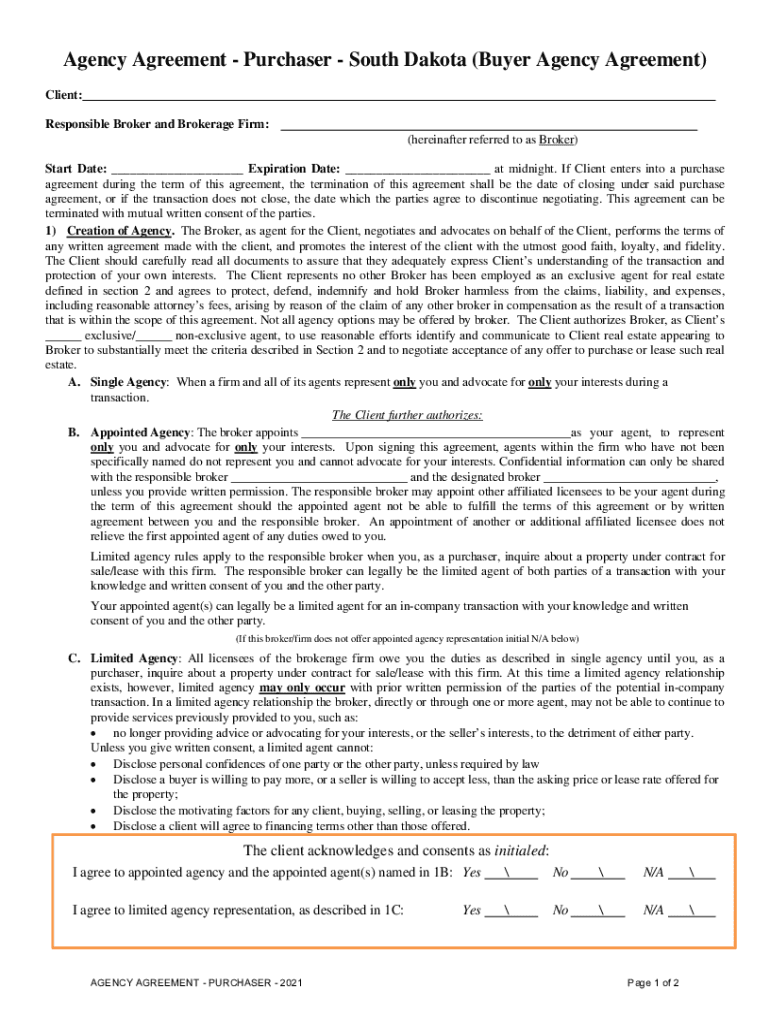
- Real Estate Transactions: A Buyer Agency Agreement may refer to a real estate firm as the "Broker" responsible for representing the buyer’s interests.
- Investment Services: In finance, documents might identify financial advisors as "Broker" to simplify references in complex advisory contracts.
Steps to Complete the (hereinafter referred to as Broker)
- Identify the broker and their roles: Clearly state who the broker is and the services they provide.
- Define terms and conditions: Outline the specifics of the broker’s engagement, including duties, compensation, and duration.
- Include legal clauses: Ensure all necessary legal protections, like nondisclosure agreements, are included.
- Review and sign: All parties should review the document carefully before signing to confirm agreement and understanding.