
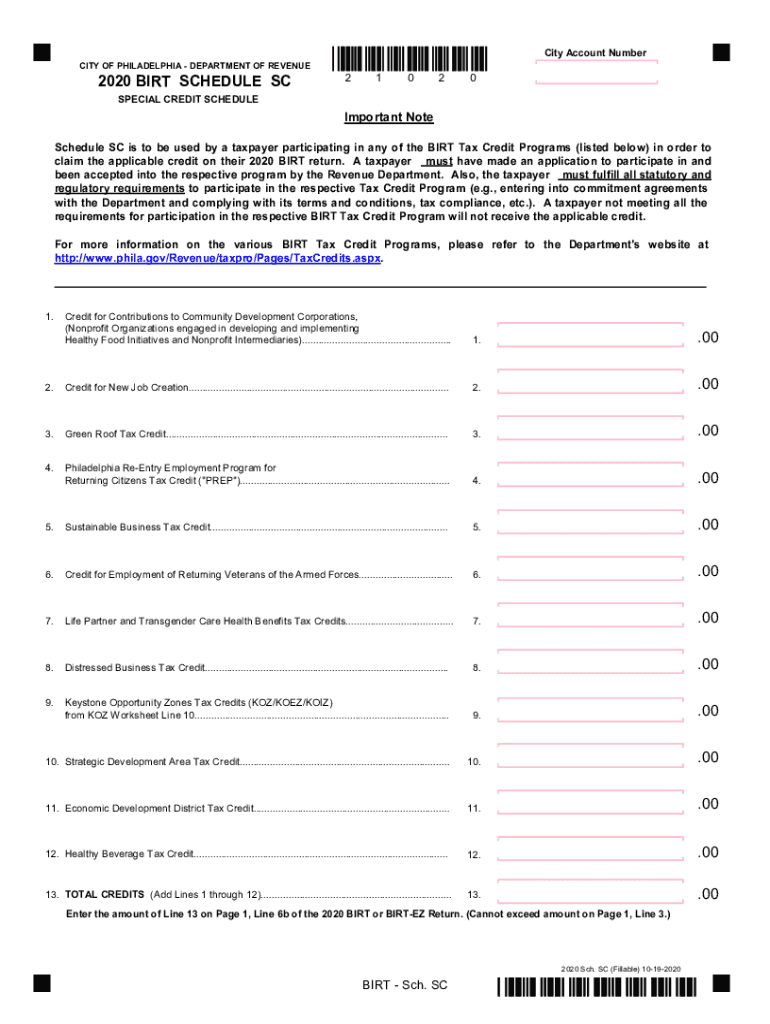







Definition and Purpose of BIRT Schedule SC
The BIRT Schedule SC is a specialized tax form utilized within the context of the Business Income and Receipts Tax (BIRT) system in Philadelphia, Pennsylvania. It relates specifically to the Special Credit Schedule SC for businesses looking to claim various tax credits. This form is designed to support businesses by offering financial relief through credits for activities like community development, job creation, and environmental initiatives. Understanding the precise role of this schedule is crucial for taxpayers looking to optimize their tax obligations under Philadelphia's BIRT framework.
Key Functions
- Tax Credit Allocation: The Schedule SC is primarily used to apply for and document eligibility for various tax credits available under the BIRT system.
- Efficient Tax Planning: By leveraging the credits available, businesses can effectively reduce their tax liabilities, thereby optimizing operational costs.
- Incentivizing Growth: The form includes credits aimed at encouraging business activities that contribute to the local economy and community development.
Steps to Complete the BIRT Schedule SC
Filing the BIRT Schedule SC accurately is essential for obtaining the relevant tax credits. The process involves several detailed steps to ensure complete and correct submission.
Step-by-Step Process
- Gather Required Information: Compile all necessary financial records and documents related to the tax credits you intend to claim. This ensures accuracy and completeness.
- Review Eligible Credits: Understand which credits apply to your specific business circumstances. This involves reviewing the criteria for each credit type.
- Complete Tax Credit Sections: Fill in the necessary sections on the form to apply for the credits, ensuring you provide detailed information to support each claim.
- Calculate Totals: Carefully calculate the total credits available to deduct from your BIRT liabilities based on the entries made.
- Submit the Schedule: Prepare to submit the form along with your BIRT return, ensuring compliance with Philadelphia's tax regulations.
Key Considerations
- Documentation: Maintain accurate and thorough documentation to support your claims, as this may be required for verification purposes.
- Professional Assistance: Consider consulting with a tax professional to ensure compliance and maximize the benefits available through this schedule.
Required Documents for BIRT Schedule SC
Completing the BIRT Schedule SC requires an array of documents to substantiate claims and support eligibility for various tax credits.
Essential Documents
- Financial Statements: Relevant business financial records that reflect income and expenditures related to the claimed credits.
- Proof of Compliance: Certificates or documentation proving compliance with credit-eligible activities (e.g., environmental certifications, community development initiatives).
- Previous Tax Returns: Copies of prior BIRT submissions, if referenced for carryover credits or adjustments.
Importance of Accurate Documentation
Accurate documentation is critical not only for the successful completion of Schedule SC but also for potential audits. Properly curated documents establish eligibility and facilitate a smooth filing process.
Legal Use and Compliance of BIRT Schedule SC
Legal compliance is a paramount concern when utilizing the BIRT Schedule SC. This involves adhering to specific regulations and guidelines provided by Philadelphia’s tax authority.
Legal Requirements
- Prior Application and Acceptance: Ensure that you have applied and been accepted for any credit programs you claim, as pre-approval is often necessary.
- Adherence to Guidelines: Follow the regulations as stipulated by the Philadelphia Department of Revenue to avoid common legal pitfalls.
Consequences of Non-Compliance
Failing to correctly follow legal procedures or misrepresenting information can result in penalties, disallowance of credits, or audits. This underscores the importance of meticulous attention to detail when filing.
How to Obtain the BIRT Schedule SC
Obtaining the BIRT Schedule SC involves specific channels and procedures, which might vary depending on your preferred method of access.
Acquisition Methods
- Online: The primary method is through the City of Philadelphia’s official website, which allows for easy access.
- In-person: Visit local tax offices if you prefer obtaining physical copies of the form.
- Professional Services: Tax professionals can provide the Schedule SC during client consultations or tax preparation services.
Tips for Efficient Access
Ensure you are accessing the most current form version to avoid submission issues, and check for any online instructions or updates that might affect the acquisition process.
Importance of BIRT Schedule SC for Businesses
The BIRT Schedule SC plays a significant role in the financial health and planning of businesses operating within Philadelphia.
Business Benefits
- Cost Reduction: By reducing the overall tax obligations through credits, businesses can allocate resources to other critical areas.
- Strategic Growth: Incentivized credits promote activities like expansion or investment in environmentally friendly practices, contributing to sustainable business growth.
- Competitive Advantage: Efficient tax credit utilization can provide a competitive edge by lowering operational costs compared to less informed competitors.
State-Specific Rules for BIRT Schedule SC
The regulations and requirements for the BIRT Schedule SC are specific to Philadelphia and may differ from standard state tax forms.
Tailored Regulations
- Geographical Relevance: Applicable exclusively to businesses within Philadelphia due to the nature of BIRT.
- Local Incentives: Includes credits designed to support local economic objectives.
Compliance Tips
Familiarize yourself with the local rules governing BIRT taxes, as state or federal tax guidelines will not apply in the same way. Consult local tax experts if unclear about specific requirements.
Business Entity Types that Benefit Most from BIRT Schedule SC
Different business structures might find varying levels of benefit from the BIRT Schedule SC, depending on their unique circumstances.
Beneficial Entity Types
- Corporations: Often eligible for numerous credits, aiding substantial tax burden reduction.
- LLCs and Partnerships: Can leverage specific credits linked to local business development and innovation.
- Non-Profits: May qualify for credits that support community engagement and public welfare initiatives.
Alignment with Business Goals
Choosing an optimal business entity type and understanding applicable credits can significantly affect financial strategies and tax outcomes.


