
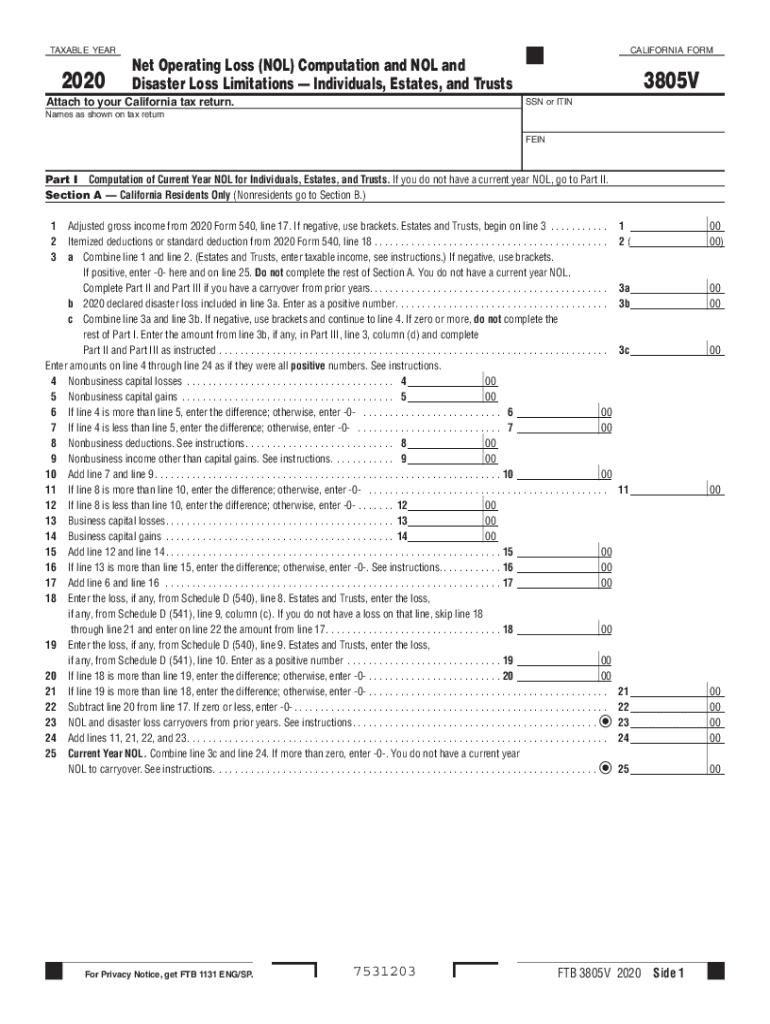







Definition and Purpose of the FTB Form 3805V
The FTB Form 3805V is a critical document for residents and businesses in California. This form is primarily used to compute the Net Operating Loss (NOL) and disaster loss limitations for the taxable year. The form provides a framework for calculating adjustments to taxable income based on various losses, ensuring taxpayers can accurately report their financial position to the Franchise Tax Board (FTB). The form addresses the needs of individuals, estates, and trusts, offering a detailed approach to compute NOL based on factors like adjusted gross income and deductions. Understanding the purpose and correct application of this form can help mitigate incorrect calculations and potential penalties.
Steps to Complete the FTB Form 3805V
-
Verify Personal and Taxpayer Information:
- Ensure that all personal information such as taxpayer identification number and filing status are accurate.
- Include details specific to your category—individual, estate, or trust.
-
Calculate Current Year NOL:
- Determine the adjusted gross income and apply relevant deductions to compute the current year NOL.
- Utilize California-specific guidelines, as the formula for NOL might differ from federal regulations.
-
Evaluate Disaster Loss Limitations:
- Review recent events that may qualify as disaster losses.
- Document and apply appropriate loss limitations provided by FTB guidelines.
-
Finalize Carryovers:
- Calculate modified taxable income to determine the carryover amounts from prior years.
- Note any changes in loss types or tax law that may affect this calculation.
Important Terms Related to the FTB Form 3805V
- Net Operating Loss (NOL): Represents the excess of allowable tax deductions over taxable income, which can be carried forward or back to other tax years to reduce taxable income.
- Adjusted Gross Income (AGI): The total income subject to tax, minus specific deductions.
- Modified Taxable Income: Taxable income before applying the NOL deduction, crucial for determining carryover limitations.
How to Obtain the FTB Form 3805V
There are several ways to acquire the FTB Form 3805V:
-
Download from the FTB Website:
- Visit the official FTB portal to access and download the form directly.
-
Request by Mail:
- Contact FTB customer service to request a mailed copy, which can take longer to receive.
-
Through Tax Preparation Software:
- Utilize platforms like TurboTax that may include access to the form as part of the service.
Eligibility Criteria for Using the FTB Form 3805V
Certain conditions must be met to utilize the FTB Form 3805V effectively:
- Residency: Both full-year and part-year California residents can use the form to report NOL.
- Entity Type: Form is applicable to individuals, estates, and trusts with qualifying disaster losses.
- Taxable Year Conditions: Must have applicable losses in the respective tax year to properly complete the form.

Legal Use of the FTB Form 3805V
The legal use of the FTB Form 3805V involves complying with the ESIGN Act, ensuring that all electronic signatures are legally binding. This confirms that entering information onto the form and submitting it electronically adheres to California state law. Misuse or incorrect reporting on the form may lead to penalties or audits, emphasizing the importance of accuracy and compliance.
Filing Deadlines and Important Dates
- Annual Tax Filing Deadline: Aligns with the standard April 15th deadline or extended period if an extension is filed.
- Estimated Tax Payments: Quarterly payments are due on specified dates throughout the year.
- Disaster Loss Reporting: Deadlines for specific disaster loss claims may vary based on FTB proclamations or federal declarations.
Software Compatibility
Taxpayers using software such as TurboTax or QuickBooks can integrate the FTB Form 3805V seamlessly into their filing process. Compatibility ensures that electronic calculations are precise, and data transfers to the form accurately, simplifying the reporting and submission process for taxpayers relying on digital solutions. Integration capabilities not only enhance accuracy but also streamline workflow for tax professionals and individuals alike.




