
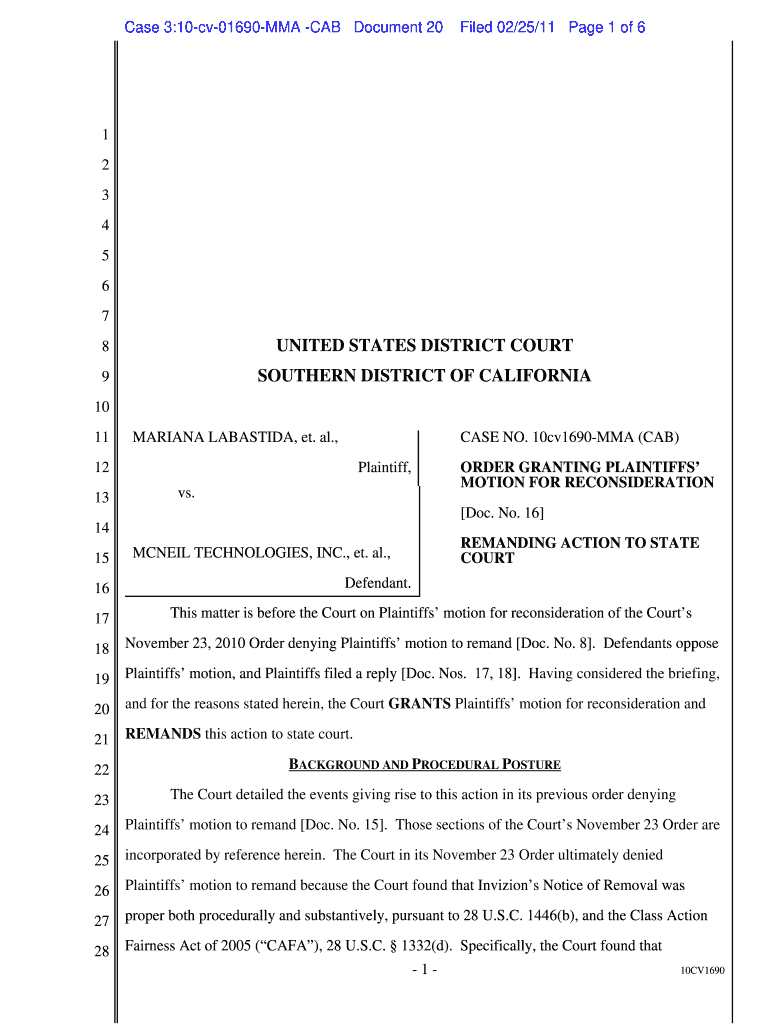







Understanding Motion for Reconsideration
A motion for reconsideration is a legal request made by a party to review a court's previous ruling. Often utilized when a party believes the court has overlooked certain facts, misapplied the law, or issued a ruling that is contrary to established precedent, this motion serves as a formal avenue for seeking a change in the court's decision.
Grounds for Filing a Motion for Reconsideration
There are several potential grounds upon which a party may file a motion for reconsideration, including:
- New Evidence: If new evidence has emerged that was not previously available and could impact the court's ruling, this could warrant reconsideration.
- Incorrect Application of Law: If the party believes that the law was applied incorrectly or that the court made a legal error in its decision.
- Change in Circumstances: A change in the situation relevant to the case since the prior decision was made may also be grounds for reconsideration.
Format and Structure of a Motion for Reconsideration
The format of a motion for reconsideration is crucial for its acceptance by the court. While specific requirements may vary by jurisdiction, the following components are generally included:
- Title of the Document: Clearly state 'Motion for Reconsideration' at the beginning of the document.
- Introduction Section: Briefly introduce the purpose of the motion and the order being contested.
- Statement of Facts: Provide a summary of relevant facts and background information pertinent to the case.
- Argument Section: Detail the legal arguments supporting the request for reconsideration, including citations to relevant statutes or case law.
- Conclusion: Formally request that the court reconsider its earlier ruling.
Sample Motion for Reconsideration Template
While specific cases will require unique details, a basic template may look like this:
[Your Name] [Your Address] [City, State, ZIP Code] [Email Address] [Phone Number]
[Date]
[NAME OF COURT] [Court Address] [City, State, ZIP Code]
RE: Motion for Reconsideration of [Case Name/Number]
Dear [Judge's Name],
I, [Your Name], hereby submit a motion for reconsideration concerning the court's ruling dated [Date of Ruling] regarding [Brief Description of the Ruling].
- Introduction: [Introduce the scope of the case and the ruling].
- Statement of Facts: [Summarize relevant background information].
- Legal Arguments: a. [First Argument] b. [Second Argument]
- Conclusion: For the reasons outlined above, I respectfully request the court to reconsider its previous decision.
Sincerely,
[Your Name]
Examples of Motion for Reconsideration in Practice
In various legal contexts, motions for reconsideration may be employed effectively. For instance:
- Family Law: A motion for reconsideration could be used when a court has denied a request for spousal maintenance based on what the moving party believes is an incorrect assessment of their financial situation.
- Environmental Law: If a court has ruled on an environmental impact assessment without considering the latest scientific studies, parties could file a motion for reconsideration incorporating this new data.
Legal Implications and Consequences
Filing a motion for reconsideration can significantly impact ongoing litigation. If granted, it may lead to a modification of the court's previous order, potentially allowing for new evidence to be considered or a revision of the legal basis for the ruling. Conversely, filing an ineffective or frivolous motion can lead to delays in proceedings or even sanctions against the filing party.
State-Specific Rules and Procedures
Different jurisdictions have specific rules governing the filing of motions for reconsideration. It is essential to adhere to local rules regarding:
- Filing Deadlines: A motion typically must be filed within a specific timeframe following the original decision.
- Content Requirements: Some jurisdictions may have additional required elements or specific formatting guidelines.
- Justification Thresholds: The standards for what constitutes sufficient grounds for reconsideration can vary.
When filing a motion for reconsideration, thorough attention to jurisdictional requirements and precise formulation of content can be critical to success.




