







Definition & Meaning
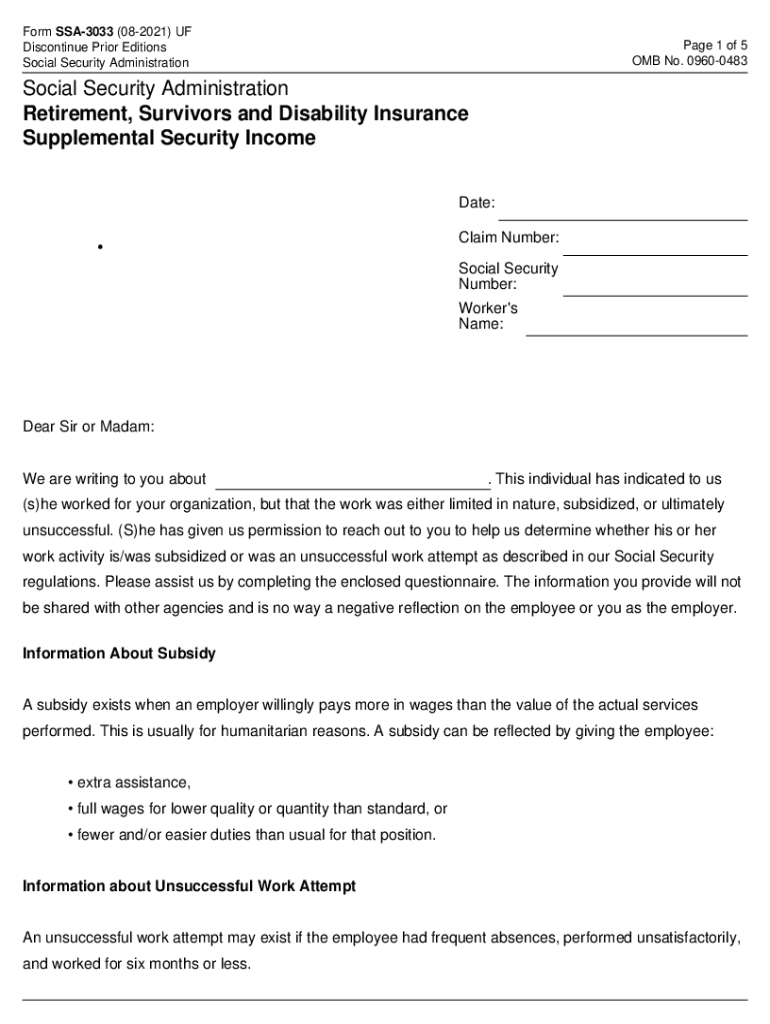
Form SSA-3033, issued by the Social Security Administration (SSA), plays a critical role in evaluating an employee's work activity. Employers use this form to provide insights about an employee's job performance, attendance, and whether their work was subsidized or constituted an unsuccessful work attempt. It's integral in assessing an individual's eligibility for disability benefits, factoring in any necessary accommodations or subsidies provided by the employer that may impact the employee's work capability.
Steps to Complete the SSA-3033
Completing Form SSA-3033 requires careful attention to detail, as the accuracy of the information provided can significantly affect the Social Security benefits assessment. Here are the steps involved:
-
Personal Information: Start by filling out the basic details about the employee, such as name, social security number, and contact information.
-
Employment Details: Enter information about the employer, including the company name, address, and the duration of the employee's tenure at the organization.
-
Job Performance and Assistance: Provide detailed information on the employee's job performance, indicating any assistance or special accommodations received. Include specifics about the type, extent, and impact of these accommodations.
-
Attendance: Record the employee’s attendance history, with emphasis on any frequent absences or irregularities that could relate to their medical conditions.
-
Supplementary Materials: Attach any additional documents that could support the information provided, such as performance reviews or medical certificates explaining absences.
Who Typically Uses the SSA-3033
Form SSA-3033 is predominantly used by employers who need to furnish detailed reports on an employee's work activity as part of the Social Security disability determination process. Human resources departments, payroll teams, and managers responsible for overseeing employee performance typically handle the completion of this form. Additionally, it may involve collaboration with legal or compliance departments to ensure data accuracy and adherence to confidentiality standards.

Legal Use of the SSA-3033
The Social Security Administration uses the SSA-3033 to verify whether an individual's work was impacted by a disability, determining eligibility for benefits under the Social Security Disability Insurance program. Legal use mandates strict confidentiality to protect employee information, and employers must ensure the data is accurate, as any false reports could lead to legal consequences for both employer and employee.
Key Elements of the SSA-3033
Form SSA-3033 contains several key elements that must be thoroughly addressed:
-
Employee Identification: Clearly documented personal and work-related identifiers.
-
Nature of Accommodations: Specifics about the type and duration of support the employee receives.
-
Performance Metrics: Objective assessments of job performance and productivity.
-
Absence Record: Detailed attendance logs that correspond with medical or disability claims.
These elements collectively provide a holistic view of the employee's capabilities and the adjustments made to support them, essential for SSA’s benefit determination process.
Required Documents
To complement the SSA-3033, employers must gather supplementary documentation that substantiates the claims made within the form. Necessary documents often include:
-
Performance reviews documenting any noted accommodations or assistance.
-
Medical certificates explaining recurrent absences or reduced capacity.
-
Employment contracts or agreements detailing specific job roles and expectations.
Ensuring these documents are comprehensive and current is vital for the form's legitimacy and effectiveness.
Form Submission Methods (Online / Mail / In-Person)
Employers have several options when submitting Form SSA-3033:
-
Online Submission: This is often the quickest method, where employers can upload the completed form and supporting documents directly to the SSA's online portal.
-
Mail: Mailing the form is traditional, requiring a physical copy to be sent to the designated SSA office. It should be ensured that the form and any accompanying documents are legible.
-
In-Person: While less common, some choose to submit the form directly at an SSA office, which allows for immediate verification that all necessary information is included.
Each submission method varies in processing time, so it is advisable to choose the one that best aligns with the urgency of the situation.
Penalties for Non-Compliance
Failure to accurately and timely submit Form SSA-3033 can have significant repercussions. Non-compliance may result in delayed processing of the employee's disability benefits, affecting their financial stability. Employers may also face legal scrutiny if it's found that misinformation or omission of critical details was intentional. Therefore, compliance with the submission guidelines and deadlines is imperative to avoid these potential penalties.
State-by-State Differences
While Form SSA-3033 is a federal document, some states might have additional requirements or complementary forms that need to be submitted alongside it. These requirements may reflect state supplemental programs or specific accommodations under state disability laws. Employers should verify any state-specific mandates to ensure full compliance with both federal and state regulations.




