




01. Edit your form online
Type text, add images, blackout confidential details, add comments, highlights and more.

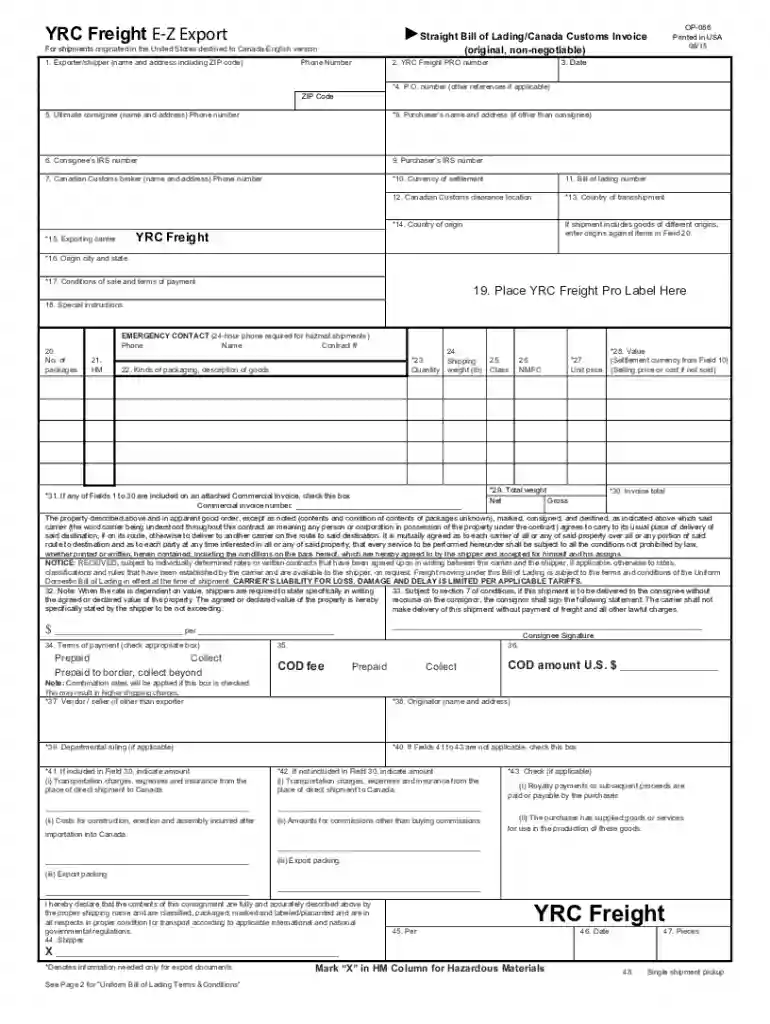
Type text, add images, blackout confidential details, add comments, highlights and more.

Draw your signature, type it, upload its image, or use your mobile device as a signature pad.

Send it via email, link, or fax. You can also download it, export it or print it out.
Customs information comprises documentation and data essential for the movement of goods across international borders. This information is pivotal in complying with governmental regulations related to importing and exporting, ensuring goods meet all legal requirements, and facilitating seamless transactions. Typical components include the description of goods, origin, destination, and applicable tariffs or taxes. A comprehensive understanding of this information aids businesses and individuals in navigating customs procedures efficiently, reducing the risk of delays or penalties.
Understanding customs information is crucial for efficient trade operations. For instance, inaccuracies in declaring goods' value or misclassification can lead to increased duties or legal issues. Correct documentation generated through platforms like DocHub can significantly streamline the customs process.
Utilizing customs information properly involves providing accurate data for customs declarations, compiling necessary documents, and submitting them through appropriate channels. This ensures compliance with legal frameworks set by governments, thereby facilitating the swift clearance of goods.
Acquiring customs information involves gathering data from multiple sources—such as exporters, importers, and customs brokers—and compiling it into a legally compliant format. This task requires coordination with various stakeholders in the supply chain to ensure all details align with international trade regulations.
Preparation of accurate customs documentation involves a systematic approach to compiling and verifying details. Each step ensures that the information aligns with legal and logistical standards, reducing the potential for errors and delays.
Customs information is utilized by a wide range of entities involved in international trade. Each user group relies on precise and compliant data to facilitate legal and operational processes.


Several crucial documents form the backbone of customs processes. These papers provide the necessary details customs authorities require to assess, verify, and approve the transit of goods.
Legal use of customs information entails following prescribed rules and regulations governing international trade and customs compliance. Ensuring legal use extends beyond the correct submission of documents to encompass understanding penalties and repercussions of inaccuracies or fraud.
Several core components make up comprehensive customs information. Each element plays a crucial role in ensuring goods can pass smoothly across international boundaries while complying with all necessary regulations.
Real-world applications of customs information highlight its importance and utility in global trade operations. Through specific examples, businesses can better understand and optimize their customs processes.
We've got more versions of the customs information form. Select the right customs information version from the list and start editing it straight away!
At DocHub, your data security is our priority. We follow HIPAA, SOC2, GDPR, and other standards, so you can work on your documents with confidence.
Additional Information Official Notice of Extension, Suspension and Liquidation The single point of contact between CBP and Congress.Read more
The contractual service covers the customs clearance of alcohol at the port of entry where duty, VAT, and excise duty must be paid.


