
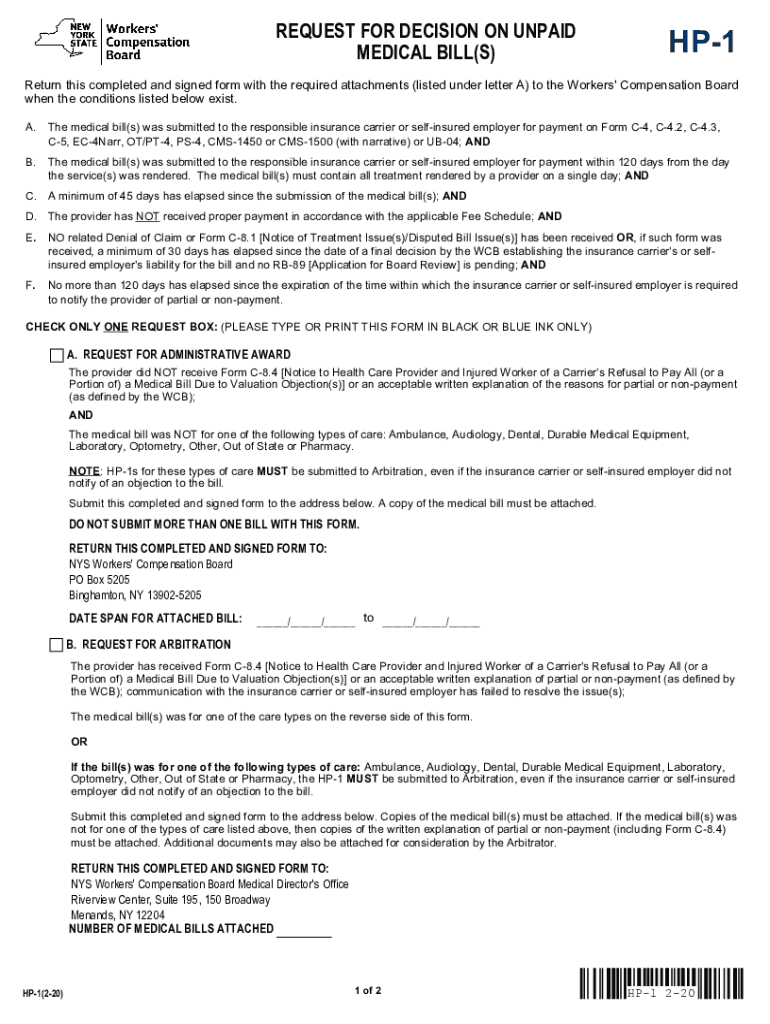







Definition and Purpose of NY HP-1
The NY HP-1 form serves as a request form specifically designed to address unpaid medical bills associated with workers' compensation claims in the state of New York. The document plays a critical role in ensuring that medical providers receive compensation for services rendered to injured workers. It allows claimants or their authorized representatives to officially record and submit a request for payment, either through an administrative award or arbitration, depending on the scenario. This form provides a structured pathway for resolving financial disputes related to workers' compensation claims, ensuring compliance with New York's legal framework for workers’ compensation.
Key Elements of the NY HP-1
Understanding the essential components of the NY HP-1 form is crucial for effectively using it. The form requires the submission of detailed information, including:
- Injured Worker’s Information: Personal details such as name, address, and workers' compensation case number.
- Medical Provider Details: The name and contact information of the medical provider seeking payment.
- Type of Care Provided: A detailed description of the medical services rendered.
- Billing Information: The amount being claimed, including a breakdown of services and associated costs.
- Signature Sections: Must be completed by the claimant or authorized representative to verify the submission.
Each section of the form must be filled accurately to prevent delays in the payment process and to ensure the claim is processed efficiently.
How to Obtain the NY HP-1
Acquiring the NY HP-1 form is a straightforward process, typically involving:
-
Online Access: The form is available for download from the official New York Workers' Compensation Board website. This option provides the convenience of immediate access and the ability to complete the form digitally.
-
Request by Mail: An alternative method is to request a physical copy of the form by contacting the New York Workers' Compensation Board directly. This option is ideal for those who prefer a paper version or lack reliable internet access.
-
In-Person Collection: You may visit a regional office of the New York Workers' Compensation Board to obtain a copy in person.
Having multiple avenues to access the form ensures that all users, regardless of their preferred method, can easily obtain the document.
Steps to Complete the NY HP-1
Filling out the NY HP-1 form requires careful attention to detail. Follow these steps to ensure accuracy:
-
Gather Required Information: Collect all necessary details related to the injured worker, medical provider, and specific bills in question.
-
Complete Personal and Case Details: Input accurate personal details for the injured worker and case-specific information.
-
Document Medical Services and Costs: Provide a comprehensive listing of services rendered, along with corresponding charges.
-
Choose Resolution Preference: Indicate whether you're seeking an administrative award or pursuing arbitration based on the circumstances.
-
Verification and Signature: Ensure all entries are correct before signing the form to confirm its authenticity.
-
Submit the Form: Forward the completed form to the appropriate office either online, via mail, or in person as per the submission guidelines.
By following these steps methodically, applicants can streamline the application process and reduce the likelihood of form rejection or processing delays.
Importance of Submitting the NY HP-1
Filing the NY HP-1 is vital for multiple reasons:
- Financial Recovery: It facilitates the recovery of unpaid medical bills for services offered to injured workers, ensuring healthcare providers receive due compensation.
- Dispute Resolution: Offers a formal mechanism to resolve payment disputes legally and effectively, which is crucial in maintaining harmonious relationships between providers and payers.
- Legal Compliance: Submitting this form aligns with regulatory requirements governing workers' compensation in New York, mitigating risks of non-compliance.
Ensuring the form is submitted promptly and accurately is crucial for medical providers wishing to expedite bill recovery and navigate workers' compensation procedures effectively.
Required Documents for the NY HP-1
To successfully complete and submit the NY HP-1 form, certain supporting documents are necessary:
- Medical Bills and Receipts: Copies of all outstanding bills and associated payment receipts.
- Workers' Compensation Case Files: Relevant case documentation to substantiate the claim.
- Correspondence Records: Any communication with insurers or financial representatives regarding the unpaid amounts.
Having these documents on hand will aid in substantiating claims made within the NY HP-1, enhancing the application's credibility and facilitating the review process.
Filing Deadlines and Important Dates
Timeliness is critical when submitting the NY HP-1 form. Consider these key deadlines:
- Initial Submission Period: Typically, the form must be submitted within a specific duration following the provider's service to ensure timely processing.
- Time Elapsed Since Initial Submission: Conditions for resubmission may depend on how much time has passed since the original billing.
- Response Timeframes: Be aware of the stipulated times within which you should expect feedback or payment post-submission.
Adhering to these critical timelines ensures that claims are processed efficiently and reduces the likelihood of disputes over late submissions.
Legal Use and Compliance of the NY HP-1
The NY HP-1 form is an official document governed by New York's workers' compensation laws, underscoring its importance in legal and regulatory compliance:
- Adherence to Regulations: The form must be utilized in accordance with the established legal framework, maintaining compliance with New York's specific workers' compensation statutes.
- Confidentiality Obligations: Personal information provided within the form is subject to privacy considerations that must be upheld.
- Resolved Dispute Avenues: Offers a recognized method for addressing financial disagreements, ensuring parties have a legitimate recourse to a fair resolution.
Ensuring strict adherence to these legal requirements helps protect both healthcare providers and claimants from regulatory penalties and fosters trust within the workers' compensation system.




