
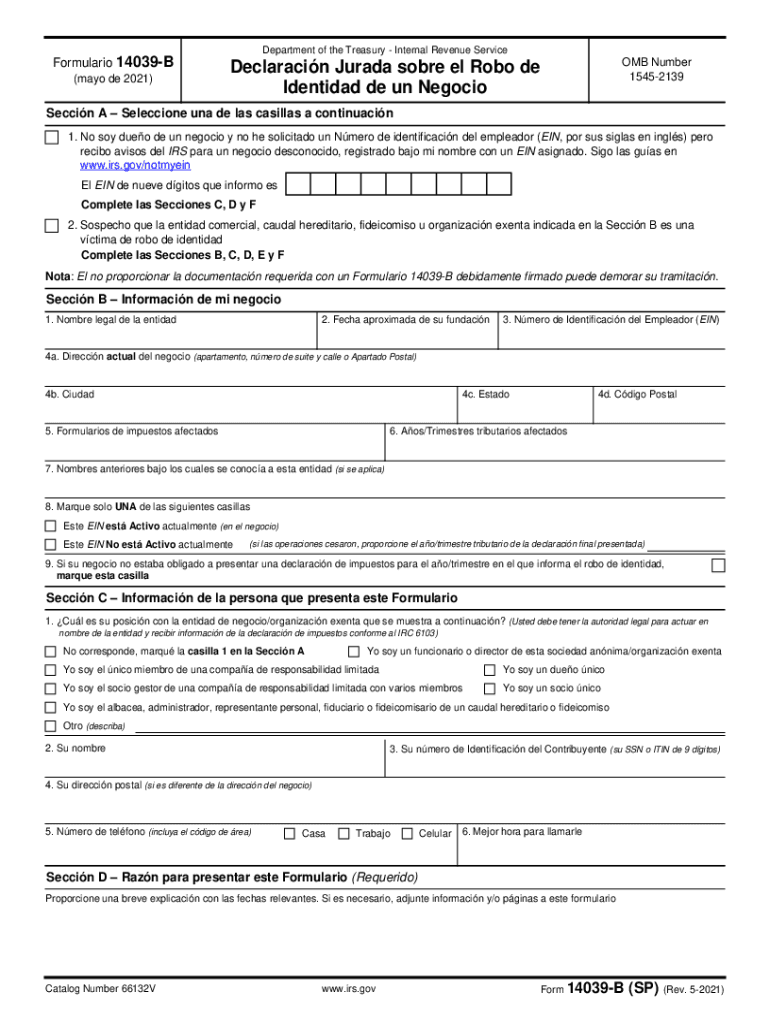







Definition and Purpose of IRS Form 14039
IRS Form 14039, known as the Identity Theft Affidavit, is used to report identity theft to the Internal Revenue Service (IRS). This form allows taxpayers to alert the IRS to fraudulent tax returns filed using their name or Social Security number. Identity theft can result in significant financial and personal challenges, and the IRS 14039 form serves as a critical step in rectifying the situation. It helps the IRS verify your identity and prevent further misuse of your personal information.
How to Obtain IRS Form 14039
IRS Form 14039 can be obtained directly from the IRS website. The form is available in both digital and print formats. You can download the PDF version and print it for physical completion or fill it out electronically. Ensure you have the latest version by checking the IRS website for updates, as tax forms are periodically revised.
Steps to Complete IRS Form 14039
-
Gather Information: Collect relevant documents, such as your Social Security card, tax returns, and any correspondence from the IRS related to the identity theft.
-
Provide Personal Information: Enter your personal details, including your name, Social Security number, and contact information.
-
Describe the Issue: Clearly explain the identity theft situation and specify if a fraudulent tax return was filed using your identity.
-
Attach Documentation: Include copies of any notices you received from the IRS and any police reports you may have filed related to the identity theft.
-
Sign and Submit: Ensure you sign the form and follow the submission instructions, which may include mailing it to a designated address or submitting it online if applicable.
Who Typically Uses IRS Form 14039
Typically, taxpayers who suspect that their personal information has been misused to submit fraudulent tax returns utilize IRS Form 14039. This can include individuals whose information was compromised in data breaches or who experienced unauthorized use of their Social Security number. Victims of identity theft within the United States predominantly use this form to ensure that the IRS is aware of and addressing any fraudulent activities impacting their taxes.
Required Documents for IRS Form 14039
When submitting IRS Form 14039, you must include relevant documents to support your identity theft claim. These documents typically include:
- Copies of tax returns (if any) with an indication of whether they are the legitimate or fraudulent submissions.
- Identification documents such as a Social Security card or a government-issued ID.
- IRS notices or letters that prompted the filing of Form 14039.
- Police reports, if filed, related to the identity theft.
Filing Methods for IRS Form 14039
There are primarily two methods to submit IRS Form 14039:
-
Mail: Complete the form and send it to the IRS mailing address provided in the form instructions. Ensure all accompanying documentation is included.
-
Online Submission: If the IRS requests submission via an electronic method, follow the instructions provided in their correspondence. Online filing may expedite the resolution process.
Legal Considerations Regarding IRS Form 14039
Using IRS Form 14039 is a legal process that aids in protecting your rights and finances. Filing the form does not exempt you from any tax obligations but helps address unauthorized activities by criminals using your identity. Furthermore, while filing this form, accuracy and honesty are paramount, as providing false information to the IRS constitutes legal violations with severe penalties.
IRS Guidelines on Identity Theft Reporting
The IRS provides detailed guidelines on using Form 14039 as part of its procedures for handling identity theft cases. Key points include reporting the theft as soon as it is suspected, cooperating with IRS inquiries, and maintaining patience, as resolving identity theft issues can take time.
- Follow up on IRS responses and keep track of any correspondence.
- Reach out to the IRS identity theft protection unit for ongoing support and information on your situation.
- Utilize IRS resources available on their website for affected taxpayers, including FAQs and help centers tailored to identity theft victims.




