
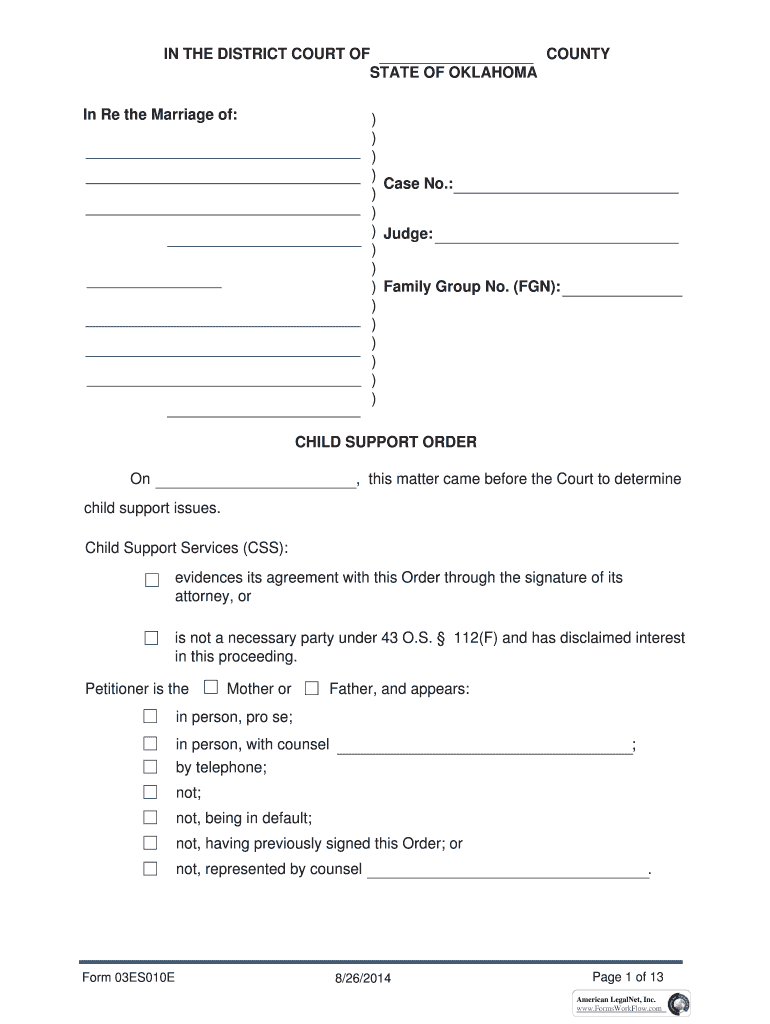







Definition and Meaning
The Oklahoma Statutes Title 43 covers laws related to marriage and family in Oklahoma, providing a legal framework governing domestic relations. This statute encompasses regulations on marriage licenses, divorce proceedings, child custody, and support obligations. It defines the legal responsibilities and rights of individuals regarding marital and familial relationships, ensuring compliance with state laws.
How to Use the Oklahoma Statutes Title 43
To utilize the Oklahoma Statutes Title 43 effectively, individuals or legal practitioners must understand its applicability to specific family law issues. Whether dealing with marriage licenses or navigating divorce proceedings, users should reference relevant sections to ensure compliance with Oklahoma law. Consulting this statute provides guidance on procedural requirements and rights under the family law system.
Steps to Complete Marriage Licensing Under Oklahoma Statutes Title 43
-
Application Submission: Couples must apply for a marriage license at a county court clerk's office. Both parties need to be present to provide required identification and information.
-
Verification Process: The clerk will verify the applicants' ages, identities, and any previous marital statuses. Proof of divorce or annulment is required if applicable.
-
Fee Payment: A fee is typically required for processing the marriage license application. Discounts may apply if premarital counseling has been completed.
-
Waiting Period: Oklahoma law may impose a waiting period before the license becomes valid. It's essential to plan appropriately to accommodate this timeframe.
-
License Validity: The marriage license is valid for a specific duration. The marriage ceremony must be conducted within this period for the license to remain valid.
-
Ceremony and Certification: A certified officiant must perform the marriage ceremony, after which the completed license is returned to the clerk for official recording.
Key Elements of the Oklahoma Statutes Title 43
- Marriage Laws: Detailed criteria for obtaining marriage licenses, including age, consent, and documentation requirements.
- Divorce Regulations: Procedures and grounds for divorce, including asset division, alimony, and child support considerations.
- Child Custody and Support: Guidelines determining custody arrangements and financial obligations towards children, ensuring their welfare.
- Annulments and Separations: Legal provisions for annulments and separations, outlining conditions and effects on marital status.
Legal Use of the Oklahoma Statutes Title 43
This statute provides authoritative guidance in legal settings for resolving family and marriage-related disputes. Lawyers utilize it to build cases regarding divorce, child custody, and support. Courts rely on its provisions to adjudicate family law matters, ensuring decisions align with state legislation.
Important Terms Related to Oklahoma Statutes Title 43
- Custody: Legal care and control over a child, categorized into physical and legal custody.
- Alimony: Financial support paid to a spouse post-separation, determined by factors such as income and marriage duration.
- Annulment: A legal declaration that a marriage is null, treating it as if it never legally existed.
- Premarital Agreement: A contract entered before marriage outlining asset division in case of divorce.
State-Specific Rules for the Oklahoma Statutes Title 43
While general principles of family law are consistent, Oklahoma imposes unique regulations on marriage age, residency requirements for divorce, and specific forms for court submissions. Understanding these state-specific rules is crucial for compliance and successful legal proceedings.
Examples of Using the Oklahoma Statutes Title 43
A couple interested in marriage must navigate Title 43's marriage license requirements, ensuring all documentation and legal prerequisites are met. In contrast, individuals seeking a divorce must adhere to Title 43's procedures for filing petitions, engaging qualified legal representatives for effective resolution aligned with state laws. Child custody disputes are resolved using guidelines outlined within this statute, ensuring judgments are equitable and prioritize children's welfare.
State-by-State Differences
The Oklahoma Statutes Title 43 contains regulations specific to Oklahoma, which may differ from family law statutes in other states concerning marriage requirements, divorce processes, and child custody considerations. Comparing Oklahoma's statutes to those of neighboring states highlights variations in legal frameworks affecting family law proceedings.




