
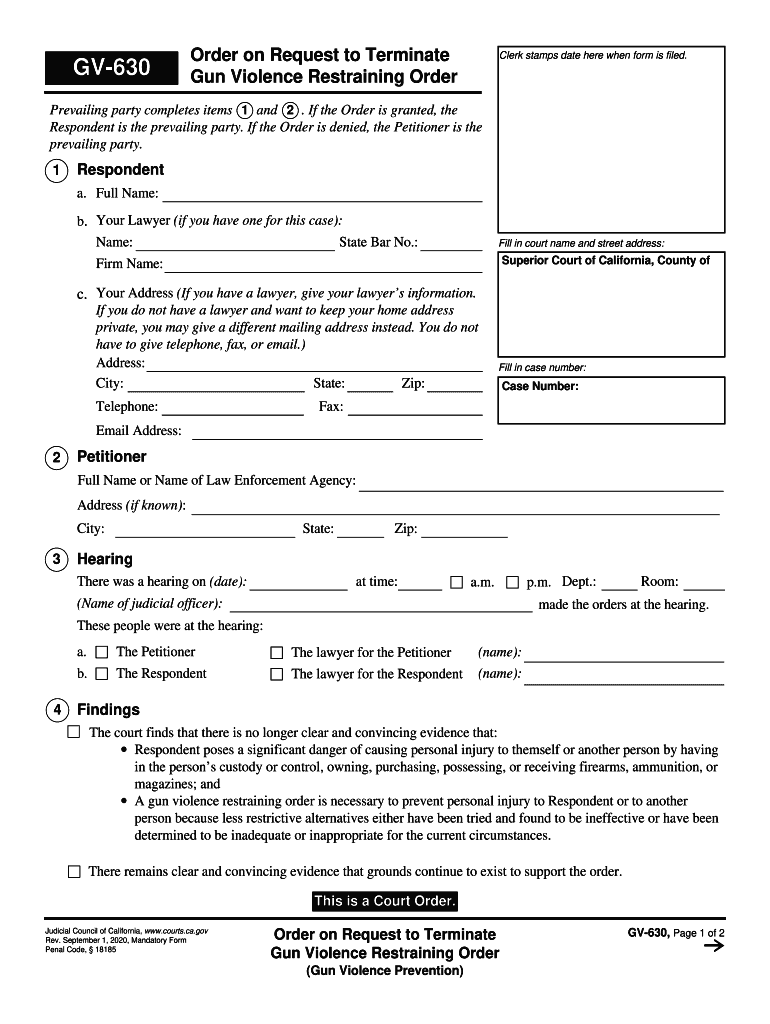







Definition and Meaning of the GV-630 Order
The GV-630 order is a form associated with the termination of a Gun Violence Restraining Order (GVRO) in California. It plays a critical role in the judicial process by assessing evidence to determine whether an existing restraint should be lifted. The form outlines the necessary procedural details, identifies the involved parties, and grants or denies the termination request based on the findings presented during the hearing.
Purpose and Context
- Gun Violence Restraining Order: A legal measure designed to prevent individuals deemed potentially dangerous from accessing or owning firearms.
- Termination: This form specifically deals with terminating the restraining order, combating any incorrect assumptions or changes in circumstances.
Importance in Legal Proceedings
- Evidence Evaluation: The form is used to record evidence assessments about the respondent's potential danger to themselves or others.
- Judicial Decision: Based on the submissions and proceedings, courts use this form to decide whether to continue or terminate the restraints.
How to Use the GV-630 Order
Understanding how to efficiently use the GV-630 form is pivotal for all parties involved—whether petitioners, respondents, or legal practitioners.
Detailed Usage Instructions
- Filing the Form: Securely fill out the GV-630 with all required details regarding the current restraining order.
- Attach Supporting Evidence: Submit evidence showing changed circumstances or improvements in conduct justifying the need for termination.
- Submit to Court: Submit the completed form to the relevant court for review. Consider consultation with an attorney specializing in GVROs for thoroughness.
- Attend the Hearing: Be prepared to present arguments and evidence at the court hearing where the decision will be made.
Steps to Complete the GV-630 Order
Filling out the GV-630 requires adherence to specific steps to ensure that the form is completed correctly and effectively.
Detailed Completion Guide
- Identification Details: Include detailed information about the petitioner and respondent, such as names and contact details.
- Original Order Information: Provide details of the existing GVRO, including issuance date and specific conditions.
- Reason for Termination: Clearly articulate the reasons for requesting the termination, supported by evidence and appropriate documentation.
- Signature and Submission: The form must be signed by the petitioner or their representative before submission.
Subsections
- Features:
- Text boxes for inputting information.
- Sections specifically designated for evidence presentation.
- Example Scenarios:
- Changes in mental health status leading to reevaluation requests.
- Demonstrated compliance with other court directives previously ordered.
Legal Use of the GV-630 Order
The GV-630 form is specifically tailored for use within the California legal system.
Legal Framework and Compliance
- Jurisdiction: Strictly used within California courts dealing with gun violence restraining orders.
- Legal Validity: Adheres to California laws governing the termination of restraining orders, essential for ensuring compliance with state-specific regulations.
Courtroom Presentation
- Information Accuracy: Ensure all information presented is accurate and verifiable.
- Court Instructions: Follow all procedural instructions provided by the court for handling and submitting the form.
Key Elements of the GV-630 Order
Several core elements make up the GV-630, framing its structure and functionality.
Core Components
- Parties Involved: Requires detailed specification of the individuals or parties involved in the initial GVRO.
- Hearing Details: Space to document hearing dates and outcomes, pivotal for the legal process.
Additional Elements
- Service of the Order: Instructions on serving the order to respective parties once decisions have been made.
- Documentation and Record Keeping: Guidelines on maintaining records related to the order and corresponding hearings.
State-Specific Rules for the GV-630 Order
California enforces specific rules and guidelines associated with the GV-630.
California-Specific Regulations
- Gun Laws: California's stringent gun laws influence how GVROs are issued and terminated.
- Court Requirements: Compliance with specific documentation standards unique to California.
Importance of State Variability
Understanding how these rules differ from other states can prevent errors and ensure successful form handling within California's jurisdiction.
Examples of Using the GV-630 Order
Practically applied, the GV-630 has several scenarios where it plays a crucial role.
Case Studies
- Successful Termination: Example of a case where a respondent showed sufficient rehabilitation, leading to a successful termination of the GVRO.
- Denied Requests: A scenario where the request was denied due to lack of evidence, highlighting the importance of thorough documentation.
Real-World Applications
- Family Disputes: Instances where family members utilize the form in the context of intrafamily protective orders.
- Rehabilitation Cases: Demonstrations of how mental health improvements justify reevaluating a respondent's status under the GVRO.
Who Typically Uses the GV-630 Order
Certain individuals and groups are more likely to interact with the GV-630 form, based on their circumstances or professional roles.


Standard Users
- Petitioners: Often individuals seeking protective measures for perceived threats to safety.
- Legal Professionals: Lawyers and paralegals handling cases involving GVROs.
- Respondents: Those subject to a GVRO who believe circumstances warrant the order's termination.
Professional Involvement
- Counselors and Therapists: May provide supporting documentation illustrating changes in behavior or risk.
- Law Enforcement: Offers insight into the respondent's compliance with existing orders, aiding the court's decision-making process.
Penalties for Non-Compliance
Non-compliance with GVRO regulations, including those related to the GV-630, carries significant penalties.
Consequences and Legal Repercussions
- Legal Sanctions: Missing deadlines or submitting incomplete forms can result in legal disadvantages.
- Court Action: Failure to accurately or timely complete the GV-630 can lead to dismissed termination requests or other judicial actions.
Implications of Non-Compliance
Understanding these potential penalties underscores the necessity of diligence in handling the GV-630, ensuring all efforts align with legal standards and protocols.




