




01. Edit your labour camp inspection checklist pdf online
Type text, add images, blackout confidential details, add comments, highlights and more.

Type text, add images, blackout confidential details, add comments, highlights and more.

Draw your signature, type it, upload its image, or use your mobile device as a signature pad.

Send camp inspection report sample via email, link, or fax. You can also download it, export it or print it out.
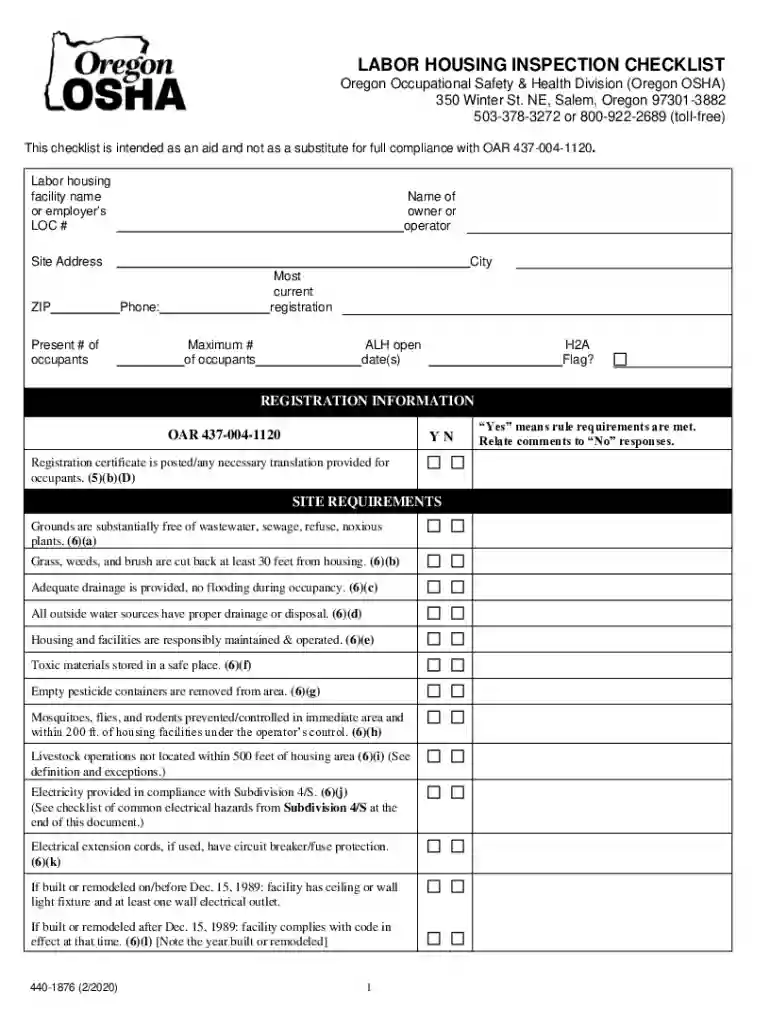
A camp inspection checklist is a vital tool used to ensure that camp facilities meet all necessary standards for safety, health, and operational functionality. The checklist serves as a comprehensive guide to evaluate different aspects of the campsite, including accommodation, dining, recreational areas, and emergency facilities. It seeks to promote an environment that is not only compliant with legal regulations but also safe and enjoyable for occupants. Camp administrators and inspectors employ this checklist to systematically assess each area of the camp, identifying potential issues and ensuring proactive measures are taken to address them. The checklist may include sections such as general site requirements, sanitation facilities, and safety protocols, among others.
The general site requirements section typically covers elements like accessibility, signage, and the overall layout of the campgrounds. Inspectors check that pathways are clear and well-marked, ensuring easy navigation throughout the site. Additionally, this section would assess the camp's compliance with zoning laws and local ordinances. Proper signage, both for directions and emergency exits, is crucial for maintaining a safe environment. This part of the checklist ensures the campsite's physical layout is practical and conducive to a positive experience for campers.
This section reviews the conditions of the living areas, including cabins, tents, and other lodging facilities. Inspectors verify that these structures are in good repair, free of hazards, and comfortable for campers. Specific focus areas include fire safety measures, adequate ventilation, and appropriate bedding. Compliance with federal and state housing codes is assessed to guarantee that living conditions align with safety standards. By ensuring all accommodation facilities are safe and habitable, the checklist mitigates potential risks for campers.
Assessment of sanitation facilities is critical in preventing the spread of illness within a camp. This section evaluates the maintenance and cleanliness of restrooms, showers, and handwashing stations. It checks for up-to-date cleaning schedules and stocks of essential supplies like soap and paper towels. The functionality of sewage disposal systems, including septic tanks, is scrutinized to confirm proper operation. By maintaining high hygiene standards, camps reduce the likelihood of health-related incidents among campers and staff.
Ensuring the camp is prepared for emergencies is a primary concern addressed by the checklist. This encompasses the availability and accessibility of first aid kits, the presence of trained medical personnel, and the camp’s evacuation and emergency response plans. Inspectors review the fire safety equipment, such as extinguishers and alarms, to ensure they are in working order. Regular drills and clear communication strategies are also necessary for effective preparedness, reassuring both campers and their guardians of their safety.
This segment focuses on the camp’s food preparation and service areas to uphold health standards and prevent foodborne illnesses. Evaluations include the cleanliness of kitchens, storage facilities for perishables, and the food handling practices of kitchen staff. Inspectors look for proper temperature controls in refrigeration units and verify that pest control measures are actively maintained. By following stringent health codes, camps can provide safe and nutritious meals, which are crucial for camper health and satisfaction.
Using the checklist effectively involves a step-by-step process that ensures all areas of the camp are covered comprehensively. Begin by identifying all sections of the checklist relevant to the camp. Conduct inspections regularly, ideally before the camp season starts, to address issues proactively. During inspection, use the checklist to guide the evaluation of each area, taking detailed notes on findings and areas needing improvement. Collaboration with staff to immediately rectify any deficiencies is essential, increasing the quality and safety of the camp environment.
The checklist is utilized by a variety of stakeholders involved in the operation and management of camps. Camp directors and managers frequently reference it to self-assess readiness before welcoming campers. Environmental health and safety inspectors from regulatory bodies use the checklist during official evaluations to enforce compliance with safety standards. Counselors and camp staff may also review the checklist to familiarize themselves with safety protocols and ensure all areas meet expected standards. Each group contributes to the systematic upkeep and operation of a safe and enjoyable camp.


Camp inspections must align with various legal regulations at both the state and federal levels. Adherence to health department guidelines, building codes, and fire safety rules is mandatory. Inspectors must be aware of any specific requirements that apply to the geographical location of the camp, ensuring full compliance with local laws. Regulatory bodies may have their own versions of inspection checklists to enforce these standards, requiring camps to integrate legal requirements into their regular inspection routines effectively.
While the core objective of safeguarding campers remains consistent, variations of the camp inspection checklist might exist depending on the camp's focus or geographical location. For example, adventure camps may emphasize equipment safety and risk management for outdoor activities, while educational camps might focus more on classroom space and instructional equipment. As camping regulations can differ by state, state-specific versions of the checklist may exist, necessitating familiarity with local guidelines. Moreover, field-specific checklists, such as those for sports camps, may include additional sections tailored to particular activities.
We've got more versions of the labour camp inspection checklist pdf form. Select the right labour camp inspection checklist pdf version from the list and start editing it straight away!
Sure, and it’s really easy! DocHub is an online PDF editor with advanced document processing capabilities that allow you quickly adjust your paperwork, fill out empty fields and drop new ones for other people to fill out, and create eSignatures in several ways. Add your labour camp inspection checklist, provide information as requested, and decide how you want to eSign your template - by typing your name, drawing your signature, uploading its image, or using a QR code.
Having a swift editing platform like DocHub, you do not need anything but a web browser and connection to the internet to edit your camp inspection checklist on the internet swiftly. Add your document or find the relevant form in DocHub’s catalog, open our editor with a single click, and complete it digitally. To edit your forms at any time, register a free profile with DocHub.
At DocHub, your data security is our priority. We follow HIPAA, SOC2, GDPR, and other standards, so you can work on your documents with confidence.
Step 1: Research the type of camp or youth program you are interested in organizing and do some preliminary planning.Read more
The wiring work and inspections must be done by a qualified technician. Wire the units after installing the Motion controller, servo amplifier and servomotor.Read more
Inspector Signature: This form can be used to document areas of compliance or violations of 105 CMR 430.000 Minimum Standards for Recreational Camps forRead more


