




01. Edit your form online
Type text, add images, blackout confidential details, add comments, highlights and more.

Type text, add images, blackout confidential details, add comments, highlights and more.

Draw your signature, type it, upload its image, or use your mobile device as a signature pad.

Send it via email, link, or fax. You can also download it, export it or print it out.
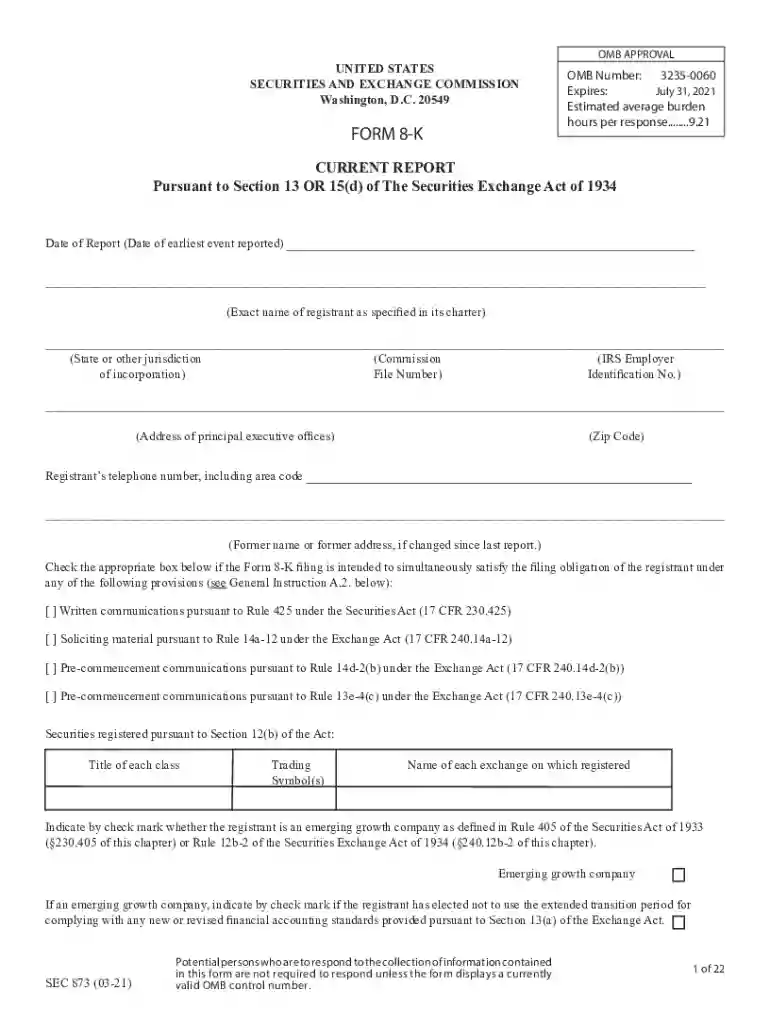
The phrase "Indicate by check mark whether the registrant is an emerging growth company as defined in Rule 405 of the Securities Act of 1933" refers to a specific requirement within a securities filing. This indication helps classify a registrant as an emerging growth company (EGC) under the SEC's guidelines, which can offer certain regulatory benefits. Rule 405 provides the legal framework for this classification, outlining attributes that define an EGC. Generally, an EGC is a company that had total annual gross revenues of less than $1.07 billion during its most recent fiscal year and has not gone public more than five years ago.
This requirement to check a box is part of registration statements filed with the SEC. The elements include several considerations:
To indicate this status, registrants must place a check mark in the appropriate section on various SEC documents, such as the S-1 Registration Statement. This step alerts the SEC and investors to the company’s EGC status, allowing them to benefit from reduced disclosure requirements and extended compliance timeframes. This practical step is executed during the preparation of SEC filings and is crucial for utilizing the benefits of EGC status.
To qualify as an EGC, a company must meet specific criteria:


Primarily, this form is utilized by smaller and newer publicly traded companies attempting to leverage the advantages of EGC status. It is critical for legal and financial teams within these corporations to accurately designate this classification to navigate IPO preparations efficiently. Companies that intend to grow swiftly without excessive regulatory burdens often use this designation.
Legal practitioners involved in corporate compliance and public offerings regularly engage with this process. Understanding the legal framework of Rule 405 ensures that companies can rightfully claim EGC status. This compliance task involves readying the necessary SEC disclosures to validate EGC claims under federal regulations, thereby allowing eligible companies to focus on business growth.
Business types such as Limited Liability Companies (LLCs) or partnerships that transition to public markets can particularly benefit from EGC status by easing the often burdensome regulatory reporting obligations typical of larger corporations. This classification helps maintain a competitive edge in industries where market adaptation and product development timelines are critical.
Emerging growth companies benefit from reduced disclosure requirements:
Filing as an EGC allows companies to streamline communication with investors, enhance operational focus, and expedite entry into public markets under lenient regulatory scrutiny.
We've got more versions of the Indicate by check mark whether the registrant is an emerging growth company as dened in Rule 405 of the Securities Act of 1933 form. Select the right Indicate by check mark whether the registrant is an emerging growth company as dened in Rule 405 of the Securities Act of 1933 version from the list and start editing it straight away!
At DocHub, your data security is our priority. We follow HIPAA, SOC2, GDPR, and other standards, so you can work on your documents with confidence.


