







Definition and Meaning of DSHS 17-063
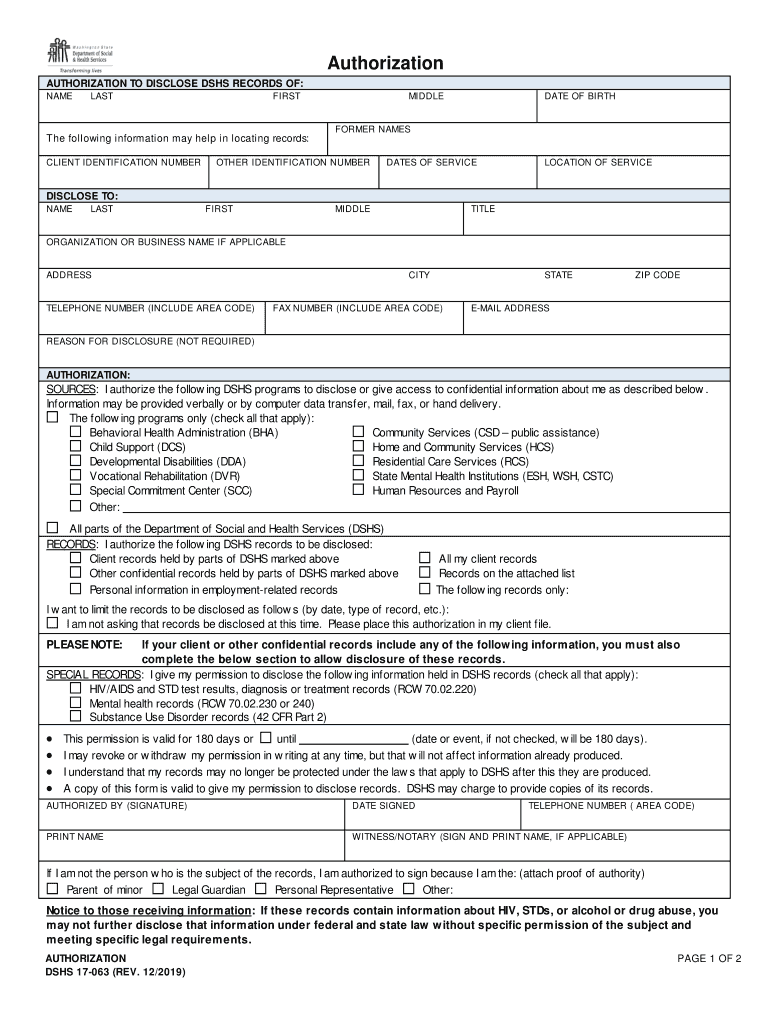
The DSHS 17-063 is an authorization form utilized by the Department of Social and Health Services (DSHS) to facilitate the legal disclosure of confidential records. This form grants individuals the power to authorize the sharing of their personal information, stored by DSHS, with selected recipients. The form delineates the types of records subject to disclosure, provides guidelines for restricting the scope of disclosed information, and includes sections for subject identification.
Components of the Form
- Subject Identification: Captures details about the individual whose records are being released.
- Types of Records: Specifies which records can be disclosed.
- Disclosure Limitations: Allows individuals to set boundaries on the extent of information sharing.
Examples and Use Cases
This form is commonly employed in scenarios where individuals need to share health records for medical purposes, legal cases, or collaborative governmental efforts. For instance, a person undergoing a medical procedure might use the form to allow their healthcare provider access to relevant health records from DSHS.
How to Obtain DSHS 17-063
The DSHS 17-063 form can be obtained through various channels, ensuring accessibility for users who need it. It is typically available directly from the Department of Social and Health Services.
Access Points
- DSHS Website: Forms can be downloaded and printed from the official website.
- Local DSHS Offices: Physical copies may be picked up from designated offices.
- Request by Mail: Individuals can request the form to be mailed to their address.
Properly accessing the form ensures that individuals have the necessary tools to manage their personal information responsibly.
Steps to Complete the DSHS 17-063
Completing the DSHS 17-063 form involves a structured approach to ensure all necessary information is provided accurately.
Step-by-Step Process
- Identify Personal Information: Fill out the section with the individual’s name, contact details, and any identification numbers required.
- Specify the Records: Clearly indicate which records are subject to disclosure. This may include medical, educational, or other sensitive data.
- Select Recipients: List the individuals or institutions authorized to receive the information.
- Define Limitations: If applicable, specify any limitations or conditions governing the disclosure.
- Sign and Date: The individual granting permission must sign and date the form, affirming their authorization.
By following these steps, individuals ensure the form is completed comprehensively and correctly.
Legal Use of DSHS 17-063
The DSHS 17-063 form serves a legally binding purpose, facilitating the authorized release of confidential records in compliance with privacy standards.
Compliance with Laws
- Privacy Protection: Adheres to regulations like the Health Insurance Portability and Accountability Act (HIPAA), which governs the safe handling of personal information.
- Authorization Confirmation: The signature on the form validates an individual’s consent, making the disclosure process legally sound.
- Security Measures: Includes provisions ensuring that only authorized parties access the information.
These legal frameworks provide confidence that personal data shared via the form remains protected and appropriately used.
Key Elements of DSHS 17-063
Understanding the critical components of the DSHS 17-063 form is vital for proper utilization and compliance.
Fundamental Sections
- Contact Information: Ensures all parties involved can communicate effectively.
- Scope of Disclosure: Clarifies the boundaries within which information can be shared.
- Signature and Date: Acts as a legal attestation to the consent provided.
Each section contributes to the overall functionality and legality of the form, which underscores the importance of careful completion.
Who Typically Uses the DSHS 17-063
The form attracts a diverse audience due to its broad applicability in various sectors involving data disclosure.


Main Users
- Healthcare Providers: For sharing patient records for treatment purposes.
- Legal Professionals: To obtain necessary documents for legal proceedings.
- Government Agencies: Collaborating on public service initiatives requiring shared records.
The form’s versatility makes it an essential tool in areas where information sharing is necessary and sensitive.
Important Terms Related to DSHS 17-063
Having a grasp of key terminology enhances comprehension and accurate completion of the form.
Glossary of Terms
- Authorization: The formal consent given by an individual to release their records.
- Recipient: The party designated to receive the disclosed information.
- Disclosable Records: Any records specified in the form that may be shared according to the authorization given.
Familiarity with these terms reduces the likelihood of errors and increases the efficiency of filling out the form.
State-Specific Rules for DSHS 17-063
Different states may have varying requirements concerning the use and submission of DSHS 17-063, necessitating attention to local regulations.
Variations Across States
- Form Variations: Some states may mandate the use of additional documents or identifiers.
- Submission Processes: Options for submitting the form—such as online platforms or specific drop-off locations—might differ.
- Notification Requirements: Certain jurisdictions may require additional parties to be notified during the authorization process.
Understanding these state-specific nuances ensures compliance and proper processing of the form, thereby avoiding delays or legal complications.




