







Definition & Meaning
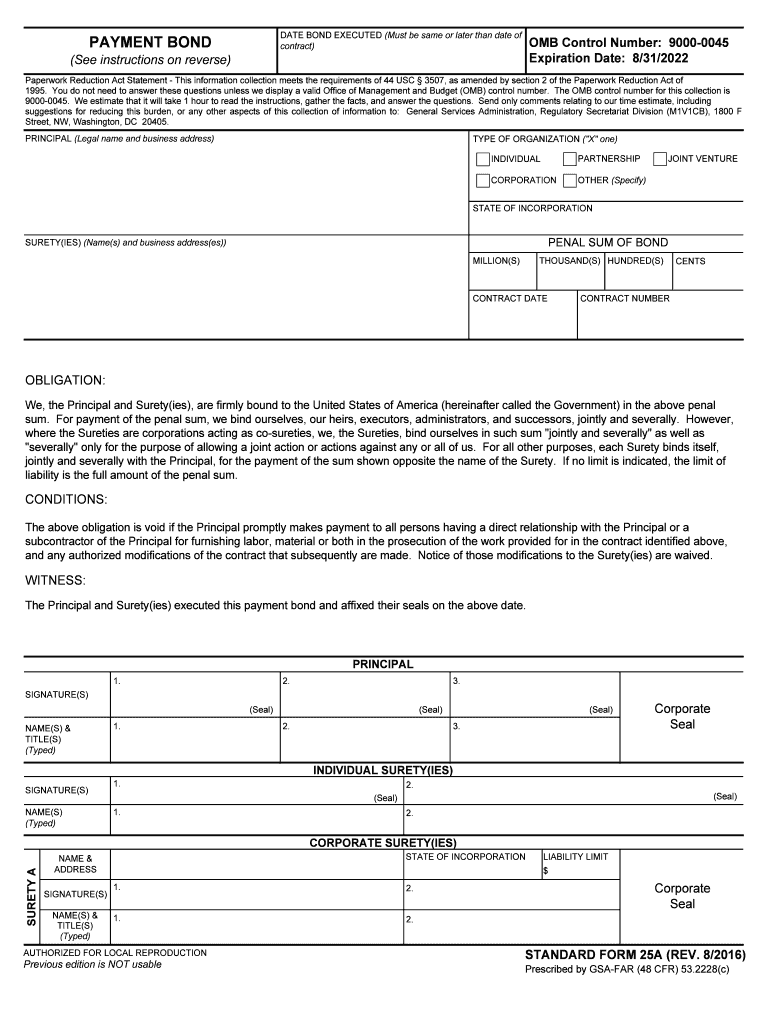
A Form 25A bond, commonly referred to within contractual and legal frameworks, is a type of payment bond used primarily in government contracts. Its primary function is to protect individuals or entities supplying labor and materials from non-payment. It ensures that the principal (usually the contractor) fulfills their financial obligations to suppliers and subcontractors, thereby preventing project disruptions and financial losses.
What is a Payment Bond?
- A payment bond is a legal instrument guaranteeing that subcontractors and material suppliers associated with a project are paid in accordance with the agreed terms.
- This bond serves to protect the interests of subcontractors by ensuring that funds are available to cover their payments, reducing the likelihood of financial disputes.
Key Elements of the Form 25A Bond
Understanding the key elements of a Form 25A bond is crucial for its proper application. These components form the basis of the bond and dictate the responsibilities of all parties involved.
Principal and Surety Obligations
- Principal: The entity primarily responsible for fulfilling the contractual obligations, typically a contractor.
- Surety: The entity, usually a bonding company, that guarantees the obligations of the principal. If the principal fails, the surety steps in to cover the losses.
Conditions of the Bond
- The bond specifies when it is considered void, usually upon full payment for labor and materials supplied.
- Detailed conditions outline the responsibilities of both the principal and the surety under various scenarios, ensuring clarity and enforceability.
How to Obtain the Form 25A Bond
Obtaining the Form 25A bond involves a structured process that ensures all necessary criteria are met before issuance. Understanding this process aids in seamless acquisition and helps avoid common pitfalls.
Step-by-Step Application Process
- Identify a Surety Company: Begin by selecting a surety company experienced in providing Form 25A bonds for government projects.
- Gather Necessary Information: Compile required documents, including financial statements and project details.
- Submit Application: Complete the application process, providing detailed information about the project and the entities involved.
- Undergo Underwriting: The surety company will evaluate the creditworthiness and financial stability of the applicant.
- Approval and Issuance: Once approved, the surety issues the bond, confirming the commitment of fulfilling the payment obligations.
Steps to Complete the Form 25A Bond
Completing a Form 25A bond requires thorough attention to detail to ensure accuracy and compliance with legal standards. The following outlines the necessary steps to finalize the bond effectively.
Instructions for Form Completion
- Download the Form: Access the official Form 25A from a government website or reputable legal resource.
- Fill in Principal Information: Include details about the contractor undertaking the project.
- Provide Surety Details: Enter the information of the surety company backing the bond.
- Project Description: Accurately describe the project scope and materials or services involved.
- Signatures and Seals: Ensure all required parties, including company representatives, sign the document and affix any necessary corporate seals.
Legal Use of the Form 25A Bond
The legal framework surrounding the use of the Form 25A bond is critical in ensuring compliance with U.S. contracting laws. Its use legally binds the parties to their obligations and provides assurances to all participants in the contractual agreement.
Compliance with U.S. Laws
- The bond must adhere to federal regulations governing payment protection in government contracts.
- Legal enforceability requires that all terms and conditions in the bond are clearly defined and agreed upon by all parties involved.
Who Typically Uses the Form 25A Bond
Understanding who uses the form provides insights into its applicability and the types of projects that benefit from its use. The form primarily serves entities involved in government contracts.


Common Users
- Government Contractors: Regularly utilize the form as part of their contractual obligations in federal, state, or local government projects.
- Subcontractors and Material Suppliers: Benefit from the bond's protections, securing payments for the resources they provide.

State-Specific Rules for the Form 25A Bond
The use and requirements of a Form 25A bond can vary by state, and understanding these differences ensures full compliance with local laws.
Variations by State
- Each state may mandate specific documentation or procedural requirements for issuing and enforcing the bond.
- Familiarization with local laws is essential to ensure the bond's validity and the proper handling of any claims that arise.
Examples of Using the Form 25A Bond
Practical examples provide clarity on the form's function and demonstrate how it is applied in real-world scenarios.
Case Studies
- Large Infrastructure Project: A construction company uses the bond to ensure labor and material payments are secured for a highway expansion project.
- Municipal Building Contract: A contractor utilizes the bond to fulfill obligations on a city hall renovation project, safeguarding payments to subcontractors.
These comprehensive insights provide a deep understanding of the Form 25A bond, detailing its significance, application, and benefits for all parties involved in government contracting.




