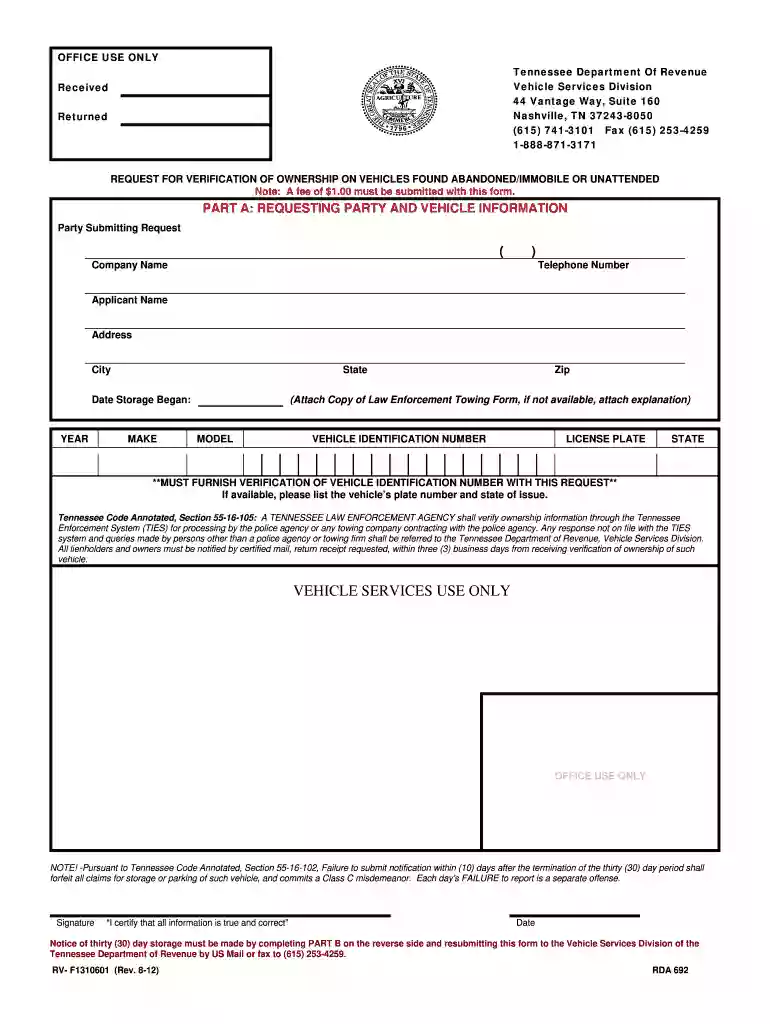
Car title generator 2026

Get Form
make a car title online Preview on Page 1

Here's how it works

01. Edit your make a car title online online
Type text, add images, blackout confidential details, add comments, highlights and more.

02. Sign it in a few clicks
Draw your signature, type it, upload its image, or use your mobile device as a signature pad.

03. Share your form with others
Send car title template via email, link, or fax. You can also download it, export it or print it out.

Overview of Car Title Generators

A car title generator is a tool that enables users to create vehicle titles efficiently and accurately. These tools are particularly useful for individuals needing to draft car titles, whether for private sales, transfers, or record-keeping. Understanding how these generators function can greatly assist in maintaining proper documentation for vehicle ownership.

Legality and Compliance

Using a car title maker must always adhere to local laws and regulations regarding vehicle ownership documentation. Titles must accurately reflect ownership to avoid legal ramifications. Automakers and sellers typically require specific details to ensure compliance:

  • Identification details: Accurate names, addresses, and signatures of all parties involved.
  • Vehicle information: VIN, make, model, year, and odometer reading.
  • Purchase details: Sale price, date of sale, and any liens against the vehicle.

Ensuring that the car title reflects true and complete information can aid in preventing future disputes or legal issues.

How to Create a Car Title Online

Creating a vehicle title online involves several steps. Following these can streamline the process and ensure accuracy:

  1. Select a car title template: Choose a state-specific template to ensure compliance with local requirements.
  2. Enter vehicle details: Fill in necessary information, including vehicle identification numbers (VIN) and descriptions.
  3. Provide seller and buyer information: Include full names and addresses for all parties involved in the transaction.
  4. Add signatures: Use electronic signature options to finalize the document. Most title generators provide a way to add signatures securely.
  5. Review and export: Check all the entered information for accuracy before printing or saving the document in a preferred format, such as a PDF.

Key Features of Car Title Templates

Car title templates often come with several key features that enhance their usability:

  • Customizability: Users can modify templates to fit unique situations or additional requirements.
  • Legally Binding Elements: Many templates incorporate legally required sections that adhere to state laws.
  • Fillable Fields: Interactive fields guide users on where to enter information, making the process simpler and error-free.
  • Downloadable Formats: Titles can usually be exported in various formats, such as PDF or Word, for easy sharing or printing.

These features facilitate the generation of valid titles that meet legal standards.

Use Cases for Car Title Generators

Car title generators serve various purposes and can be beneficial in numerous scenarios:

  • Private Sales: Individuals selling vehicles can create titles quickly without needing to visit a DMV office.
  • Transfers Between Owners: When ownership changes hands, a generator can streamline the process of drafting a new title.
  • Lost or Damaged Titles: Generators can be used to recreate lost or damaged titles, helping to mitigate the hassles associated with re-filing at the DMV.
  • Vehicle Donations: When donating a vehicle, having a title ready can expedite the process for both the donor and the charity receiving the vehicle.

Understanding these scenarios can help users leverage the full potential of car title generators.

Important Considerations When Using a Car Title Maker

While using car title makers offers many advantages, users should be aware of certain considerations:

  • State-Specific Regulations: Each state may have different requirements for vehicle titles, including necessary forms and fees.
  • Quality of the Generator: Not all car title generators are created equal; choosing a reputable tool is critical to ensure the produced documents meet legal standards.
  • Record Keeping: Maintaining copies of generated titles can assist in future transactions and ownership verification.

Being mindful of these considerations helps users navigate the car title generation process effectively.

Examples of Car Title Templates

Various templates are available that cater to different needs and situations, including:

  • Standard vehicle title: A basic template commonly used for most private vehicle sales.
  • Gifted vehicle title: Specifically designed for vehicles being transferred as gifts, often requiring unique wording or provisions.
  • Salvage title: For vehicles that have been rebuilt or repaired after being declared a total loss by an insurance company, this template outlines specific information relevant to such vehicles.

Choosing the appropriate template ensures that all necessary information is captured correctly, aligning with the intended purpose of the title.

See more car title generator versions

We've got more versions of the car title generator form. Select the right car title generator version from the list and start editing it straight away!
Versions Form popularity Fillable & printable
2020 4.9 Satisfied (51 Votes)
2016 4.9 Satisfied (25 Votes)
2012 4.3 Satisfied (39 Votes)
2011 4 Satisfied (28 Votes)
2005 4.6 Satisfied (46 Votes)
be ready to get more

Complete this form in 5 minutes or less

Get form

Got questions?

We have answers to the most popular questions from our customers. If you can't find an answer to your question, please contact us.
Contact us
Dave Ramseys core car buying rule is to pay cash for a reliable used car, avoiding debt, with the total value of all vehicles being less than half your annual income, and never buying new unless youre a millionaire. He emphasizes that cars are depreciating assets, so financing traps you; focus on paying cash and owning it outright, considering used cars that have already lost DocHub value. Key Rules Guidelines: Pay Cash: The best approach is to save up and buy a decent used car with cash to avoid interest and debt. Total Vehicle Value: The combined value of all your cars (and motorized items like boats) should not exceed 50% of your annual income. Avoid New Cars: Unless you have a net worth of $1 million or more, buying new is a poor financial move due to rapid depreciation (losing 60% in 5 years). Used is Smart: Most millionaires buy used cars, often 4-year-old models, to avoid the massive depreciation hit of new cars, says Ramsey Solutions. No Car Debt: Ramsey views car loans as traps, keeping you broke because youre paying for something thats constantly losing value. Pay Yourself a Payment: If you cant pay cash, save the money you would have spent on a car payment for 10 months, then use that savings plus your trade-in to buy a better car, as explained in this TikTok video. The 20/4/10 Rule (For those who must finance): While Ramsey promotes cash, he also mentions the 20/4/10 rule as a guideline for modest financing: 20% Down Payment: Pay at least 20% of the purchase price upfront. 4-Year Loan: Finance the rest for no more than 48 months. 10% of Income: Your total monthly car expenses (payment, insurance, gas, maintenance) should be under 10% of your gross monthly income. For financial advice, consult a professional. How Much Car Can I Afford? - Ramsey SolutionsFeb 19, 2026 Key Takeaways. How much you should spend on a car depends on your income, savings, trade-in value, time frame and overRamsey SolutionsBuying a car with no car payment?Apr 13, 2024 you didnt call Dave Ramsey. and has to go into car debt did you. well good im glad you did car and I want a reliableTikTok Dave Ramsey
With a $70,000 salary, you can likely afford a car in the $28,000 to $45,000 range, with monthly payments (including insurance) ideally staying under $600-$900, depending on your budget, debt, and down payment; aim for a total car expense (payment, insurance, gas, maintenance) under 15-20% of your take-home pay, following rules like 20/4/10 for a conservative approach. Vehicle Price Monthly Payment Guidelines Purchase Price: Aim for a total vehicle price (including taxes/fees) generally not exceeding 35-50% of your annual income, so around $24,500 to $35,000, though some sources suggest up to $45,000 with good finances. Monthly Payment (Total): Keep all car costs (payment, insurance, gas, maintenance) under 15-20% of your take-home pay. For $70k/year, your take-home is roughly $4,500-$5,000/month, meaning a total budget of $675-$1,000/month. Loan Down Payment: A 20% down payment and a 4-year loan (20/4/10 rule) helps manage costs. How to Calculate Your Budget Estimate Take-Home Pay: $70,000 gross is roughly $4,500-$5,000 after taxes and deductions. Calculate Total Monthly Car Budget: Aim for 15-20% of take-home pay (e.g., $700 - $900/month) for all car expenses. Subtract Other Costs: Take out estimated insurance, gas, and maintenance. The remainder is your maximum loan payment. Test Drive Your Budget: For a few months, save the money you would spend on car payments, insurance, and gas to see how it feels. Key Factors to Consider Debt: High student loans or other debts reduce your car budget. Down Payment: More cash upfront lowers your loan amount and monthly cost. Insurance Costs: These vary wildly by vehicle, location, and driver. Total Cost of Ownership (TCO): Factor in fuel, insurance, maintenance, and repairs, not just the sticker price. AI can make mistakes, so double-check responsesCar Affordability Calculator - How Much Car Can I AffordHow much can I afford per month? The current wisdom from personal finance advisers is to limit your monthly car budget to less thaKelley Blue BookHow Much Car Can I Afford? Edmunds Car Affordability CalculatorAs if car shopping werent challenging enough already, figuring out how much to spend on a car is a moving target even among finanEdmunds
Now that you know how much youre underwater, lets look at five strategies to help you out of your situation. Prioritize Loan Repayment. Chipping away at negative equity isnt easy, but every little bit will help. Refinance Your Loan. Get Gap Insurance. Sell or Trade-In Your Vehicle. Negotiate With Your Lender. Jun 20, 2025
Double-check the titles issuing state. If its not the state you are in, its likely not a valid title. Verify the vehicle identification number (VIN) by obtaining a vehicle history report from an online provider like AutoCheck. A one-time report costs $25, but its well worth it.
Also known as floating a title, the practice is illegal. A title is a record of the vehicles ownership history kept by the state. Title jumping leaves no trace of the previous owner, leaving the buyer vulnerable if there are issues at the DMV, such as missing signatures and unpaid fees.Jul 8, 2022

Security and compliance

At DocHub, your data security is our priority. We follow HIPAA, SOC2, GDPR, and other standards, so you can work on your documents with confidence.

Learn more
ccpa2
pci-dss
gdpr-compliance
hipaa
soc-compliance

People also ask

The 3000 rule for cars refers to different financial guidelines, most commonly having $3,000 for a down payment or buying a reliable used car outright, or a rule of thumb that repairs exceeding $3,000 annually might signal its time to trade in an old car for something more dependable. It can also relate to the old advice for frequent oil changes (every 3,000 miles, now outdated) or a component of more complex rules like the 20/3/8 rule, suggesting a 3-year loan term. Here are the main interpretations of the 3000 rule: 1. For Buying a Car (Down Payment/Budget) $3,000 Down Payment: A common guideline suggests saving $3,000 as a solid down payment for a financed car or to purchase an older, dependable used vehicle outright. Budgeting: In a different context, if your take-home pay is $3,000/month, you might aim for a $300 monthly car payment (10% rule). 2. For Deciding When to Trade In (Repairs) The $3,000-Per-Year Rule: If your car is older (e.g., over 150,000 miles) and repairs cost more than $3,000 in a single year, it may be financially smarter to trade it in and get a new loan or purchase. 3. For Maintenance (Outdated) 3,000-Mile Oil Changes: This is an old guideline for frequent oil changes, but modern cars and oils usually allow for much longer intervals, so check your owners manual. 4. Part of the 20/3/8 Rule This more comprehensive guideline suggests a 20% down payment, a loan term of no more than 3 years, and a monthly payment under 8% of your gross income, with the 3 referring to the loan term. In Summary: The context matters, but the most relevant modern interpretations focus on either having a decent sum for a down payment or recognizing when repair costs make keeping an old car uneconomical. AI can make mistakes, so double-check responses$3000 Rule for Buying Cars - Smart Budget Guide - Mohawk Honda7 days ago What does the $3000 rule mean when buying a car? + It typically means you should have at least $3,000 available either tMohawk HondaWhen to Keep Your Car and When to Trade - YahooOct 27, 2025 The $3,000-Per-Year Threshold Use the 7.6-year mark as a checkpoint. If you are past 150,000 miles and repairs top $3,Yahoo
Key Questions to Ask Your Dealership Others may require you to obtain a replacement title before finalizing the trade-in. What documents can I use instead of a title? In many cases, dealerships may accept a valid vehicle registration, bill of sale, or loan payoff statement as proof of ownership.Mar 11, 2025
Cars qualifying for the Big Beautiful Bill (One Big Beautiful Bill Act) tax deduction must be new, U.S.-assembled, under 14,000 lbs GVWR, purchased between 2025-2028 for personal use, and financed with a qualified loan, allowing for up to $10,000 in annual loan interest deduction for eligible buyers. Qualifying vehicles are standard cars, SUVs, trucks, vans, or motorcycles, but not used cars, leased vehicles, or commercial vehicles, and you can check final assembly via the VIN. Key Vehicle Requirements: Type: Car, SUV, pickup truck, minivan, van, or motorcycle. Condition: Must be new (used vehicles dont qualify). Final Assembly: Must be assembled in the U.S. (Check drivers side doorjamb sticker or VIN decoder). Weight: Gross Vehicle Weight Rating (GVWR) under 14,000 pounds. Use: For personal use only (not commercial). Loan Purchase Requirements: Purchase Window: Between January 1, 2025, and December 31, 2028. Financing: Must be a standard auto loan from a qualified lender, not a lease or cash purchase. How to Check if a Vehicle Qualifies: Check the Sticker: Look at the drivers side doorjamb for the final assembly location. Use the VIN: Enter the Vehicle Identification Number (VIN) on the National Highway Traffic Safety Administration (NHTSA) website to find assembly details. VIN Starting with 1, 4, or 5: Often indicates U.S. assembly. Who Benefits: The deduction helps middle-class families finance new, American-made vehicles, with income limits applying (e.g., $100k single, $200k joint MAGI). For financial advice, consult a professional. One, Big, Beautiful Bill Act: Tax deductions for working Americans Jul 14, 2025 Qualified vehicle: A qualified vehicle is a car, minivan, van, SUV, pick-up truck or motorcycle, with a gross vehicle IRS (.gov)What Cars Qualify For 2025 Tax Deductions: The Big Beautiful Bill The must-have rules * New vehicle only (used vehicles dont qualify). * Final assembly in the U.S. * Personal use only (non-comNapleton Chevrolet Buick GMC Beaver Dam

car title generator