






Definition & Meaning of the I-765 Form
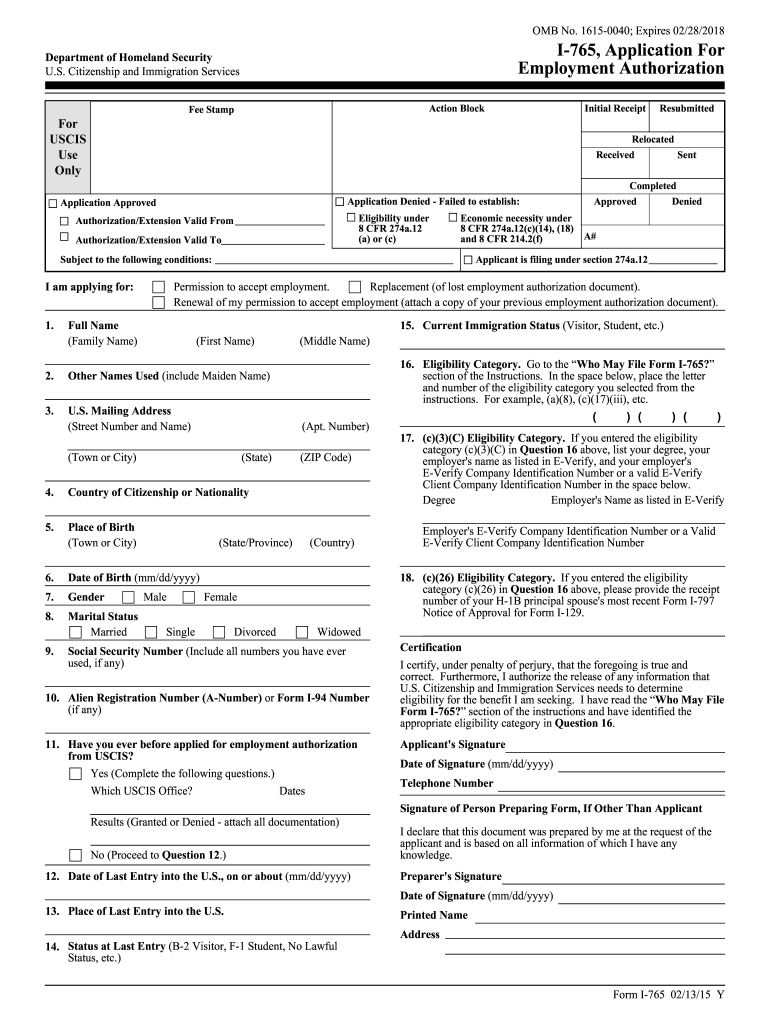
The I-765 form, officially known as the Application for Employment Authorization, is a crucial document issued by the U.S. Citizenship and Immigration Services (USCIS). This form allows eligible non-citizens to request permission to work in the United States. The application process requires individuals to provide personal information, such as their name, address, and immigration status, along with any relevant supporting documentation that verifies eligibility for employment authorization. Importantly, this form is integral for individuals seeking to work lawfully while their immigration status is under consideration.
Eligibility Criteria for the I-765 Form
To successfully complete the I-765 form, applicants must fall under specific eligibility categories established by USCIS, which include:
- Asylees and Refugees: Individuals granted asylum or refugee status in the U.S.
- Temporary Protected Status (TPS) Holders: Those from designated countries experiencing ongoing conflict or environmental disaster.
- Certain Visa Holders: Such as individuals with pending adjustment of status applications or those on F-1 student visas with approved Optional Practical Training (OPT).
Each category has unique requirements that need to be satisfied to qualify for employment authorization.


Required Documents for Filing the I-765 Form
When submitting the I-765 form, it is essential to include various supporting documents. These documents may vary slightly depending on the eligibility category but generally include:
- Completed Form I-765: The form itself must be filled out accurately.
- Proof of Identity: Such as a copy of a passport or government-issued photo ID.
- Immigration Documents: Depending on your status, this could include Form I-94, which shows your immigration status or approval notices related to your status.
- Photos: Recent passport-sized photographs meeting specific USCIS guidelines.
By ensuring all required documents are included, applicants can help streamline the processing of their applications.
Steps to Complete the I-765 Form
Filling out the I-765 form requires careful attention to detail. Here are the necessary steps to complete the form accurately:
- Obtain the Latest Version: Download the most current I-765 form from the USCIS website.
- Provide Personal Information: Fill in relevant information, including your name, address, and date of birth.
- Select Eligibility Category: Indicate the category under which you are applying for employment authorization.
- Sign and Date the Form: Ensure that you sign and date the form appropriately before submission.
- Prepare to Submit: Gather your supporting documents and the filing fee, if applicable.
Following these steps meticulously can enhance the chances of a smooth application process.
Form Submission Methods
Once the I-765 form is completed and necessary documents gathered, applicants can submit their application through various methods:
- Online Submission: Eligible applicants can file the I-765 form electronically through the USCIS online portal; this method provides immediate confirmation of submission.
- Mail Submission: Alternatively, applicants can send the completed form and documents via U.S. Postal Service or a courier service to the designated USCIS address relevant to their eligibility category.
- In-Person Submission: Although less common, some applicants may choose to schedule an appointment with USCIS to submit their application in person at a local field office.
Understanding these submission methods offers flexibility and helps cater to personal preferences and circumstances.
Penalties for Non-Compliance
Non-compliance with the requirements for filing the I-765 form can lead to serious consequences. Potential penalties include:
- Application Rejection: Failure to submit correct or complete information may result in rejection.
- Loss of Work Opportunity: Delays or denials can hinder the ability to work legally in the U.S.
- Immigration Consequences: For some individuals, unauthorized employment can negatively impact future immigration applications or status adjustments.
Awareness of these penalties underscores the importance of adhering to the filing requirements and guidelines set forth by USCIS.
Examples of Using the I-765 Form
Real-world scenarios can illustrate the practical applications of the I-765 form. Consider these examples:
- F-1 International Student: An F-1 student who has completed their degree may apply for post-completion OPT by submitting the I-765 form, allowing them to work in their field of study for up to twelve months.
- Asylee Seeking Employment: An individual granted asylum status can file the I-765 form to obtain authorization to work while integrating into American society.
These examples demonstrate how individuals leverage the I-765 form to secure lawful employment, emphasizing its significance within the broader immigration process.
Key Takeaways About the I-765 Form
Understanding the I-765 form is essential for navigating the employment authorization process in the U.S. Here are the key points to remember:
- The I-765 form is necessary for eligible non-citizens to obtain permission to work.
- Eligibility categories vary, and supporting documents must be accurate and complete.
- Applicants can choose from different submission methods, though online filing is often recommended for its efficiency.
- Non-compliance can result in significant penalties, including application rejection or loss of work status.
Being informed about these aspects of the I-765 form can empower individuals seeking employment authorization, guiding them through the complexities of the immigration system.