




Here's how it works
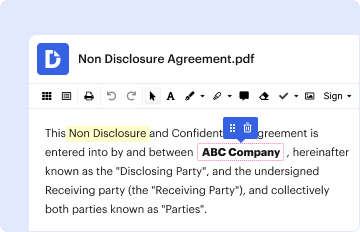
01. Edit your delaware tax returns online
Type text, add images, blackout confidential details, add comments, highlights and more.
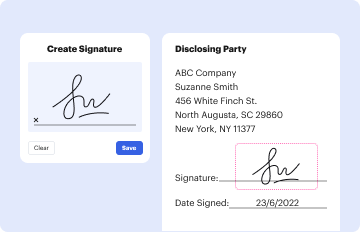
02. Sign it in a few clicks
Draw your signature, type it, upload its image, or use your mobile device as a signature pad.

03. Share your form with others
Send w1q via email, link, or fax. You can also download it, export it or print it out.
How to use or fill out Delaware Form W1A 9301 with DocHub

- Click ‘Get Form’ to open it in the editor.
- Enter your Account Number in the designated space at the top of the form.
- Select the correct tax period ending date from the options provided. If your payroll date does not align with specified dates, use the next succeeding date.
- Fill in your current business name and mailing address in the appropriate fields.
- If applicable, check the box for 'Request for Change' if you are submitting changes to your account information.
- Input the amount of Delaware Income Tax Withheld during the period on Line 1.
- On Line 2, enter the amount of tax you are remitting. If this differs from Line 1, indicate which tax period you are adjusting and provide an explanation on the back of the form.
- Complete your email address, telephone number, and today's date. Sign the return before sending it along with payment (if applicable) to the State of Delaware Division of Revenue.
Start using our platform today to easily complete and submit your Delaware Form W1A 9301 for free!
Fill out delaware form w1a 9301 online
It's free
It's free
See more delaware form w1a 9301 versions
We've got more versions of the delaware form w1a 9301 form. Select the right delaware form w1a 9301 version from the list and start editing it straight away!
Got questions?
We have answers to the most popular questions from our customers. If you can't find an answer to your question, please contact us.
Contact us
What taxes do you not pay in Delaware?
Delaware does not have a state sales tax rate. Delaware has a 0.48 percent effective property tax rate on owner-occupied housing value. Delaware does not have an estate tax or inheritance tax. Delaware has a 23 cents per gallon gas tax rate and a $2.10 cigarette excise tax rate.
Does Delaware have income tax for retirees?
Delaware is tax-friendly toward retirees. Social Security income is not taxed. Withdrawals from retirement accounts are partially taxed. Wages are taxed at normal rates, and your marginal state tax rate is 4.80%.
Is Delaware a mandatory withholding state?
Every employer maintaining an office or conducting business in Delaware who makes a payment of wages or other remuneration to a resident or non-resident (of Delaware) must pay Withholding Tax. Withholding Tax requires that a business withhold an estimated amount of tax from its employees.
Does Delaware have a state withholding form?
Obtain from each employee a signed withholding Delaware form DE-W4, Employees Withholding Allowance Certificate, at the time of employment. Form DE-W4 may be downloaded from the Delaware Division of Revenue website . In general, workers are covered by the unemployment law of the state in which the work is performed.
Does Delaware have an e-file form?
The Division of Revenue links for online filing options are available at . Electronic filing is fast, convenient, accurate and easy. When completing a form electronically, please download the form prior to completing it to obtain the best results.
Security and compliance
At DocHub, your data security is our priority. We follow HIPAA, SOC2, GDPR, and other standards, so you can work on your documents with confidence.
Learn more


Related forms

Georgia Dekalb County Order on Affidavit of Poverty
The document is an order from the Superior Court of DeKalb County, Georgia, regarding an Affidavit of Poverty filed by a ...

Idaho - Parental Consent to Name Change (Minor)
The document is a legal form for parental consent to change the name of a minor child in the state of Idaho. It includes ...

Qcc 100 form
The document is a reporting form (QCC-100) for the Commission on Quality of Care, requiring programs operated or certifi ...
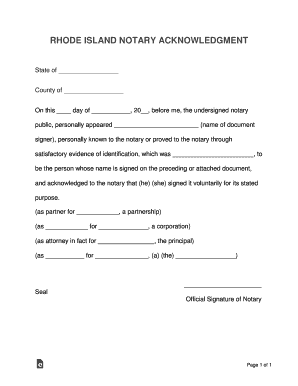
RI Notarial Certificates
The document is a Rhode Island Notary Acknowledgment form, which serves as a legal declaration by a notary public confir ...

Vermont Quit Claim Deed Form
The document is a Vermont Quit Claim Deed, which serves as a legal instrument for transferring property rights from the ...

Financial Powers of AttorneyThe Office of Attorney
The document is a General Power of Attorney for Financial Affairs, allowing an individual to appoint an agent to manage ...

Free South Dakota Notary Acknowledgement Form
The document is a South Dakota Notary Acknowledgment form, which serves as a legal declaration by a notary public confir ...

This delegation cannot last more than one year and can be revoked by the parent or
The document outlines a limited power of attorney allowing a parent or guardian to delegate care, custody, and property ...
People also ask
What is the tax advantage of living in Delaware?
Delawares Lack of Sales Tax: A Shoppers Paradise One of the biggest perks of living in Delaware is the absence of state sales tax. Imagine making major purchases anything from a new car to a home entertainment system without adding the extra 6-8% that many people in neighboring states have to pay.
What is the best state to retire to avoid taxes?
Best tax-friendly states for retirees in 2025 South Dakota. Nevada. Alaska. Tennessee. New Hampshire. Delaware. Retirement income tax: Social Security is not taxed; other retirement income is partially excluded. Mississippi. Retirement income tax: None on retirement income. Georgia.
What is the tax exemption for retirees in Delaware?
Retirement Income Exclusion: Residents aged 60 and older can exclude up to $12,500 of qualified retirement income, including pensions, IRAs, and 401(k) distributions, from state taxes.