





Here's how it works

01. Edit your form online
Type text, add images, blackout confidential details, add comments, highlights and more.

02. Sign it in a few clicks
Draw your signature, type it, upload its image, or use your mobile device as a signature pad.

03. Share your form with others
Send it via email, link, or fax. You can also download it, export it or print it out.
How to use or fill out pro se guide with our platform

- Click ‘Get Form’ to open the pro se guide in the editor.
- Begin by reviewing the 'Before You File Your Case' section. Ensure you understand if you are in the correct court and if your claims are timely.
- Fill out the required forms, including the Complaint and Civil Cover Sheet. Make sure to provide detailed information about your case, including parties involved and jurisdiction.
- Complete the Application to Proceed In Forma Pauperis (IFP) if applicable, ensuring all financial details are accurate.
- Once all forms are completed, save them as a PDF. Use our platform's features to sign electronically if needed.
- Submit your documents either electronically through our platform or in person at the Clerk’s Office, following any specific instructions provided in the guide.
Start using our platform today for free to simplify your document preparation and filing process!
Fill out pro se guide online
It's free
It's free
See more pro se guide versions
We've got more versions of the pro se guide form. Select the right pro se guide version from the list and start editing it straight away!
Got questions?
We have answers to the most popular questions from our customers. If you can't find an answer to your question, please contact us.
Contact us
What is a pro-se mother?
Youre not required to have a lawyer when you go to court for child custody. If you choose to represent yourself, youre called a self-represented or pro se litigant.
What is a pro se for dummies?
If you are representing yourself without the benefit of an attorney, you are known as a PRO SE LITIGANT. Pro Se is a Latin term meaning for yourself. As a pro se litigant, you enjoy every right entitled to you under the law. You need not worry if you have had little or no experience with the courts before.
What are the disadvantages of being pro-se?
Even defendants with legal experience may have trouble getting rid of their bias when representing themselves. It may also be challenging for defendants because they are emotionally involved in their case in a way that a lawyer is not. Emotions can get in the way of rational thinking.
What is another word for pro se?
pro per. The term pro per is an abbreviation of the Latin phrase in propria persona, meaning in their own person, and it refers to a situation where a litigant represents themselves, without a lawyer. Pro per is synonymous with the more commonly used term pro se.
What are the common mistakes in pro-se cases?
6 Of The Biggest Mistakes Pro Se Litigants Make #6. BEING LED BY OPPOSING COUNSEL. Oftentimes, self-represented litigants become reactive when theres a lawyer on the other side. #5. LACKING CONFIDENCE IN YOURSELF. #4. FAILURE TO BRING A COURT REPORTER. #3. REACTING TO LAWYER CRAP. #2. NO LEGAL RESEARCH. #1. (FALSE) BRAVADO.
Security and compliance
At DocHub, your data security is our priority. We follow HIPAA, SOC2, GDPR, and other standards, so you can work on your documents with confidence.
Learn more


Related forms

Howitzer range card
The document is a Howitzer Range Card form used for military purposes, specifically referencing ATP 3-09.50 and managed ...

Afadvantage com forms
The document outlines the process for submitting a claim for the Accident Only Wellness Benefit provided by American Fid ...

SPRINKLER CONTROL VALVE INSPECTION RECORD
The document outlines the inspection procedures for sprinkler control valves, specifying weekly inspections for standard ...

Ticket to Ride - University of Nebraska Medical Center - unmc
The document outlines a patient transport form used in medical settings, detailing essential information such as patient ...
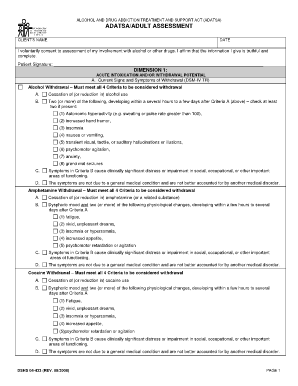
04 433 adatsa
The document outlines the Alcohol and Drug Addiction Treatment and Support Act (ADATSA), detailing a comprehensive asses ...

Repeat Recompute application - University of North
The document is an application form from the Registrar's office for students at UNA to request the recomputation of cour ...
People also ask
What is pro se short for?
Proxies and Proxy Servers. Proxy comes from a contracted form of the Middle English word procuracie (meaning procuration). A proxy may refer to a person who is authorized to act for another or it may designate the function or authority of serving in anothers stead.
What is the difference between pro and pro se?
Judges and lawyers typically refer to defendants who represent themselves with the terms pro se or pro per, the latter being taken from in propria persona. Both pro se (pronounced pro-say) and pro per come from Latin and essentially mean for ones own person. The terms are synonymous.


