
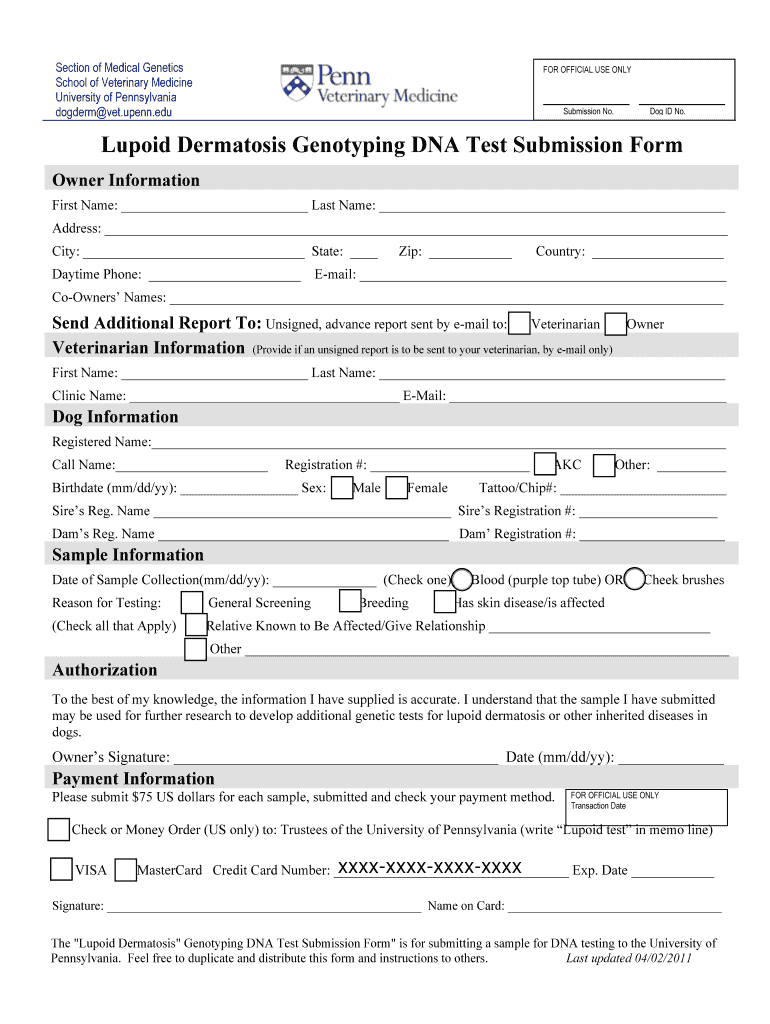







Understanding the DNA Test Form
The DNA test form serves as an essential document used in scenarios like paternity testing, ancestry analysis, or health-related genetic testing. It generally includes various sections that collect personal information, specify the type of DNA test, and provide instructions for sample collection. Understanding how this form is structured is crucial for ensuring accurate and efficient testing.
Common Elements in a DNA Test Form
A typical DNA test form may include several key components:
-
Personal Information: This section requires names, addresses, and contact details of the individuals involved in the testing. Accurate data entry is critical for tracking and reporting results.
-
Sample Collection Method: The form usually specifies how samples should be collected. Common methods include cheek swabs, blood samples, or hair follicles, with instructions detailing each method.
-
Authorization for Testing: Signatures are often required to indicate consent for the test and to allow the testing agency to use the samples for analysis. This section might also outline any limitations on the use of results.
-
Test Type Specification: Users must indicate which type of DNA test they seek, such as paternity, maternity, or ancestry tests. Each test type can have different procedures or requirements.
Sample Submission Guidelines
The DNA test form generally provides detailed instructions for submitting DNA samples. Adhering to these guidelines ensures the integrity of the samples, which is vital for reliable test results. Key points to consider include:
-
Sample Packaging: Clear instructions on how to package the sample securely to prevent contamination or error during transport.
-
Shipping Methods: Information on acceptable shipping options, including whether samples should be sent via regular mail or expedited services.
-
Return Procedures: Guidelines for returning completed forms and samples, including addresses and required enclosures that accompany the samples.
Understanding Test Result Formats
Upon completion of testing, results are typically presented in a standardized format. Knowing how to interpret these results is vital for the recipients. The following details define what users can expect:
-
Document Appearance: A well-formatted report usually contains the testing laboratory's logo, the test subject's name, and a unique identification number.
-
Result Interpretation: The results section clearly indicates whether the test is positive, negative, or inconclusive. Accompanying explanations may help recipients understand what these results mean.
-
Further Steps: Instructions for follow-up actions are often included, especially if the results require additional testing or consultation.
Security and Privacy Considerations
When dealing with DNA tests, security and privacy are paramount. The test form usually includes sections addressing:
-
Confidentiality Assurance: Statements ensuring that all personal information and test results will be kept confidential and that the testing agency complies with relevant privacy laws.
-
Data Protection Measures: Descriptions of how samples and results are stored and protected from unauthorized access.
-
Withdrawal of Consent: Information on how individuals can withdraw their consent for testing and what implications that might have regarding sample disposal.
Examples of DNA Test Forms
Different organizations may use varied formats and requirements for their DNA test forms. Some common examples include:
-
Paternity Test Form: Designed specifically for testing biological parentage, focusing on the involved parties' identification and consent.
-
Ancestry DNA Testing Form: Often more detailed in terms of family history and may ask about geographic origins or specific ancestral queries.
-
Health-Related DNA Testing Form: These forms usually require additional health-related questions to facilitate a comprehensive analysis of genetic predispositions.
Understanding the structure of a DNA test form is imperative for both consumers and professionals in the field. Clarity in each section helps avoid errors, protects personal information, and conveys necessary details effectively.




