





Definition and Importance of the Michigan CDL Pre-Trip Inspection Memory Aid
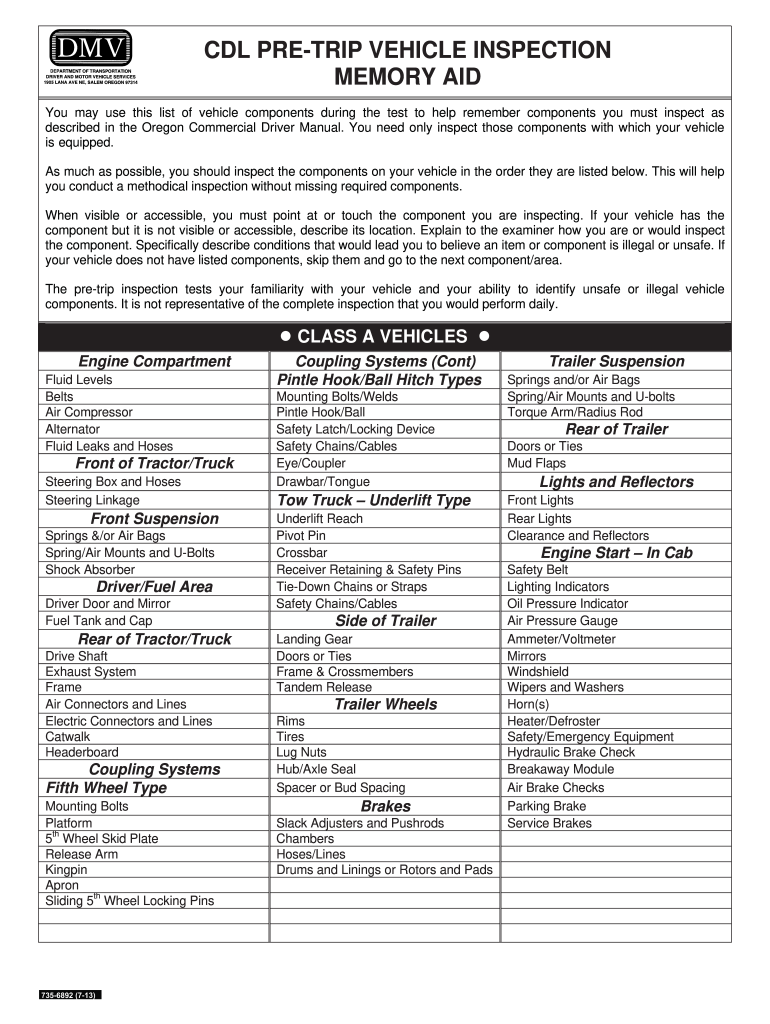
The Michigan CDL pre-trip inspection memory aid is a crucial tool for commercial drivers, designed to ensure that they perform thorough vehicle inspections before operating their trucks or buses. This memory aid serves as a systematic checklist that guides drivers through the various components of the vehicle that must be inspected, bolstering safety and compliance with legal regulations.
The memory aid includes a detailed inventory of items to inspect, including:
- Engine Compartment: Checks for fluid levels, leaks, and overall condition.
- Brakes: Ensures the air and hydraulic systems function properly.
- Lights: Confirms that all exterior lights, turn signals, and emergency flashers are operational.
- Tires: Assesses tire pressure, tread depth, and the condition of sidewalls.
- Suspension Systems: Evaluates components for wear or damage that could affect vehicle handling.
Understanding and utilizing this memory aid minimizes risks on the road and keeps the driver accountable for vehicle safety.
Steps to Complete the Michigan CDL Pre-Trip Inspection
Properly conducting a pre-trip inspection involving the memory aid requires adhering to a step-by-step process. Each step provides a comprehensive approach to ensuring that all critical vehicle components are checked before departing.
- Review the Memory Aid: Familiarize yourself with the inspection checklist prior to starting your inspection.
- Start at the Front of the Vehicle: Begin with the front exterior, checking lights, mirrors, and windshields.
- Inspect the Engine Compartment: Open the hood and look for oil leaks, coolant leaks, and ensure all fluid levels are adequate.
- Examine the Braking System: Check for proper function of brakes, including air pressure in air brakes, brake pads, and fluid levels in hydraulic brakes.
- Tire Condition: Inspect all tires for the correct pressure, tread depth, and overall condition. Look for any visible damage.
- Check the Interior Controls: Ensure that the dashboard indicators, controls, and gauges function properly.
- Final Walk-Around: Complete a final check of the vehicle’s exterior, ensuring no tools or equipment are left behind and that all lights are functioning.
Following these steps ensures that the vehicle is fully prepared for safe operation on the road.
Key Elements of the Michigan CDL Pre-Trip Inspection Memory Aid
The memory aid distills the inspection process into critical components, making it easier for drivers to remember what to check. Key elements include:
- Component List: A comprehensive list of all vehicle parts requiring inspection.
- Safety Checks: Guidelines on identifying potential safety hazards.
- Legal Compliance: Information about required inspections and the consequences of failure to comply with state regulations.
- Visual Aids: Diagrams or images to provide visual context, particularly for less familiar vehicle systems.
These elements enable drivers to perform inspections accurately and efficiently, ensuring they are fully compliant with driving regulations.
Examples of Using the Michigan CDL Pre-Trip Inspection Memory Aid
Real-world scenarios highlight the effectiveness and importance of using the memory aid during vehicle inspections. For instance:
- Successful Identification of Issues: A driver using the memory aid notices a low coolant level during the inspection, allowing them to top off the fluid before driving. This prevents potential overheating, which could lead to engine failure.
- Compliance Verification: During a roadside inspection, a driver who utilizes the memory aid can demonstrate their thoroughness by showing a completed checklist, which can lead to fewer penalties or citations.
In addition to aiding personal safety, these examples underscore the practical benefits drivers gain from using the pre-trip inspection memory aid consistently.
Legal Use of the Michigan CDL Pre-Trip Inspection Memory Aid
Using the Michigan CDL pre-trip inspection memory aid is not only a best practice but is often mandated by federal and state transportation laws. Drivers are required to perform daily inspections of their vehicles to ensure they meet safety standards before operating.
Legal aspects include:
- DOT Regulations: Compliance with the Department of Transportation regulations, which necessitate that vehicles are safe for operation.
- Documentation: The potential need to keep a written record of inspections as proof of compliance.
- Consequences of Neglect: Legal repercussions for failing to perform required inspections, including fines and penalties that could impact a driver's career.
Staying informed about these regulations helps the driver understand the importance of regular inspections and ensures their ability to operate within legal guidelines.