






Definition & Meaning
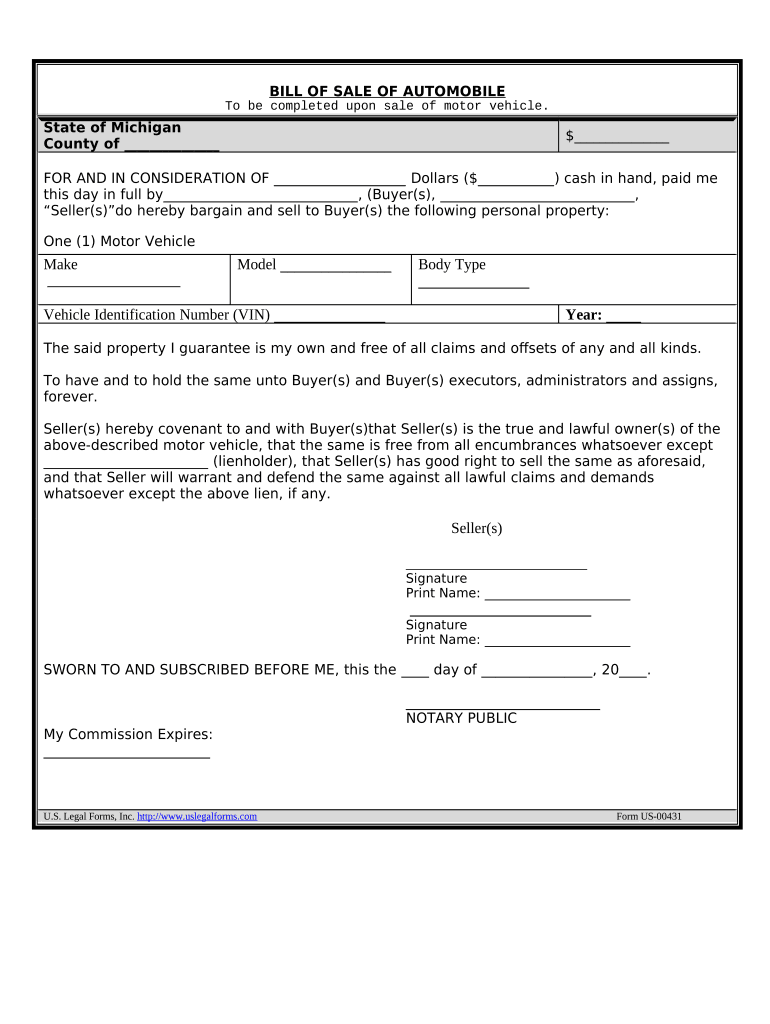
The "Bill of Sale of Automobile and Odometer Statement - Michigan" is a legally binding document that records the sale of a vehicle in Michigan, serving as proof of the transaction between the seller and buyer. This form encapsulates vital details of the vehicle, including its make, model, year, VIN, and the odometer reading, which is obligatory under federal law. By providing this information, the document aids in confirming the transfer of ownership and assists in minimizing potential disputes over vehicle mileage.
The bill of sale also includes sections where the seller guarantees that they hold clear ownership of the automobile and that there are no liens or encumbrances against it. This assurance is essential for the buyer to confidently move forward with title transfer and registration processes necessary for legally driving the vehicle in Michigan.
How to Use the Bill of Sale of Automobile and Odometer Statement - Michigan
Upon deciding to sell a vehicle in Michigan, a seller should use the Bill of Sale of Automobile and Odometer Statement as follows:
-
Fill Out Vehicle Details:
- Make, model, and year
- Vehicle Identification Number (VIN)
- Current odometer reading
-
Complete Seller and Buyer Information:
- Full names and addresses of both parties
-
Finalize the Sale Agreement:
- Agreed sale price
- Date of sale
-
Notarization:
- The document needs to be notarized, which involves both parties signing it in the presence of a notary public.
-
Provide Copies:
- After notarization, both parties should retain copies for their records.
-
Use for Title Transfer:
- The buyer will use this document to transfer the vehicle’s title with the Michigan Secretary of State.
Steps to Complete the Bill of Sale of Automobile and Odometer Statement - Michigan
Completing the Bill of Sale of Automobile and Odometer Statement involves the following steps:
-
Gather Required Information:
- Collect all necessary vehicle details and personal information.
-
Fill Out the Form:
- Accurately fill out the form with the seller’s and buyer’s information, the sale price, and the vehicle’s details.
-
Include Odometer Disclosure:
- Enter the current mileage of the vehicle in the appropriate section to comply with federal requirements.
-
Sign the Document:
- Both the seller and buyer must sign the form. Be sure to do this in the presence of a notary to facilitate notarization.
-
Notarization:
- Visit a notary public to have the form officially notarized, which adds an extra layer of authenticity and legality.
-
Post-Completion Steps:
- Make copies for both parties.
- Use the completed and notarized document to proceed with title transfer through the Michigan Secretary of State.
Key Elements of the Bill of Sale of Automobile and Odometer Statement - Michigan
-
Vehicle Information:
- Make, model, year, and VIN are critical in uniquely identifying the vehicle being sold.
-
Seller and Buyer Details:
- Full legal names and addresses are required for identification and record-keeping.
-
Sale Price and Payment Terms:
- Clearly state the agreed-upon sale amount and any terms regarding payment.
-
Odometer Disclosure:
- Essential to comply with federal laws, this disclosure prevents fraud related to vehicle mileage.
-
Certifications of Ownership and Encumbrances:
- Seller’s certification of legitimate ownership and assurance of no financial encumbrances on the vehicle.
-
Notarization:
- Adding an official stamp and signature of a notary public validates the form.
Legal Use of the Bill of Sale of Automobile and Odometer Statement - Michigan
In Michigan, this document is critical not only for buyers and sellers but also for legal processes involved in vehicle registration and title transfer:
-
Proof of Ownership Transfer:
- Demonstrates the change of possession from the seller to the buyer.
-
Legal Protection:
- Protects both parties against potential disputes by providing legally recognized evidence of the transaction.
-
Title and Registration Procedures:
- Required for processing the official title transfer with state authorities, ensuring lawful vehicle operation on public roads.
-
Fraud Prevention:
- Odometer statements help prevent fraudulent activities related to mileage tampering, protecting future buyers.
State-Specific Rules for the Bill of Sale of Automobile and Odometer Statement - Michigan
-
Notarization Requirement:
- Unlike some states, Michigan mandates notarization of the bill of sale for it to be valid.
-
Title Requirements:
- The Bill of Sale alone is insufficient for title transfer; buyers must also complete the MV-11 form.
-
License Plate Transfer:
- Sellers in Michigan have the option to transfer existing license plates from their old vehicle to another vehicle they own.
-
Unique State Taxes:
- The use tax on vehicles is based on the purchase price and must be paid upon registering the motor vehicle.
Important Terms Related to Bill of Sale of Automobile and Odometer Statement - Michigan
-
VIN (Vehicle Identification Number):
- A unique code used to identify individual motor vehicles.
-
Odometer Disclosure Statement:
- A federally mandated part of the bill providing the vehicle's mileage at the time of sale.
-
Notarization:
- The process of signing a document in front of a licensed notary public, who verifies the identities of the signing parties.
-
Liens and Encumbrances:
- Outstanding legal claims or holds on the vehicle due to debts or judgments against the seller.
-
Title Transfer:
- The legal procedure of changing ownership registering the vehicle under a new owner's name with the state authorities.