




Definition & Meaning
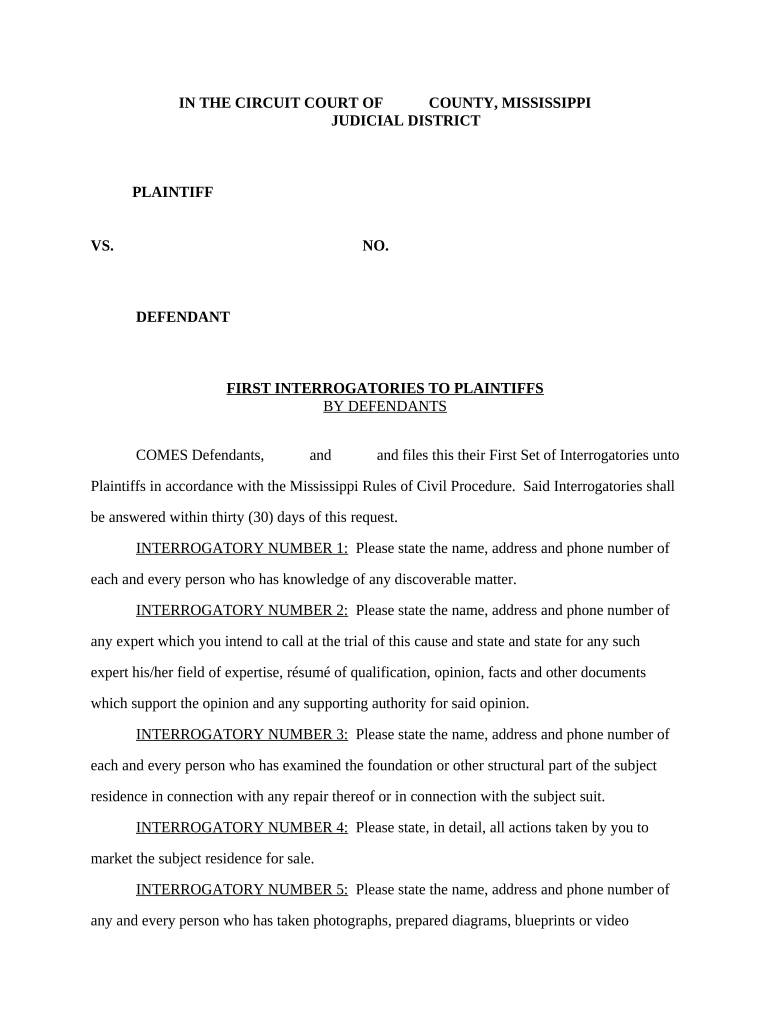
The "Interrogatories - Faulty Foundation - Mississippi" is a legal document used in a Mississippi Circuit Court as part of the discovery process in civil litigation. This form allows the defendants to submit a series of written questions to the plaintiffs related to claims concerning the structural integrity of a residence. Interrogatories are designed to gather detailed information about the incident, any expert opinions, and evidence that supports the plaintiffs' allegations. This document plays a crucial role in clarifying the foundational issues under dispute, aiding both parties in preparing their case for trial.
How to Use the Interrogatories - Faulty Foundation - Mississippi
To utilize this form effectively:
- Understand the Purpose: Recognize that the form aims to extract specific information pertinent to the case, focusing on the underlying foundation issues claimed by the plaintiffs.
- Drafting Questions: Ensure that questions are directly related to the faulty foundation claims. They should cover witness identification, expert testimonies, and any relevant documentation.
- Filing the Interrogatories: Complete and file the interrogatories according to Mississippi Circuit Court procedures. Ensure all questions are clear and legally permissible.
- Response Timeline: Be aware of the deadline by which the plaintiffs must respond, which is typically set by state law or court rules.
Steps to Complete the Interrogatories - Faulty Foundation - Mississippi
- Identify Information Needed: Pinpoint what information is essential to challenge the plaintiffs' claims or substantiate the defense.
- Prepare Questions: Draft concise and relevant questions that leave little room for ambiguity.
- Review Legality: Ensure questions adhere to legal standards and do not infringe on privileged information.
- Include Necessary Details: Provide specific instructions or references to reports, if applicable.
- File with the Court: Submit the form to the court and serve a copy to the opposing party.
- Monitor Responses: Keep track of the response deadlines to avoid delays in the litigation process.
Key Elements of the Interrogatories - Faulty Foundation - Mississippi
Key elements include:
- Plaintiff and Defendant Details: Identification of both parties involved in the litigation.
- Background Information: Context regarding the property and the alleged foundation defects.
- Specific Allegations: Questions should address the exact claims made by plaintiffs concerning the faulty foundation.
- Evidence Requests: Queries about any photographs, videos, or reports documenting foundation issues.
- Expert Witnesses: Inquiries regarding the experts retained to testify on the foundation issues.
State-Specific Rules for the Interrogatories - Faulty Foundation - Mississippi
Mississippi law governs the process and permissible scope of interrogatories:
- Question Limitations: There may be a cap on the number of interrogatories one can propound, so prioritize vital questions.
- Objections: Parties can object to certain questions if they are deemed irrelevant or overly burdensome.
- Supplementation: Mississippi rules might require parties to update responses if new information arises.
Legal Use of the Interrogatories - Faulty Foundation - Mississippi
Legally, this form serves several purposes:
- Information Gathering: Collects detailed facts that can determine the strength and validity of the claims.
- Clarification: Helps clarify disputes between parties, narrowing down the scope of issues before trial.
- Evidence Procurement: Enables acquisition of evidence to support legal arguments or dismantle opposing claims.
- Strategic Analysis: Offers a strategic tool to evaluate the opposing party’s preparedness and credibility.
Examples of Using the Interrogatories - Faulty Foundation - Mississippi
Real-world scenarios might include:
- A homeowner sues a construction company for an unstable foundation; interrogatories can unveil specifics of construction techniques and materials.
- A property seller accused of concealing foundation defects may use interrogatories to obtain buyer inspection reports or previous owner statements.
- A defendant might reveal discrepancies in the plaintiff’s claimed damages or repair costs through directed questioning.
Penalties for Non-Compliance
Non-compliance with interrogatory responses can lead to:
- Sanctions: Courts can impose fines or penalties for failing to respond adequately.
- Adverse Inferences: A court may assume unfavorable conclusions due to a lack of response.
- Dismissal or Default Judgment: Persistent non-compliance might result in dismissal of claims or a default judgment against the non-compliant party.
Form Submission Methods (Online / Mail / In-Person)
Ways to submit the interrogatories typically include:
- Online: Some courts offer electronic filing systems for faster submission and confirmation.
- Mail: Traditional mailing options are available, requiring tracking to confirm receipt.
- In-Person: Submission at the courthouse allows for direct filing and immediate issue resolution. Ensure compliance with the specific court's procedural rules.