Plaintiffs' Response to Defendants' Motion to Amend - Mississippi 2026

Get Form
Plaintiffs' Response to Defendants' Motion to Amend - Mississippi Preview on Page 1

Here's how it works

01. Edit your form online
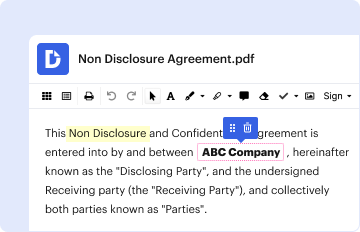
Type text, add images, blackout confidential details, add comments, highlights and more.
02. Sign it in a few clicks
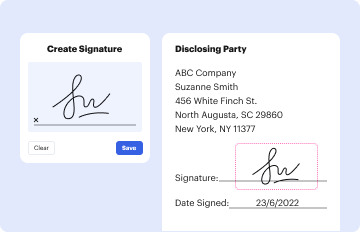
Draw your signature, type it, upload its image, or use your mobile device as a signature pad.
03. Share your form with others
Send it via email, link, or fax. You can also download it, export it or print it out.

How to use or fill out Plaintiffs' Response to Defendants' Motion to Amend - Mississippi

Form edit decoration
9.5
Ease of Setup
DocHub User Ratings on G2
9.0
Ease of Use
DocHub User Ratings on G2
  1. Click ‘Get Form’ to open it in the editor.
  2. Begin by entering the case number and the names of the parties involved at the top of the document. This ensures that your response is properly identified.
  3. In the introduction section, clearly state your position regarding the Defendants' motion. Use concise language to outline your objections and any relevant facts.
  4. Proceed to address each paragraph of the Defendants' motion. For each point, provide a detailed response, citing specific evidence or documentation where applicable.
  5. Attach any necessary exhibits that support your claims. Ensure these are referenced correctly within your response for clarity.
  6. Conclude with a respectful request for dismissal of the motion, including a signature line for your attorney and their contact information.

Start using our platform today to streamline your document editing and ensure a smooth filing process!

be ready to get more

Complete this form in 5 minutes or less

Get form

Got questions?

We have answers to the most popular questions from our customers. If you can't find an answer to your question, please contact us.
Contact us
A FRCP 12(b)(6) motion to dismiss asks the court to test the legal sufficiency of the complaints factual and legal allegations.
Rule 65 authorizes parties to seek temporary restraining orders (TROs) and preliminary injunctions in civil cases in which permanent injunctive relief or other relief is being sought.
Rule 12(b)(6), permitting a motion to dismiss for failure of the complaint to state a claim on which relief can be granted, is substantially the same as the old demurrer for failure of a pleading to state a cause of action.
It will also be observed that if a motion under Rule 12(b)(6) is thus converted into a summary judgment motion, the amendment insures that both parties shall be given a reasonable opportunity to submit affidavits and extraneous proofs to avoid taking a party by surprise through the conversion of the motion into a
To survive a motion to dismiss, a complaint must contain sufficient factual matter, accepted as true, to state a claim to relief that is plausible on its face. Ashcroft v. Iqbal, 556 U.S. 662, 129 S. Ct.

Security and compliance

At DocHub, your data security is our priority. We follow HIPAA, SOC2, GDPR, and other standards, so you can work on your documents with confidence.

Learn more
ccpa2
pci-dss
gdpr-compliance
hipaa
soc-compliance

People also ask

Rule 81 requires use of a special summons which commands that the defendant appear and defend at a specific time and place set by order of the court and informs him or her that no answer is necessary.
Rule 56. Summary Judgment A party against whom a claim, counter-claim, or cross- claim is asserted or a declaratory judgment is sought may, at any time, move with or without supporting affidavits for a summary judgment in his favor as to all or any part thereof.
What does a trial test that a 12(b)(6) motion does not? Answer: Trial tests the truth of the allegations.

Related links