
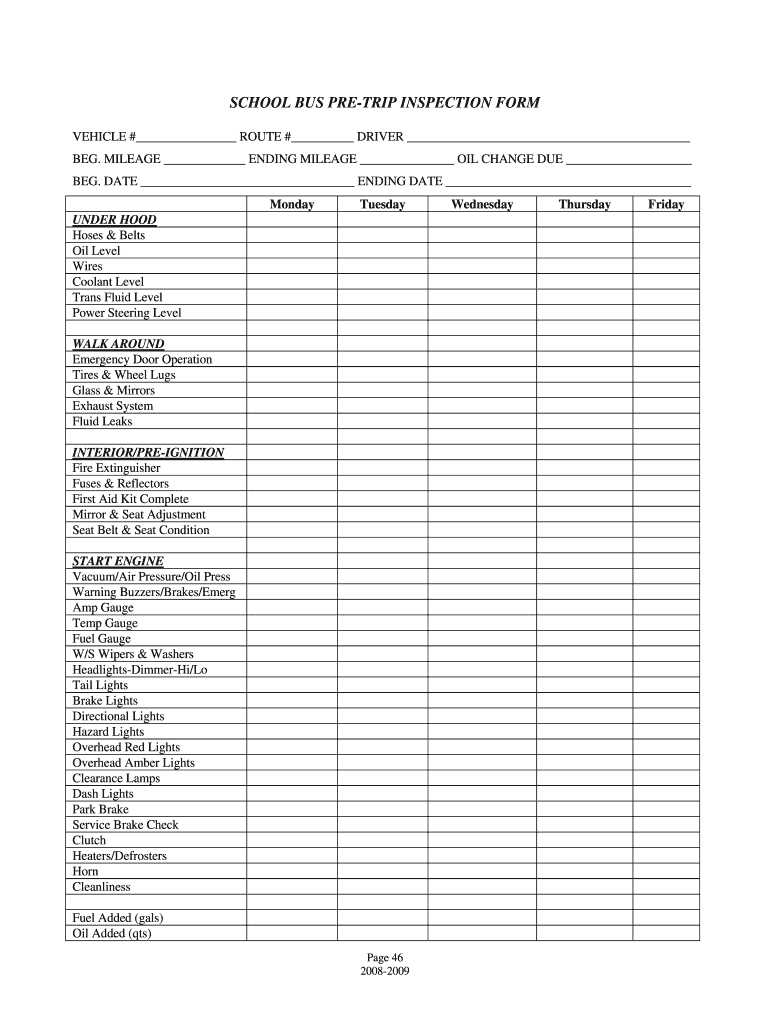







Definition and Purpose of Pre Trip Inspection for Buses
A pre-trip inspection for buses is a systematic process aimed at ensuring the safety and operational readiness of the vehicle before commencing its route. It involves checking various components and systems of the bus, which are crucial for the safe transportation of passengers. The focus during this inspection is to identify any potential issues that could lead to mechanical failures or safety risks during operation.
The fundamental purpose of this inspection is twofold: to maintain safety standards and to comply with legal regulations. Federal and state laws mandate that commercial vehicles, including school buses, undergo rigorous safety checks to ensure they meet operational standards. Failure to perform these inspections could lead to dire consequences, including fines, accidents, or liability issues. Thus, a pre-trip inspection serves not only as a preventive measure but also as a legal obligation for bus drivers and operators.
Steps to Complete a Pre Trip Inspection for Buses
Completing a pre-trip inspection for buses involves several critical steps that ensure comprehensive evaluation of the vehicle's safety and functionality. The following outline provides a detailed procedure:
-
Gather Necessary Tools and Documentation:
- Ensure you have the bus inspection sheet, pen, and any required tools for visual or physical checks.
- Review previous inspection reports for known issues that may need attention.
-
Interior Inspection:
- Check that all safety equipment (fire extinguishers, first aid kits) is accessible and in good condition.
- Ensure that the dashboard indicators are functioning and not displaying any warning lights.
- Inspect the seating area for cleanliness and safety of passenger seats.
-
Under-Hood Inspection:
- Visually inspect fluid levels (oil, coolant, brake fluid) and look for leaks.
- Check belts and hoses for wear or damage that might affect engine performance.
-
Exterior Inspection:
- Walk around the bus to examine the body for any visible damage or rust.
- Check tire pressure and tread depth, ensuring all tires conform to safety standards.
-
Lights and Signals Check:
- Test all exterior lights, including headlights, taillights, turn signals, and brake lights.
- Ensure the hazard lights function correctly, as they are crucial in emergencies.
-
Braking System Test:
- Conduct a brake test to confirm that both the service and emergency brakes are in good working order.
- Ensure that the air pressure gauge indicates appropriate levels for air brake systems.
-
Recording Findings:
- Document any issues identified during the inspection on the bus inspection sheet.
- Note any immediate repairs needed to ensure safety compliance.
Completing each of these steps systematically allows bus drivers to maintain operational safety while adhering to legal requirements.
Key Elements of the Pre Trip Inspection for Buses
The pre-trip inspection checklist encompasses various key elements critical to the vehicle's safety and functionality. These elements include:
-
Wheels and Tires:
- Inspect for proper inflation, tread depth, and signs of damage.
- Check wheel lug nut tightness to prevent wheel detachment.
-
Braking System:
- Ensure the brake pads, rotors, and other components are in good condition with no significant wear.
-
Lights and Reflectors:
- A complete check of all lights (headlights, tail lights, brake lights, and indicators) to ensure visibility and compliance.
-
Emergency Equipment:
- Availability and accessibility of emergency equipment such as a fire extinguisher, first aid kit, and road triangles.
-
Fluid Levels:
- Check engine oil, coolant, brake fluid, and windshield washer fluid.
-
Body Condition:
- Look for dents, scratches, or rust, which might compromise the body integrity or reflect safety standards.
-
Interior Safety Equipment:
- Ensure that seat belts and other safety features are operational and in good condition.
Each of these elements plays a vital role in ensuring the bus is fit for safe operation and compliant with regulatory standards.
Importance of Pre Trip Inspection for Buses
Conducting a pre-trip inspection for buses is paramount for several reasons:
-
Safety Assurance: Regular inspections help identify mechanical issues before they lead to accidents, thereby protecting both drivers and passengers.
-
Legal Compliance: Adhering to mandated inspection protocols ensures that bus operators are compliant with federal and state regulations, avoiding fines and potential liabilities.
-
Operational Efficiency: Identifying issues in advance can prevent unplanned breakdowns, thus minimizing disruptions to service schedules and operational costs.
-
Insurance Requirements: Many insurance providers may require documented pre-trip inspections as part of their coverage policies, providing protection in case of accidents or claims.
-
Passenger Satisfaction: Ensuring that buses are safe and operational fosters trust among passengers and parents, especially when it comes to school bus transport.
Recognizing the importance of these factors emphasizes the need for meticulous attention during the pre-trip inspection process.
State-Specific Rules for Pre Trip Inspection for Buses
Pre trip inspection requirements can vary by state, which makes it essential for bus drivers and operators to be aware of local regulations. Some common state-specific rules include:
-
Documentation Requirements: Certain states may require the pre-trip inspection results to be documented daily, with records kept for a specified duration.
-
Inspection Frequency: While federal regulations might suggest routine inspections, some states enforce stricter timelines or additional inspections for older vehicles.
-
Training and Certification: Specific training or certification might be mandated for drivers to conduct pre-trip inspections properly, highlighting the importance of understanding state laws.
-
Electrical Systems Check: States may have particular requirements regarding electrical system inspections, including battery checks and electrical component functionality.
Being informed about these variations is crucial for ensuring compliance and operational safety within each jurisdiction.




