Assignment of Lease from Lessor with Notice of Assignment - New Hampshire 2026

Get Form
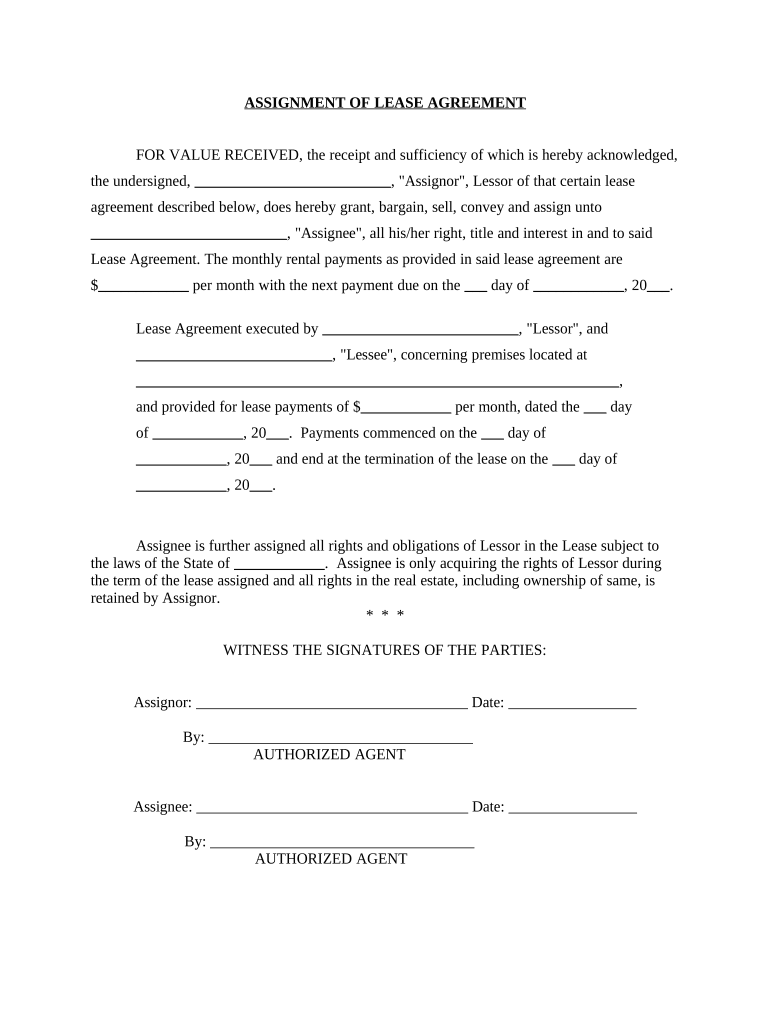
assignment of lease template Preview on Page 1

Here's how it works

01. Edit your assignment of lease template online
Type text, add images, blackout confidential details, add comments, highlights and more.
02. Sign it in a few clicks
Draw your signature, type it, upload its image, or use your mobile device as a signature pad.
03. Share your form with others
Send notice of assignment of lease template via email, link, or fax. You can also download it, export it or print it out.

How to use or fill out Assignment of Lease from Lessor with Notice of Assignment - New Hampshire

Form edit decoration
9.5
Ease of Setup
DocHub User Ratings on G2
9.0
Ease of Use
DocHub User Ratings on G2
  1. Click ‘Get Form’ to open it in the editor.
  2. Begin by filling in the 'Assignor' section with the name of the current Lessor, followed by the Assignee's name in the designated field. This establishes who is transferring and receiving the lease rights.
  3. Next, input the monthly rental payment amount and specify the due date for the next payment. This ensures clarity on financial obligations.
  4. Complete the details regarding the original Lease Agreement, including dates and parties involved. This provides context for the assignment.
  5. In the 'Assignee' section, confirm that all rights and obligations are assigned as per state laws, ensuring legal compliance.
  6. Finally, have both parties sign and date at their respective sections to validate the assignment legally.
  7. For the Notice of Assignment section, fill in Lessee(s) names and direct them to make future payments to Assignee at their new address.

Start using our platform today to streamline your document editing and signing process for free!

be ready to get more

Complete this form in 5 minutes or less

Get form

Got questions?

We have answers to the most popular questions from our customers. If you can't find an answer to your question, please contact us.
Contact us
A lease assignment occurs when a tenant fully transfers their lease to another party. This is particularly important for tenants who wish to get out of their leases early due to financial issues, especially if a landlord does not allow subleases.
An Assignment by Lessor clause in a contract allows the lessor, or property owner, to transfer their rights and obligations under the lease to another party. This clause typically specifies the conditions under which such an assignment is permissible and any required notifications or approvals that must be obtained.
The renter in an assignment is now the new tenant and is liable under the privity of the estate because they are the tenant in possession of the property since they assumed the remainder of the lease. The original tenant is not returning in this circumstance. The original tenant is still liable, however.
Generally, tenant rights may permit recording the assignment to protect their interest in the property; however, many leases require landlord consent. The recording process itself is a formal procedure that documents the assignment publicly but does not override contractual obligations.
As a general rule, if a lease contains no express restriction on assignment or subleasing, the tenant is free to transfer its rights in the lease without landlords consent. This is in line with general principles in the law that disfavor restraints on the alienation of real property.

Security and compliance

At DocHub, your data security is our priority. We follow HIPAA, SOC2, GDPR, and other standards, so you can work on your documents with confidence.

Learn more
ccpa2
pci-dss
gdpr-compliance
hipaa
soc-compliance

People also ask

A lease assignment agreement allows a tenant (assignor) to transfer their rights and obligations under a lease to another party (assignee). This transfer typically includes responsibilities such as paying rent, maintaining the property, and complying with lease terms.
Assignment agreement serves as binding documents that outline the assignments terms and conditions, including payment terms, timelines, performance expectations, and specific requirements. By docHubing a consensus on these details, both parties can minimize potential conflicts and align their expectations.

Related links