
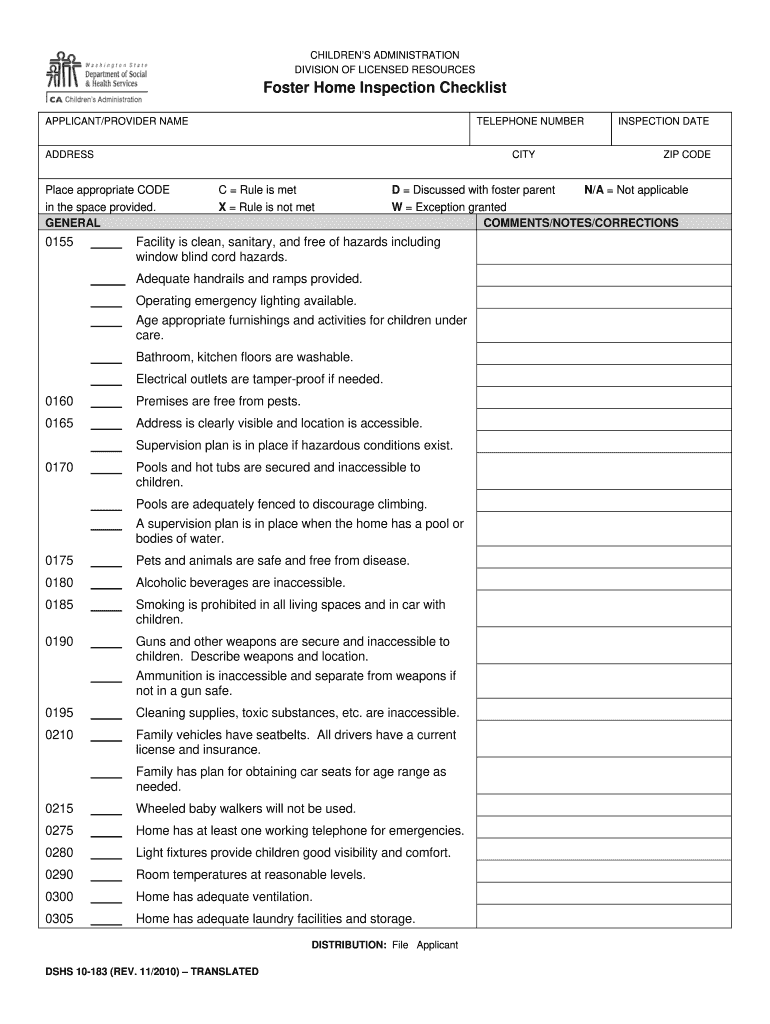







Definition and Purpose of the CPS Home Visit Checklist
The CPS home visit checklist serves as a structured tool utilized by Child Protective Services (CPS) during home inspections. Its primary purpose is to ensure that the environment is safe and suitable for children. This checklist covers various criteria focused on health, safety, and the overall living conditions within a home, guiding caseworkers as they assess each household.
Key components typically included in this checklist comprise:
- Safety Measures: Assessment of fire alarms, carbon monoxide detectors, and basic safety hazards around the property.
- Living Spaces: Evaluation of bedrooms, bathrooms, and communal areas ensuring they are free from clutter and hazards.
- Caregiver Readiness: Qualifications of the caregiver, including background checks and compliance with CPS training requirements.
- Health Standards: Verification of proper medical care access and adherence to hygiene practices.
- Food Safety: Assessment of food storage and proper nutrition to ensure children's dietary needs are met.
This structured format helps caseworkers keep detailed records and ensures they do not overlook essential elements while conducting home inspections.
How to Use the CPS Home Visit Checklist
Using the CPS home visit checklist effectively involves several steps designed to ensure thoroughness during an inspection.
-
Preparation Before Visit:
- Review the checklist in advance to familiarize yourself with the items to be evaluated.
- Gather necessary documents such as identification, training certifications, and any prior reports related to the household.
-
During the Visit:
- Conduct a walkthrough of the home, systematically checking each section of the checklist, which can include categories like child safety, caregiver qualifications, and environmental health.
- Engage with the caregiver to discuss observations and validate information against the checklist entries.
-
Post-Visit Documentation:
- Document findings on the checklist, clearly noting which items are met and which need attention.
- Include comments to provide context for decisions made during the inspection. This can be invaluable for future follow-ups or reports.
By following this structured approach, CPS workers can ensure a comprehensive assessment, identify potential issues, and assist caregivers in meeting safety standards.
Steps to Complete the CPS Home Visit Checklist
Completing the CPS home visit checklist involves several essential steps to guarantee a thorough assessment:
-
Conduct a Pre-Visit Review:
- Examine the family's history with CPS if available. Understanding past visits helps inform the current inspection's focus.
-
Initiate the Home Visit:
- Start by introducing yourself and explaining the purpose of the visit to the caregiver in a supportive manner.
- Gain consent before proceeding with the inspection.
-
Utilize the Checklist Systematically:
- Follow the checklist in a logical order, typically beginning with general observations before diving into specific areas like kitchens and bedrooms.
- Take notes for each section as you progress.
-
Assess Compliance and Safety:
- For each listed item, mark whether it is met, unmet, or requires action, providing evidence or observations when necessary.
-
Engagement and Support:
- Discuss findings with the caregiver as you go along. This inclusion can foster a cooperative atmosphere, potentially easing the path for needed changes.
-
Finalize Documentation:
- At the conclusion of the visit, review the checklist with the caregiver to ensure mutual understanding of findings and next steps.
- Safely store the completed checklist for record-keeping and follow-up.
Adhering to these steps ensures that the CPS home visit is both effective and respectful, aligning with best practices in social work.
Key Elements of the CPS Home Visit Checklist
The CPS home visit checklist includes several critical elements that are vital for assessing a child's living environment:
-
General Safety Checks:
- Evaluating presence and functioning of smoke detectors, fire extinguishers, and overall home security.
-
Child-Specific Areas:
- Conditions of children's bedrooms, including safety of furniture, availability of bedding, and general cleanliness.
-
Health and Hygiene Standards:
- Availability of first aid supplies, medication safety, bathroom hygiene, and proper sanitation practices.
-
Emergency Preparedness:
- Assessing emergency plans, including evacuation routes and accessibility of emergency contacts.
-
Affordability and Nutritional Status:
- Evaluating the kitchen and pantry for adequate food supplies and nutritional balance.
These elements are essential to ensuring the welfare and safety of children residing in the evaluated home, fostering an environment conducive to their development.
Who Uses the CPS Home Visit Checklist?
The CPS home visit checklist is primarily used by professionals within the Child Protective Services framework, including:
- CPS Caseworkers: They utilize the checklist during home visits to assess if children are safe, healthy, and properly cared for.
- Social Workers: These individuals may use the checklist as part of their broader evaluations regarding the wellbeing of clients and children.
- Foster Care Agencies: Agencies involved in placing children in foster homes use similar checklists when vetting potential caregivers and homes.
- Legal Professionals: Lawyers involved in custody or child welfare cases may reference the checklist during legal proceedings to establish home conditions.
- Treatment Providers: Mental health professionals may use insights from the checklist to better address the needs of children in therapy or counseling settings.
By understanding who uses the checklist, stakeholders can navigate responsibilities and expectations more effectively and collaboratively.




